Loading...
Done
A surfer runs down the beach past hundreds of Barbie dolls comprising the sculpture 'Wave 2' by West Australian artist Annette Thas on Tamarama Beach during the 19th annual Sculptures by the Sea exhibition in Sydney, October 23, 2015. (Photo by Jason Reed/Reuters)

A surfer runs down the beach past hundreds of Barbie dolls comprising the sculpture 'Wave 2' by West Australian artist Annette Thas on Tamarama Beach during the 19th annual Sculptures by the Sea exhibition in Sydney, October 23, 2015. Sydney's coastal walk between Bondi and Tamarama has been transformed into a temporary sculpture park featuring over 100 sculptures from Australian and international artists, billed as the largest free sculpture exhibition in the world. (Photo by Jason Reed/Reuters)
Details
27 Oct 2015 08:05:00
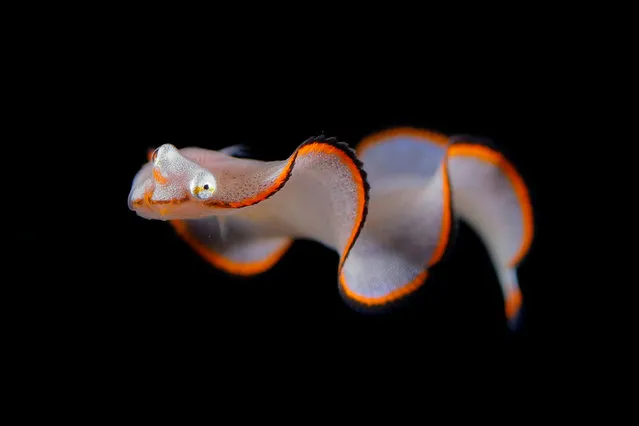
Batesian mimicry by a Soleichthys fish larva. (Photo by Ryo Minemizu/The Guardian)

Ryo Minemizu, one of Japan’s emerging stars in the field of marine life photography and the 2017 winner of the Nikkei National Geographic photography prize, captures the beauty and complexity of plankton that drift in our planet’s oceans and other bodies of water in meticulous detail. Here: Batesian mimicry by a Soleichthys fish larva. (Photo by Ryo Minemizu/The Guardian)
Details
21 Aug 2018 00:05:00
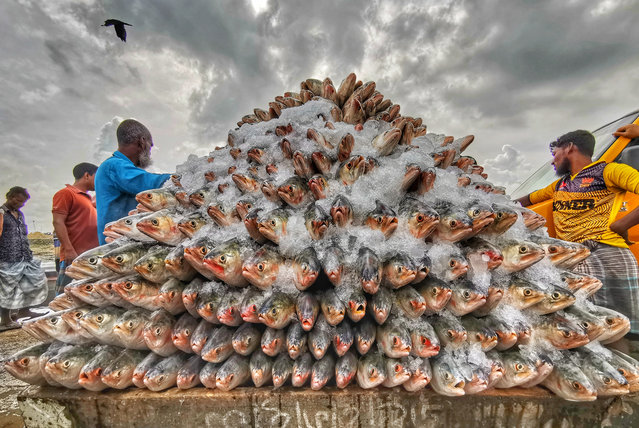
On the phone – Fishes of Hilsa by Azim Khan Ronnie. (Photo by Azim Khan Ronnie/Pink Lady Food Photographer Award 2020)

A selection of winning images from the Pink Lady food photographer of the year awards. Here: On the phone – Fishes of Hilsa by Azim Khan Ronnie. (Photo by Azim Khan Ronnie/Pink Lady Food Photographer Award 2020)
Details
03 May 2020 00:03:00
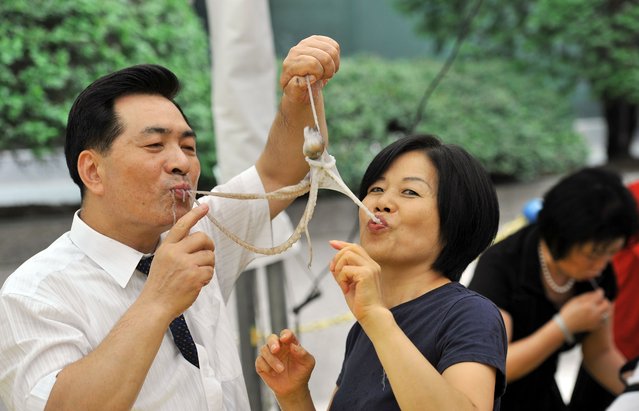
A South Korean man and a woman eat a live octopus during an event to promote a local food festival in Seoul on September 12, 2013. (Photo by Jung Yeon-Je/AFP Photo)

Live octopus is a delicacy in South Korea but is a known choking hazard, since the still-moving suction cups can cause tentacle pieces to stick in a person's throat. A baby octopus is often consumed whole, while larger varieties are cut up and the still-wriggling tentacles eaten with a splash of sesame oil. Photo: A South Korean man and a woman eat a live octopus during an event to promote a local food festival in Seoul on September 12, 2013. (Photo by Jung Yeon-Je/AFP Photo)
Details
13 Sep 2013 09:40:00
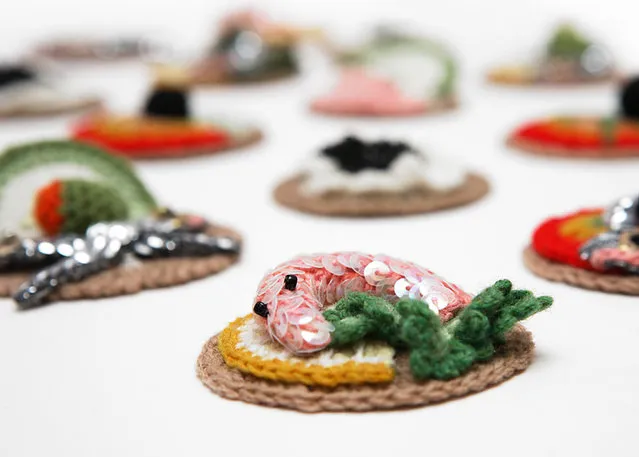
Crocheted Food Art by Kate Jenkins

Artist Kate Jenkins makes elaborate crocheted food art in her studio in Brighton. Much of her art depicts the local fare – fish and chips, bangers and mash, and so on – but a recent series, “Kate’s Diner”, focused on classic American food. We previously posted about Jenkins’ crocheted anatomical hearts.
Details
12 Apr 2017 12:15:00
Champagne Taittinger Food for Celebration – Dinner with the King and Queen of Sweden. “Sverigemiddagen (the Dinner of Sweden), an annual event held at the Royal Castle in Stockholm, celebrates individuals who have made extraordinary contributions to their local communities. Invited guests are honoured for their achievements and are hosted by the King and Queen of Sweden at a grand dinner”. (Photo by Jonas Borg/Pink Lady Food Awards 2023)

Champagne Taittinger Food for Celebration – Dinner with the King and Queen of Sweden. “Sverigemiddagen (the Dinner of Sweden), an annual event held at the Royal Castle in Stockholm, celebrates individuals who have made extraordinary contributions to their local communities. Invited guests are honoured for their achievements and are hosted by the King and Queen of Sweden at a grand dinner”. (Photo by Jonas Borg/Pink Lady Food Awards 2023)
Details
19 May 2023 04:39:00
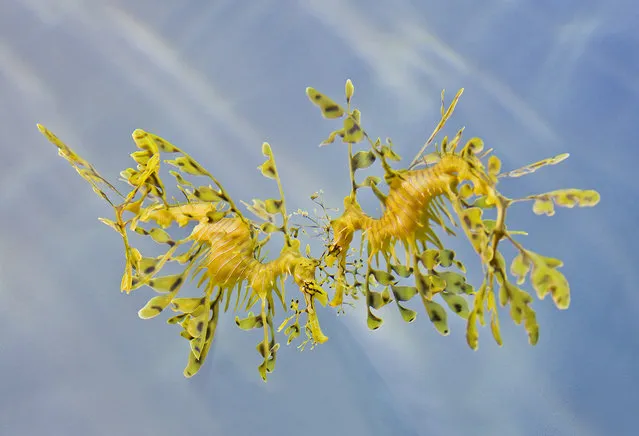
Leafy sea dragon

The leafy seadragon or Glauert's seadragon, Phycodurus eques, is a marine fish in the family Syngnathidae, which also includes the seahorses. It is the only member of the genus Phycodurus. It is found along the southern and western coasts of Australia. The name is derived from the appearance, with long leaf-like protrusions coming from all over the body. These protrusions are not used for propulsion; they serve only as camouflage. The leafy seadragon propels itself by means of a pectoral fin on the ridge of its neck and a dorsal fin on its back closer to the tail end. These small fins are almost completely transparent and difficult to see as they undulate minutely to move the creature sedately through the water, completing the illusion of floating seaweed.
Details
05 Sep 2012 08:51:00
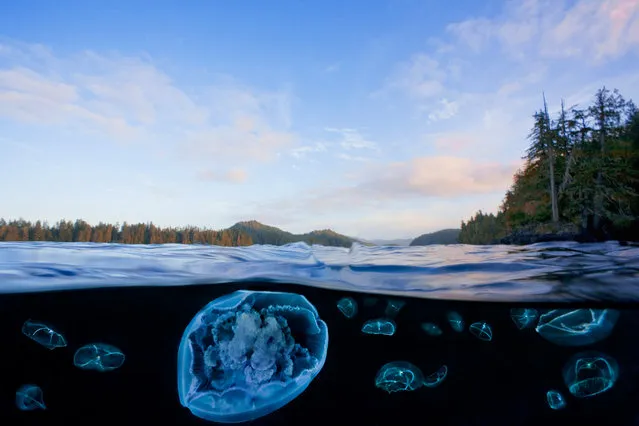
Moon jellyfish and cross jellies. (Photo by David Hall)

David Hall’s photographs of scenery and creatures off the coast of Canada in the Pacific Northwest portray serenity under the water, which belie the extreme challenges he faces to get his images. For each shoot, Hall wears a dry suit, a neoprene body suit that covers all of his body but his head and traps air inside to keep him warm. Water temperature in Canada’s British Columbia typically ranges between 45 and 50 degrees Fahrenheit. Photo: Moon jellyfish and cross jellies. (Photo by David Hall)
Details
16 Sep 2014 12:57:00