Loading...
Done
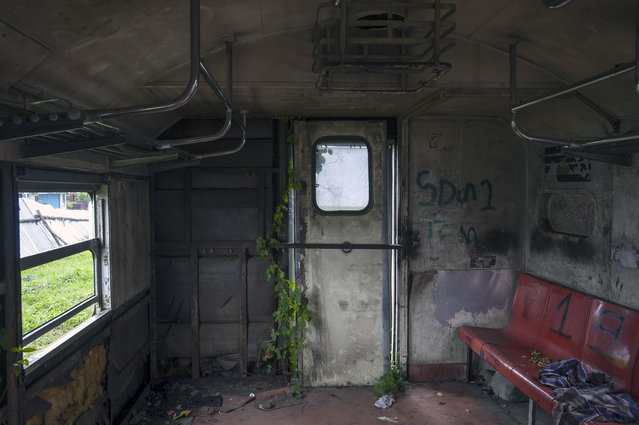
The carriages have decayed over time, on February 27, 2015, in Purwakarta, Indonesia. Dozens of trains are stacked on top of each other in what looks like a post-apocalyptic world. The old electric trains that travelled in and out of Jakarta, Indonesia, are weathered and decayed over time. The trains were used everyday since the 1980s and carried thousands of people to work. (Photo by HKV/Barcroft Media)

The carriages have decayed over time, on February 27, 2015, in Purwakarta, Indonesia. Dozens of trains are stacked on top of each other in what looks like a post-apocalyptic world. The old electric trains that travelled in and out of Jakarta, Indonesia, are weathered and decayed over time. The trains were used everyday since the 1980s and carried thousands of people to work. Now the carriages, which were once the lifeblood of public transport in the south-Asian city, have been left to rust among shrubbery. (Photo by HKV/Barcroft Media)
Details
21 Apr 2015 11:13:00
Long Exposure Airport Photos ByTerence Chang

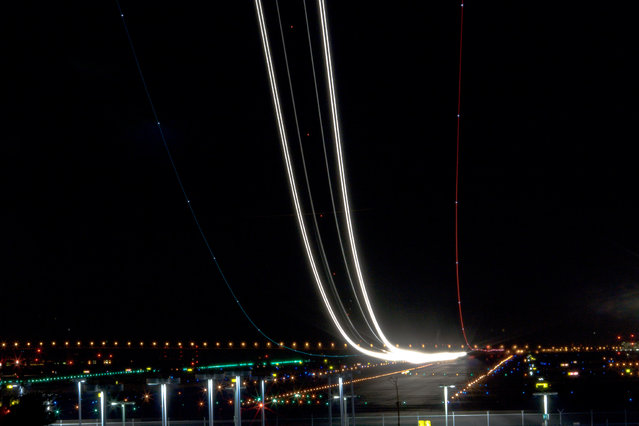
Terence Chang's (aka exxonvaldez) long exposure photographs, capturing only streaks of light as airplanes arrive and depart from the San Francisco airport, certainly are stunning. There's just something so magical about seeing the various patterns created in the sky, even over a relatively short amount of time.
Details
08 Nov 2013 11:23:00
August 19, 2012 – Alpamarca, Peru – Amazon Express white water members Juan Antonio De Ugarte, of Peru, Rafael Ortiz, of Mexico, West Hansen, of the U.S., and Tino Specht, of the U.S., paddle down the Rio Gashan after leaving Lago Acucocha. Lago Acucocha is possibly the dry season source of the Amazon River. (Photo by Erich Schlegel/zReportage via ZUMA Press)

“The Amazon river has a newly discovered source. Completed last year and led by West Hansen and documented by award-winning freelance photographer Erich Schlegel, this is the first expedition to paddle from the furthest source of the earth's largest river to the ocean”. – zReportage. Photo: August 19, 2012 – Alpamarca, Peru – Amazon Express white water members Juan Antonio De Ugarte, of Peru, Rafael Ortiz, of Mexico, West Hansen, of the U.S., and Tino Specht, of the U.S., paddle down the Rio Gashan after leaving Lago Acucocha. Lago Acucocha is possibly the dry season source of the Amazon River. (Photo by Erich Schlegel/zReportage via ZUMA Press)
Details
29 Jul 2013 10:47:00


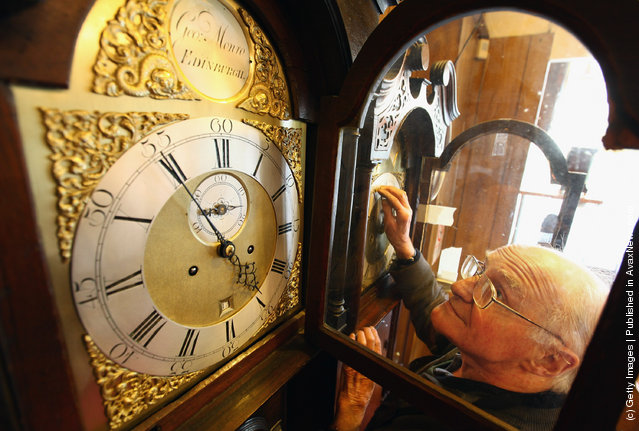
Archie McQuater, 82-year-old clockmaker at Craiglea clocks, adjusts a clock face to British Summer Time (BST) on March 25, 2011 in Edinburgh, Scotland. Clocks will be put forward by one hour at 1:00 AM GMT on Sunday March 27, 2011 officially the start of British Summer Time. British Summer Time will end this year on October 30. (Photo by Jeff J Mitchell/Getty Images)
Details
26 Mar 2011 12:06:00


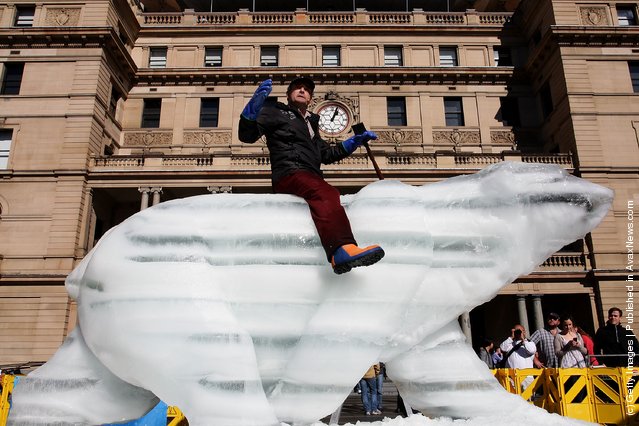
British artist, Mark Coreth sits on top of the “Sydney Ice Bear” carved from a 10 tonne block of ice to illustrate how humans affect climate change in the Arctic at Customs House on June 3, 2011 in Sydney, Australia. The public will be welcomed to touch the bear, and leave an imprint which will begin the melting process and act as a metaphor for how humans affect the environment. The ice bear's has visited six cities on it's global tour since 2009; the visit to Sydney coincides with World Environment Day on June 5. (Photo by Lisa Maree Williams/Getty Images)
Details
03 Jun 2011 08:21:00
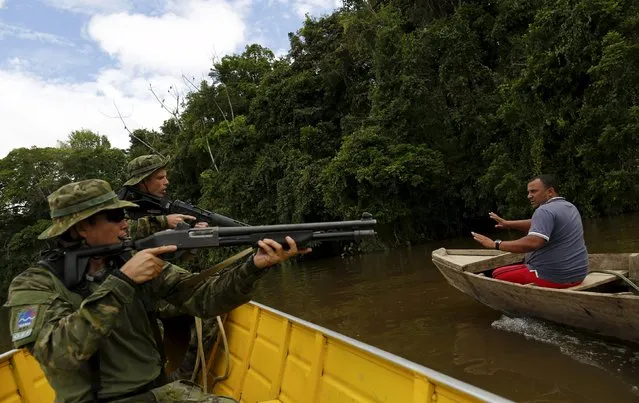
A gold prospector is detained by agents of Brazil’s environmental agency on the Uraricoera River during an operation against illegal gold mining on indigenous land, in the heart of the Amazon rainforest, in Roraima state, Brazil April 15, 2016. (Photo by Bruno Kelly/Reuters)

A gold prospector is detained by agents of Brazil’s environmental agency on the Uraricoera River during an operation against illegal gold mining on indigenous land, in the heart of the Amazon rainforest, in Roraima state, Brazil April 15, 2016. At over 9.5 million hectares, the Yanomami territory is twice the size of Switzerland and home to around 27,000 indians. The land has legally belonged to the Yanomami since 1992, but illegal miners continue to plague the area, sawing down trees and poisoning rivers with mercury in their lust for gold. (Photo by Bruno Kelly/Reuters)
Details
27 Apr 2016 10:01:00
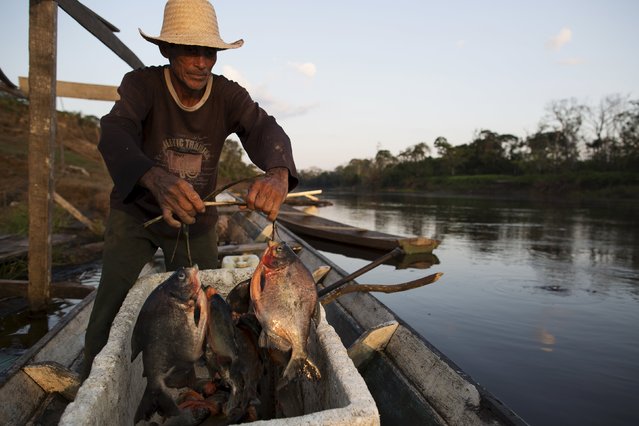
Francisco da Silva Vale, 61, cools off fish with ice produced on solar-powered ice machines at Vila Nova do Amana community in the Sustainable Development Reserve, in Amazonas state, Brazil, September 23, 2015. Three solar-powered machines, are producing about ninety kilos of ice per day, in a region with poor access to electric energy, which used to be produced only with diesel oil, in the Amazon rain forest. (Photo by Bruno Kelly/Reuters)

Francisco da Silva Vale, 61, cools off fish with ice produced on solar-powered ice machines at Vila Nova do Amana community in the Sustainable Development Reserve, in Amazonas state, Brazil, September 23, 2015. Three solar-powered machines, are producing about ninety kilos of ice per day, in a region with poor access to electric energy, which used to be produced only with diesel oil, in the Amazon rain forest. (Photo by Bruno Kelly/Reuters)
Details
10 Oct 2015 08:03:00
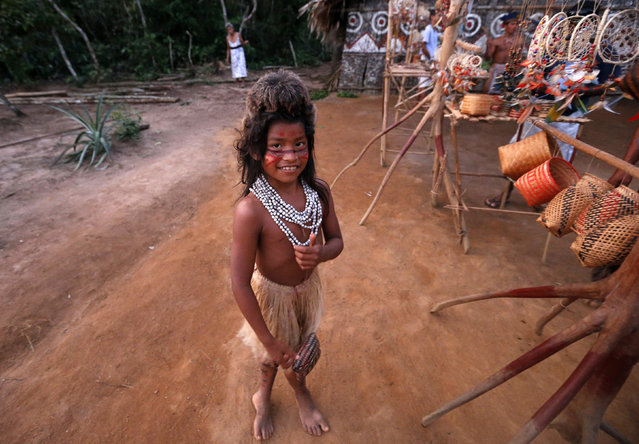
A girl of the Amazonian Tatuyo tribe poses while waiting to sell crafts to tourists in her village in the Rio Negro (Black River) near Manaus city, a World Cup host city, June 23, 2014. Because of their proximity to host city Manaus and their warm welcome, the Tatuyo have enjoyed three weeks of brisk business thanks to the World Cup. Usually, they host between 10 and 30 tourists a day. During the World Cup, this number has rocketed to 250 a day, They have become richer and other communities now come to them to sell them juices and fishes. (Photo by Andres Stapff/Reuters)

A girl of the Amazonian Tatuyo tribe poses while waiting to sell crafts to tourists in her village in the Rio Negro (Black River) near Manaus city, a World Cup host city, June 23, 2014. Because of their proximity to host city Manaus and their warm welcome, the Tatuyo have enjoyed three weeks of brisk business thanks to the World Cup. Usually, they host between 10 and 30 tourists a day. During the World Cup, this number has rocketed to 250 a day, They have become richer and other communities now come to them to sell them juices and fishes. (Photo by Andres Stapff/Reuters)
Details
27 Jun 2014 10:30:00