Loading...
Done
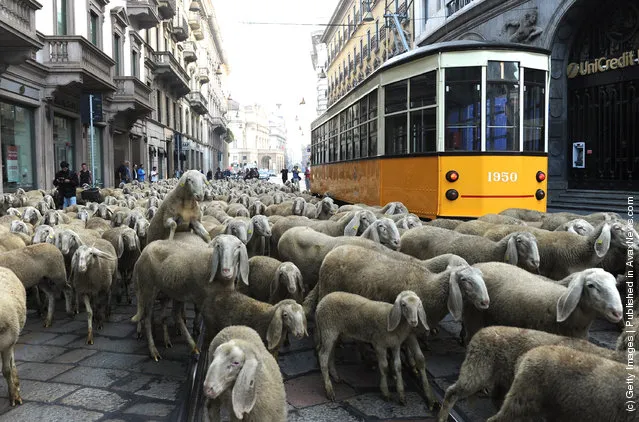
Sheep In The Streets Of Milan During Filming For The Last Shepherd

Sheep are waiting in Via Manzoni before the final filming of the Last Shepherd on October 1, 2011 in Milan, Italy. Directed by Marco Bonfanti, L'Ultimo Pastore (The Last Shepherd) tells the story of the life of Renato Zucchelli, the last nomadic shepherd in Milan. (Photo by Pier Marco Tacca/Getty Images)
Details
02 Oct 2011 12:49:00
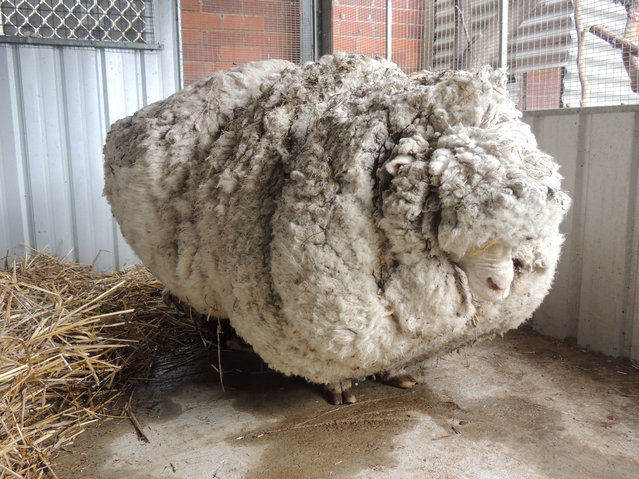
In this photo provided by the RSPCA/Australian Capital Territory, an overgrown sheep found in Australian scrubland is prepared to be shorn in Canberra, Australia, Thursday, September 3, 2015. The wild, castrated merino ram named Chris, yielded 40 kilograms (89 pounds) of wool – the equivalent of 30 sweaters – and sheded almost half his body weight. (Photo by RSPCA ACTvia AP Photo)

In this photo provided by the RSPCA/Australian Capital Territory, an overgrown sheep found in Australian scrubland is prepared to be shorn in Canberra, Australia, Thursday, September 3, 2015. The wild, castrated merino ram named Chris, yielded 40 kilograms (89 pounds) of wool – the equivalent of 30 sweaters – and sheded almost half his body weight. (Photo by RSPCA ACTvia AP Photo)
Details
04 Sep 2015 13:50:00
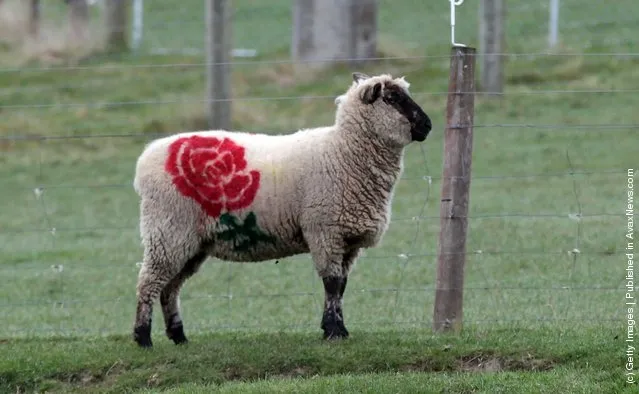
Sheep, painted in the colours of World Cup participating country

A sheep, painted in the colours of World Cup participating country England looks on on September 11, 2011 in Dunedin, New Zealand. (Photo by David Rogers/Getty Images)
Details
12 Sep 2011 10:38:00
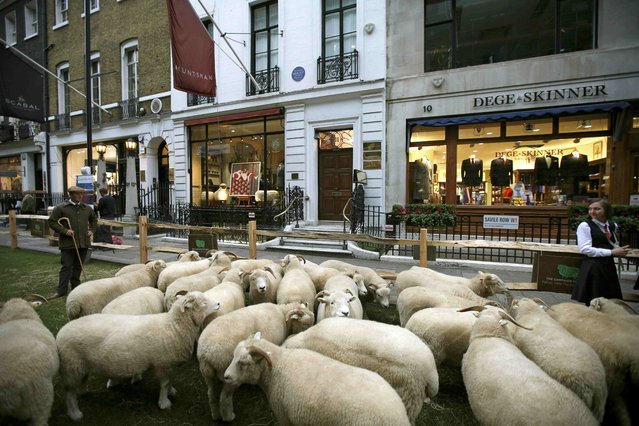
Shepherd Ben Blackmore stands with his flock of Exmoor Horn sheep in Savile Row, London, Britain October 5, 2015. (Photo by Peter Nicholls/Reuters)

Shepherd Ben Blackmore stands with his flock of Exmoor Horn sheep in Savile Row, London, Britain October 5, 2015. The Campaign for Wool marked the beginning of Britain's national Wool Week on Monday, on one of London's most renowned streets. (Photo by Peter Nicholls/Reuters)
Details
08 Oct 2015 08:03:00
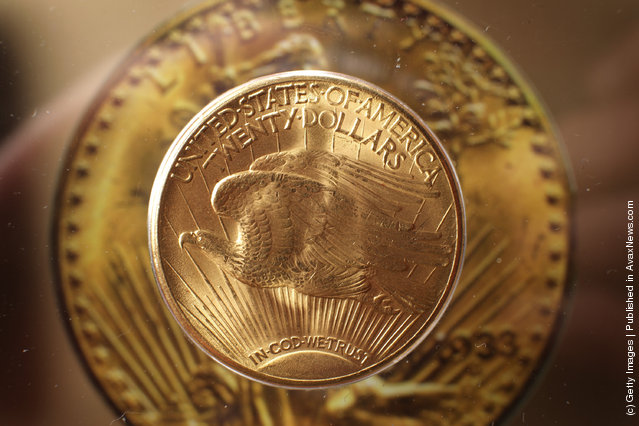
A 'Double Eagle' gold twenty dollar coin

“A Double Eagle is a gold coin of the United States with a denomination of $20. (Its gold content of 0.9675 troy oz was worth $20 at the then official price of $20.67/oz). The coins are made from a 90% gold (0.900 fine = 21.6 kt) and 10% copper alloy”. – Wikipedia

Photo: A “Double Eagle” gold twenty dollar coin is displayed above a catalogue picture showing the reverse side of the coin at Goldsmith's Hall on March 2, 2012 in London, England. Nearly half a million of these coins were originally minted in the midst of the Great Depression in the US. Only 13 are known today after the rest were melted down before they ever left the US Mint, sacrificed as part of a strategy to stabalise the American economy. In 2002 a Double Eagle sold at auction for $7.6 million. (Photo by Peter Macdiarmid/Getty Images)
Details
03 Mar 2012 10:37:00
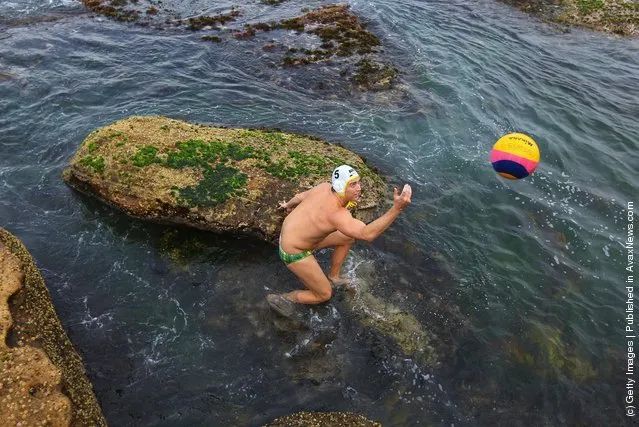
Rob Maitland of Australia collects a ball from the ocean during warm-up for the Water Polo by the Sea match between Australia and the United States of America at at Bondi Icebergs on Bondi Beach

Rob Maitland of Australia collects a ball from the ocean during warm-up for the Water Polo by the Sea match between Australia and the United States of America at at Bondi Icebergs on Bondi Beach on January 4, 2012 in Sydney, Australia. (Photo by Mark Kolbe/Getty Images)
Details
05 Jan 2012 11:53:00
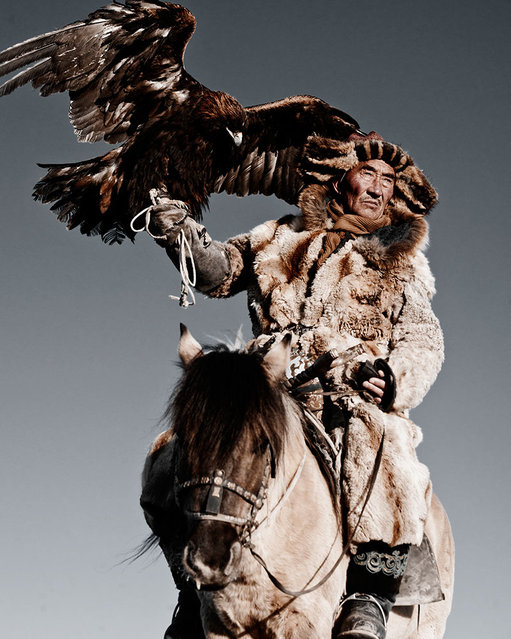
Fine Horses And Fierce Eagles Are The wings Of The Kazakh

The Kazakhs are the descendants of Turkic, Mongolic and Indo-Iranian tribes and Huns that populated the territory between Siberia and the Black Sea. They are a semi-nomadic people and have roamed the mountains and valleys of western Mongolia with their herds since the 19th century. The ancient art of eagle hunting is one of many traditions and skills that the Kazakhs have, in recent decades, been able to hold on to. They rely on their clan and herds, believing in pre-Islamic cults of the sky, the ancestors, fire and the supernatural forces of good and evil spirits.
Details
20 Feb 2014 12:12:00


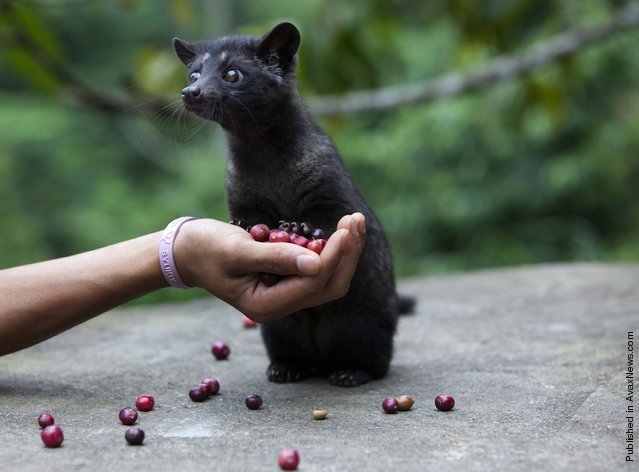
“Kopi luwak (Malay pronunciation), or civet coffee, is one of the world's most expensive and low-production coffee. It is made from the beans of coffee berries which have been eaten by the Asian Palm Civet (Paradoxurus hermaphroditus) and other related civets, then passed through its digestive tract. ...
Details
19 Mar 2011 18:41:00