Loading...
Done
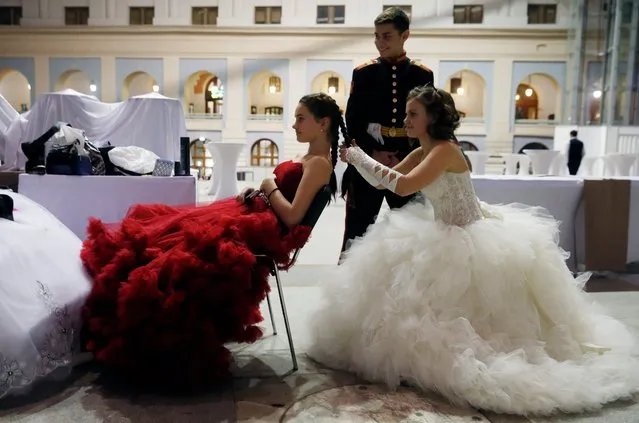
Russian participants adjust their hair, preparing for the Kremlin Cadet Ball in Moscow, Russia, 08 December 2016. (Photo by Sergei Chirikov/EPA)

Russian participants adjust their hair, preparing for the Kremlin Cadet Ball in Moscow, Russia, 08 December 2016. Pupils of cadet schools from different parts in Russia gathered for the first Kremlin Ball, restoring an old tradition of Russian officers and noble girls. (Photo by Sergei Chirikov/EPA)
Details
10 Dec 2016 08:53:00
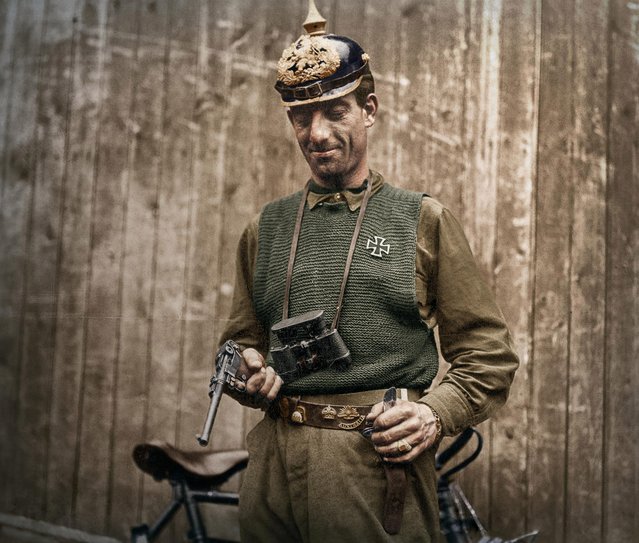
One image shows an unidentified American soldier posing with a pistol, helmet, and Iron Cross medal taken from a German soldier, 1918. (Photo by Mario Unger/Mediadrumworld)

The faces of war have been brought back to life after a series of World War One photographs were expertly colourised. The black and white snaps were painstakingly restored and colourised by photographer Mario Unger (53) from Rotenturm, Austria. Here: One image shows an unidentified American soldier posing with a pistol, helmet, and Iron Cross medal taken from a German soldier, 1918. (Photo by Mario Unger/Mediadrumworld)
Details
04 Dec 2017 07:47:00
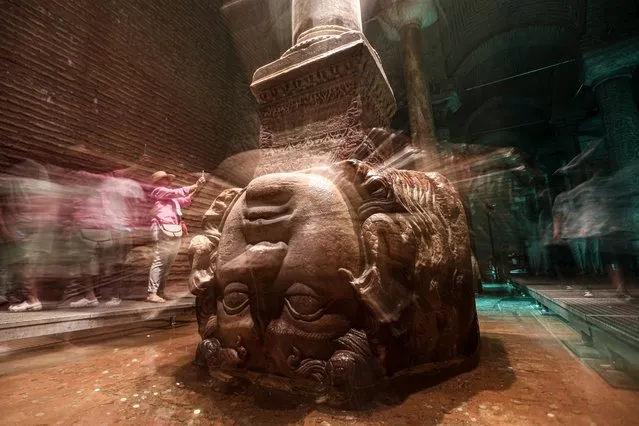
People walk behind the Medusa head in the Basilica Cistern in Istanbul, Turkey, 24 July 2022. (Photo by Sedat Suna/EPA/EFE)

People walk behind the Medusa head in the Basilica Cistern in Istanbul, Turkey, 24 July 2022. The site has been restored by the Istanbul Metropolitan Municipality and is now open for visitors again. The Byzantine structure was commissioned by Emperor Justinian and built in 532. The underground Basilica, also called Underground Cistern, is the largest well preserved cistern in Istanbul, which rests on a total of 336 columns. According to historical texts, more than 7,000 slaves were involved in the construction of the cistern. (Photo by Sedat Suna/EPA/EFE)

Details
07 Aug 2022 05:22:00
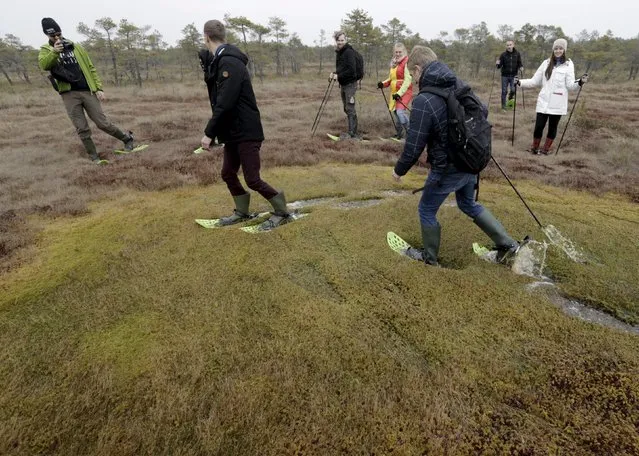
People use snowshoes during a tour of the Great Kemeri Bog, Latvia, October 17, 2015. (Photo by Ints Kalnins/Reuters)

People use snowshoes during a tour of the Great Kemeri Bog, Latvia, October 17, 2015. The Kemeri bog is more than 8,000 years old and is one of the largest dry moss swamps in the Baltics. A more than decade-long joint restoration of the bog by the European Union and the Latvian government helped the bog recover its high moss marshes, damp black alder forests, floodplain meadows and seaside lakes – features now considered rare in Europe due to industrialisation. (Photo by Ints Kalnins/Reuters)
Details
20 Oct 2015 08:03:00
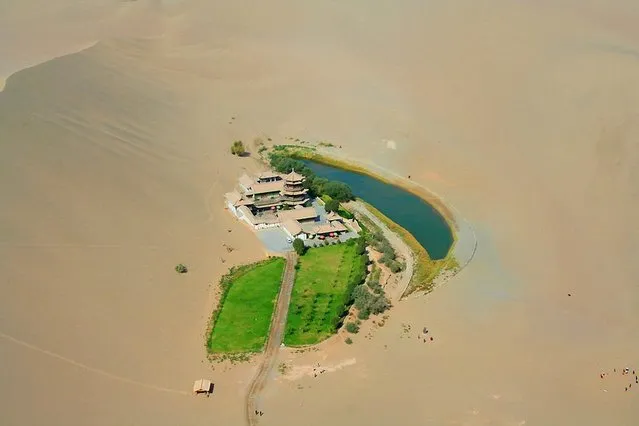
Crescent Lake In China

Yueyaquan is a crescent-shaped lake in an oasis, 6 km south of the city of Dunhuang in Gansu Province, China. It was named Yueyaquan in the Qing Dynasty. According to measurements made in 1960, the average depth of the lake was 4 to 5 meters, with a maximum depth of 7.5 metres In the following 40 years, the depth of the lake continually declined. In the early 1990s, its area had shrunk to only 5,500 m2 with an average depth of 0.9 meter (maximum 1.3 meter). In 2006, the local government with help of the central government started to fill the lake and restore its depth; its depth and size have been growing yearly since then. The lake and the surrounding deserts are very popular with tourists, who are offered camel and 4x4 rides.
Details
25 Jun 2013 10:29:00


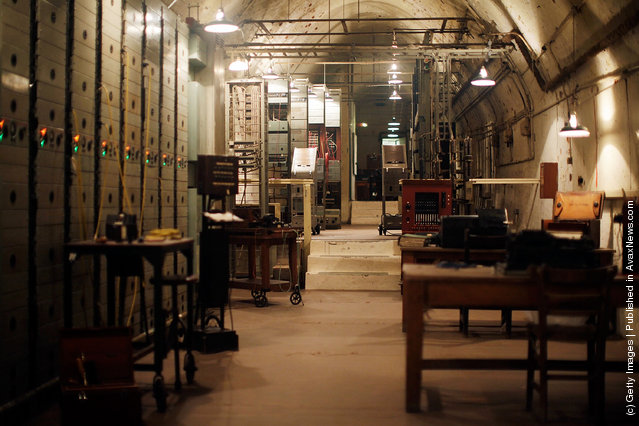
“Dover Castle is a medieval castle in the town of the same name in the English county of Kent. It was founded in the 12th century and has been described as the “Key to England” due to its defensive significance throughout history. It is the largest castle in England.

The outbreak of the Second World War in 1939 saw the tunnels converted first into an air-raid shelter and then later into a military command centre and underground hospital. In May 1940, Admiral Sir Bertram Ramsey directed the evacuation of French and British soldiers from Dunkirk, code-named Operation Dynamo, from his headquarters in the cliff tunnels”. – Wikipedia

Photo: The Repeater Station in the subterranean tunnels underneath Dover Castle, which has been restored by English Heritage for a public exhibition on June 3, 2011 in Dover, England. The evacuation of allied soldiers from Dunkirk was masterminded and co-ordinated from the secret command and control centre in the tunnels deep below the castle. (Photo by Matthew Lloyd/Getty Images)
Details
07 Jun 2011 09:26:00
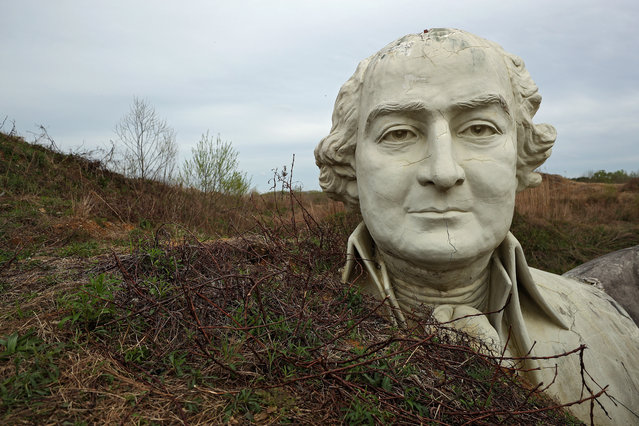
Standing nearly 20-feet-high, 43 U.S. Presidential busts rest on April 9, 2019 in Croaker, Virginia. (Photo by Patrick Smith/Getty Images)

Standing nearly 20-feet-high, 43 U.S. Presidential busts rest on April 9, 2019 in Croaker, Virginia. From George Washington to George W. Bush., these remnants of bankrupted Presidents Park are stored on the property of Howard Hankins. He has recently partnered with historian and photographer John Plashal to provide legal tour of the busts. According to multiple media reports, Hankins has said he is seeking to restore and transport the massive sculptures, but needs to fund more than $1.5 million in order to do so. (Photo by Patrick Smith/Getty Images)
Details
11 Apr 2019 00:05:00
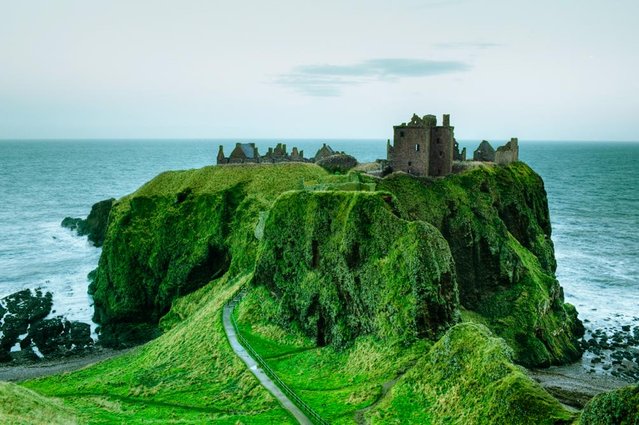
Dunnottar Castle In Scottish

Dunnottar Castleis a ruined medieval fortress located upon a rocky headland on the north-east coast of Scotland, about 3 kilometres (1.9 mi) south of Stonehaven. The surviving buildings are largely of the 15th and 16th centuries, but the site is believed to have been fortified in the Early Middle Ages. Dunnottar has played a prominent role in the history of Scotland through to the 18th-century Jacobite risings because of its strategic location and the strength of its situation. Dunnottar is best known as the place where the Honours of Scotland, the Scottish crown jewels, were hidden from Oliver Cromwell's invading army in the 17th century. The property of the Keiths from the 14th century, and the seat of the Earl Marischal, Dunnottar declined after the last Earl forfeited his titles by taking part in the Jacobite rebellion of 1715. The castle was restored in the 20th century and is now open to the public.
Details
13 Jan 2014 11:31:00