Loading...
Done
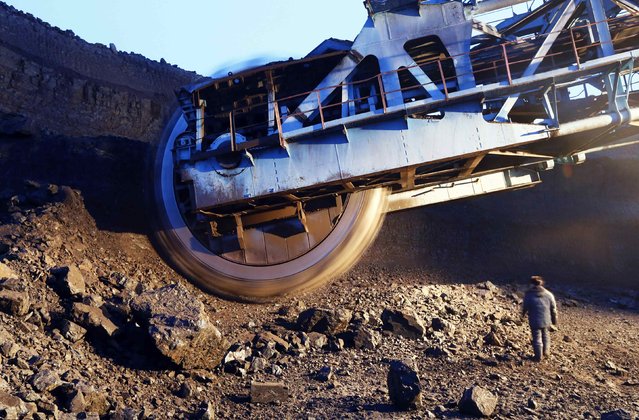
An employee walks near a rotary dredge which works on the coal face of the Borodinsky opencast colliery, near the Siberian town of Borodino, east of Krasnoyarsk, December 9, 2014. The Borodinsky colliery, 9 km (5.6 miles) long and more than 100 meters (328 feet) deep, annually produces more than 20 million tons of coal and is considered to be the biggest opencast coal mine in Russia, according to official representatives. (Photo by Ilya Naymushin/Reuters)

An employee walks near a rotary dredge which works on the coal face of the Borodinsky opencast colliery, near the Siberian town of Borodino, east of Krasnoyarsk, December 9, 2014. The Borodinsky colliery, 9 km (5.6 miles) long and more than 100 meters (328 feet) deep, annually produces more than 20 million tons of coal and is considered to be the biggest opencast coal mine in Russia, according to official representatives. (Photo by Ilya Naymushin/Reuters)
Details
11 Dec 2014 13:29:00
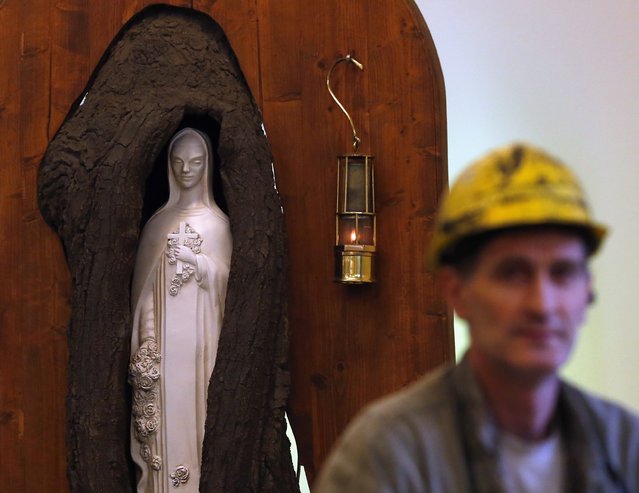
A miner sits front of the statue of St. Barbara, saint of the miners, during last working day at Hungary's last hard coal deep-cast mine at Markushegy December 23, 2014.The underground mine, west of the capital city Budapest, has to stop producing coal at the end of this year in line with a European Union effort to shut down uncompetitive hard coal mines. (Photo by Laszlo Balogh/Reuters)

A miner sits front of the statue of St. Barbara, saint of the miners, during last working day at Hungary's last hard coal deep-cast mine at Markushegy December 23, 2014.The underground mine, west of the capital city Budapest, has to stop producing coal at the end of this year in line with a European Union effort to shut down uncompetitive hard coal mines. (Photo by Laszlo Balogh/Reuters)
Details
24 Dec 2014 13:36:00
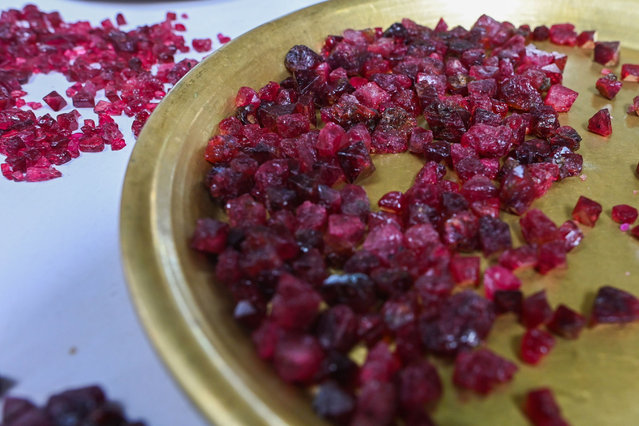
This photo taken on May 17, 2019 shows rough rubies displayed at the gems market in Mogok town, north of Mandalay. (Photo by Ye Aung Thu/AFP Photo)

This photo taken on May 17, 2019 shows rough rubies displayed at the gems market in Mogok town, north of Mandalay. Burrowing deep underground, thousands of informal miners risk their lives to find gleaming red gems as a law change spurs opportunity in Myanmar's “land of rubies”. (Photo by Ye Aung Thu/AFP Photo)
Details
29 May 2019 00:01:00
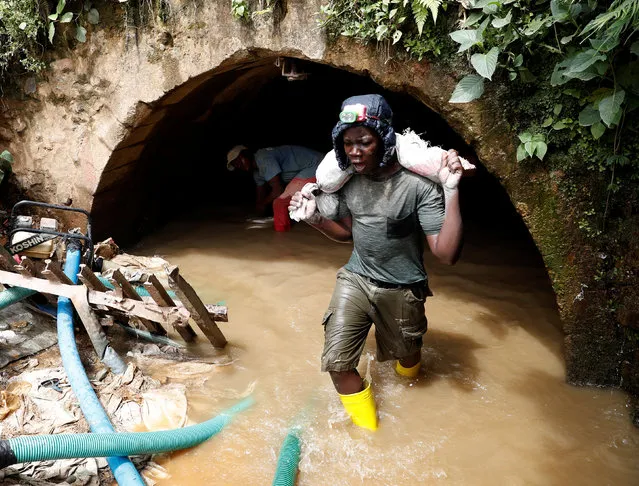
Men work at Makala gold mine camp near the town of Mongbwalu in Ituri province, eastern Democratic Republic of Congo on April 7, 2018. (Photo by Goran Tomasevic/Reuters)

Men work at Makala gold mine camp near the town of Mongbwalu in Ituri province, eastern Democratic Republic of Congo on April 7, 2018. (Photo by Goran Tomasevic/Reuters)
Details
13 Apr 2018 00:05:00
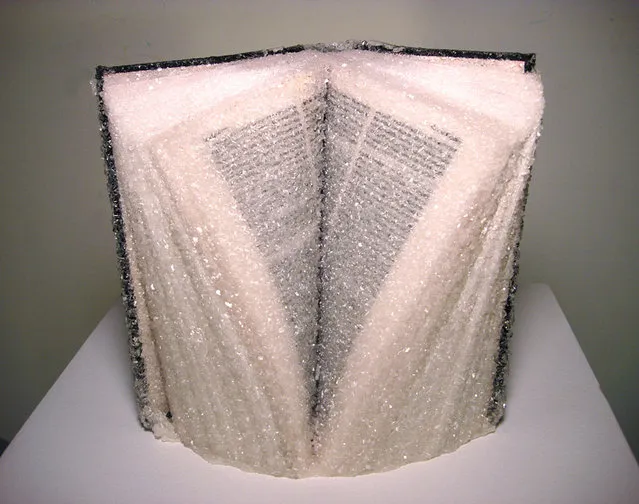
Grows Crystals On Books By Alexis Arnold

People will spout about impermanence of digital records, but books are really fragile, too. Alexis Arnold from San Francisco wanted to illustrate that with her project The Crystallized Book: collecting books and growing Borax crystals on them. Books range from literature classics to magazines, and there’s even a mysterious and arcane tome called “Linux: The Complete Manual”.
Details
12 Jun 2015 10:55:00
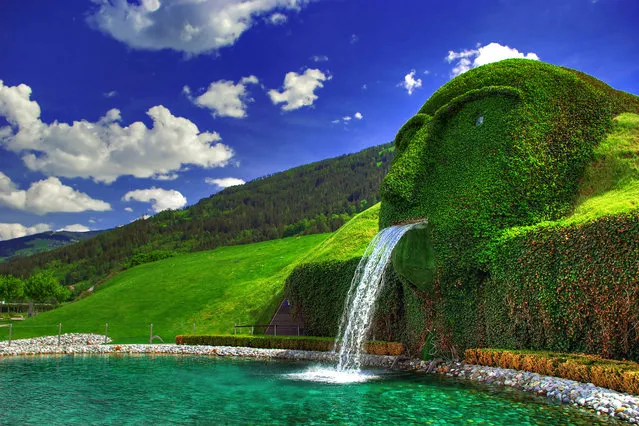
The Swarovski Crystal Head Fountain In Austria

A stone giant exhausted after his long travels decided to rest a while and drink from a pond far below. He lay down and started drinking from the crystal clear pond. So delicious was the water that he was unable to quench his thirst no matter how much he tried. Weeks have passed, months, years. The body of the stone giant became one with the hills and even his tongue has turned to water. This might seem like a fairy tale, yet you’ll be able to see this stone giant if you ever come to Wattens, Austria. He’s still there, guarding the entrance to Swarovski Kristallwelted, otherwise known as the Crystal Worlds. This is a one-of-a-kind theme park that was created by the people who first created Swarovski crystals.
Details
02 Mar 2015 08:30:00
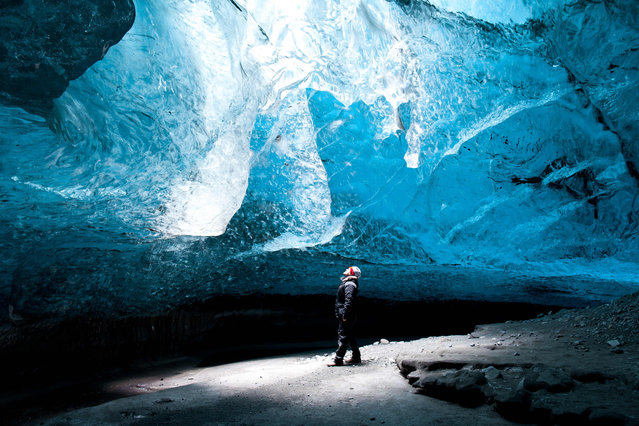
A wide view of Rob Lott  in the crystal ice cave in the Vatnajokull Glacier, Iceland. (Photo by Rob Lott/Barcroft Media)

Shimmering clearest blue and stretching as far as the eye can see, this is one of Iceland's famed crystal ice caves. The giant solid waves look frozen in time but they are slowly moving along as part of the Vatnajokull Glacier – which stretches across eight per cent of the island. The images were captured in February 2014 by British photographer Rob Lott, 49. Photo: A wide view of Rob Lott in the crystal ice cave in the Vatnajokull Glacier, Iceland. (Photo by Rob Lott/Barcroft Media)
Details
17 Mar 2014 08:26:00
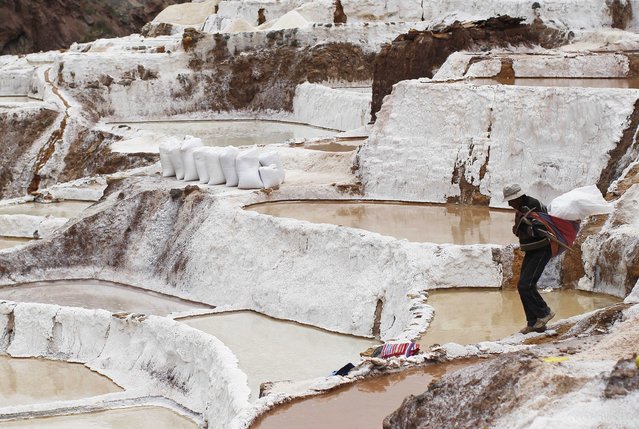
A worker carries a bag of salt after collecting it from a pond at the Maras mines in Cuzco December 3, 2014. Salt has been obtained in Maras since pre-Incan times by evaporating highly salty local subterranean stream water. The water is intricately channelled through constructions, flowing gradually down onto several hundred ancient terraced ponds. (Photo by Enrique Castro-Mendivil/Reuters)

A worker carries a bag of salt after collecting it from a pond at the Maras mines in Cuzco December 3, 2014. Salt has been obtained in Maras since pre-Incan times by evaporating highly salty local subterranean stream water. The water is intricately channelled through constructions, flowing gradually down onto several hundred ancient terraced ponds. From each pond, a local member of the mine cooperative can produce 150 to 200 kilos per month which can be sold in the markets at $0.34 per kilogram, according to miners. (Photo by Enrique Castro-Mendivil/Reuters)
Details
05 Dec 2014 13:36:00