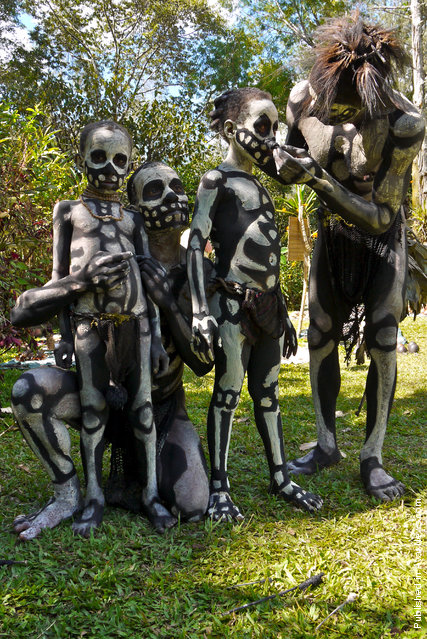
Skeleton bodypainting in Chimbu tribe. Village Mindima, Simbu (a Highlands Region province in Papua New Guinea), September 14, 2009. (Photo by Rita Willaert; Source: Flickr)
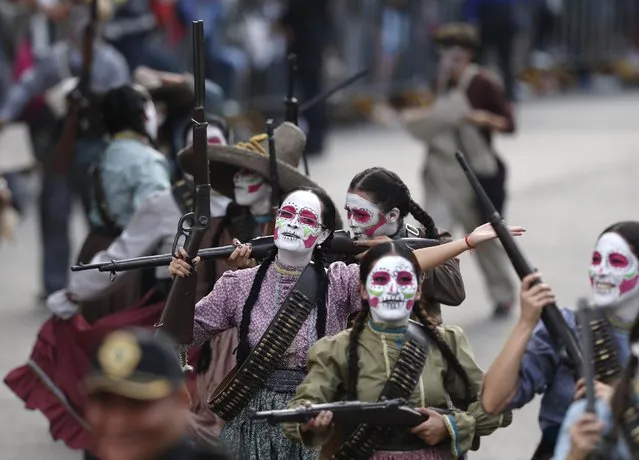
Performers participate in the Day of the Dead parade on Mexico City's main Reforma Avenue, Saturday, October 28, 2017. Mexico's capital is holding its Day of the Dead parade, an idea actually born out of the imagination of a scriptwriter for the James Bond movie “Spectre”. (Photo by Eduardo Verdugo/AP Photo)
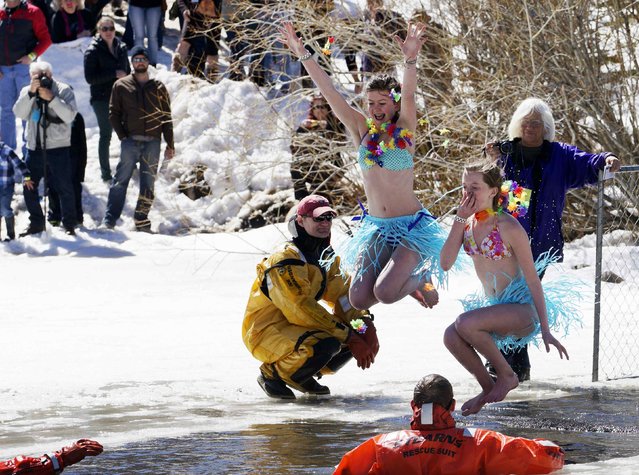
Two women jump into a frozen pond as they compete in the Polar Plunge at Frozen Dead Guy Days in Nederland, Colorado March 14, 2015. The winter festival in the small mountain town commemorates the 1994 discovery of the corpse of Bredo Morstol, which is now housed in a shed on dry ice above the town. (Photo by Rick Wilking/Reuters)
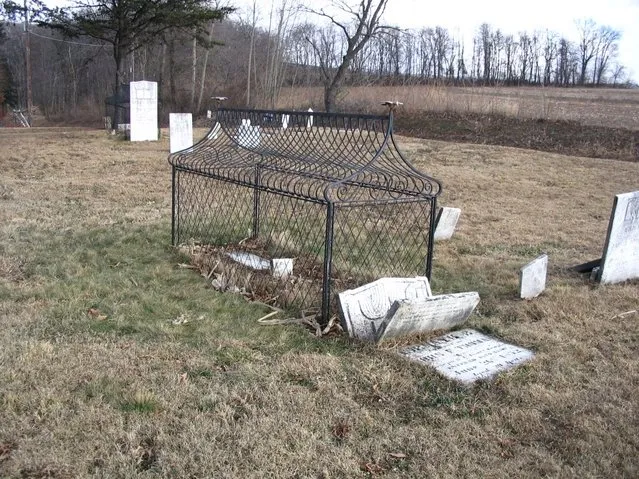
Mortsafes were contraptions designed to protect graves from disturbance. Resurrectionists had supplied the schools of anatomy in Scotland since the early 18th century. This was due to the necessity for medical students to learn anatomy by attending dissections of human subjects, which was frustrated by the very limited allowance of dead bodies – for example the corpses of executed criminals – granted by the government, which controlled the supply.
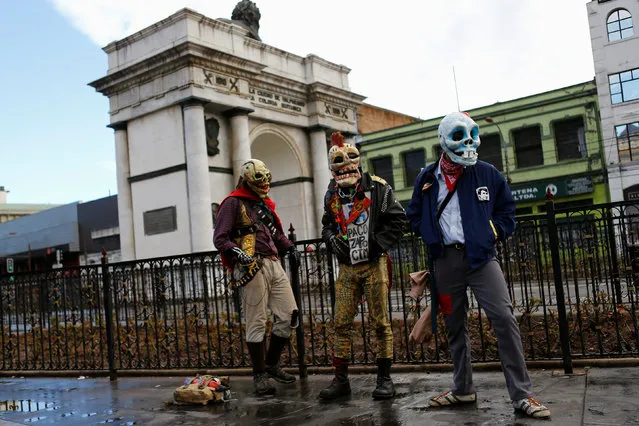
Demonstrators wear skull masks during an anti government protest, as Chile's President Michelle Bachelet delivers a speech inside the National Congress, in Valparaiso city, Chile May 21, 2016. (Photo by Ivan Alvarado/Reuters)
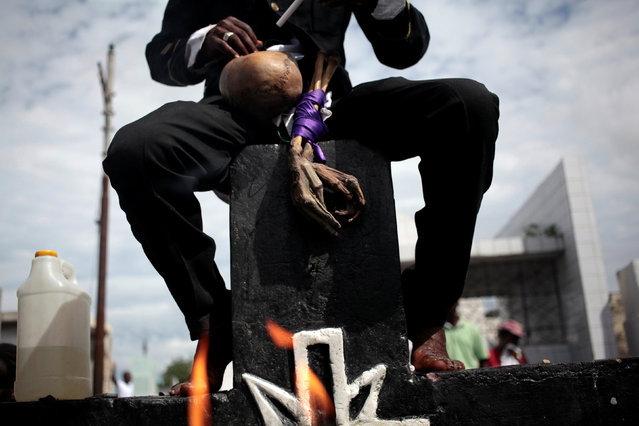
A voodoo believer, dressed as "Gede", a spirit of voodoo, sits on the cross of Baron Samdi during celebrations at the cemetery of Port-au-Prince, Haiti, November 1, 2016. Voodoo believers and devotees offer candles, alcohol and food. The Day of the Dead is celebrated on the first two days of November during All Saints and All Souls Day. (Photo by Andres Martinez Casares/Reuters)
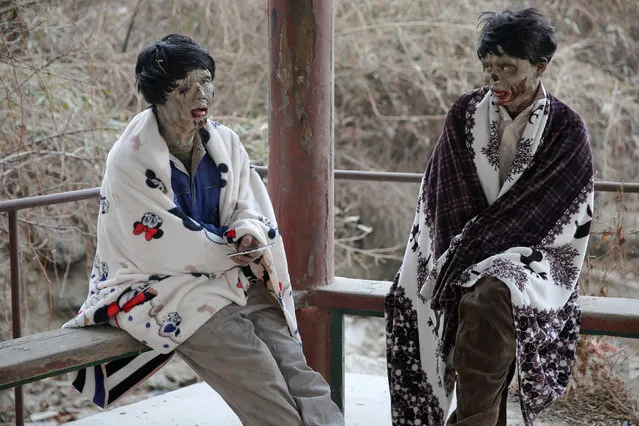
Actors wrapped in blankets react at the set of the post-apocalyptic movie “Zombie Era” at an abandoned factory complex in Langfang, Hebei province, China December 16, 2016. (Photo by Damir Sagolj/Reuters)
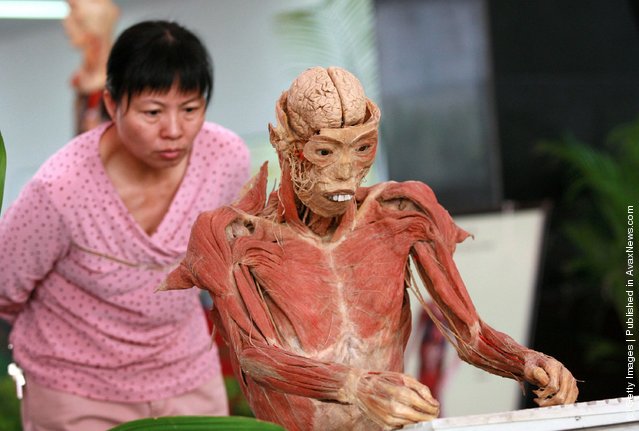
A visitor views a human body specimen during the “Human Body's Wonder Scientific Travelling Exhibition” at the Haikou Gymnasium April 30, 2006 in Haikou of Hainan Province, China. The exhibition displays 13 complete real human body specimens and about 300 pieces of small samples, such as organs, skin, etc with the purpose to promote science and help people know more about their bodies. (Photo by China Photos/Getty Images)