Loading...
Done
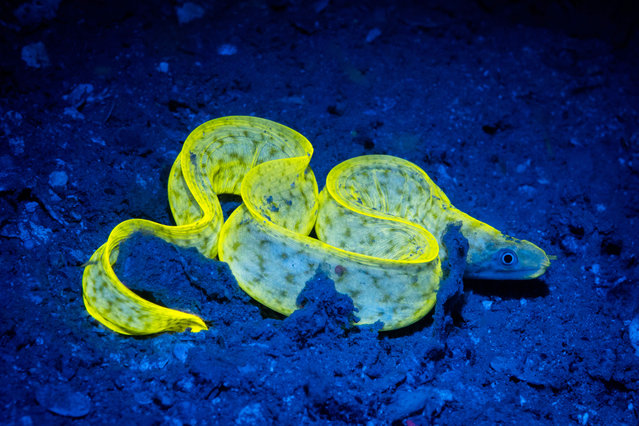
“In these photos, I was shining a blue light on the coral and various biofluorescent animals”. (Photo by Simon Pierce/Caters News Agency)

Neon sea creatures have been captured lighting up the ocean with their vibrant colors – in what looked like a scene from Avatar. Photographer Simon Pierce, 39, took the images over several months after visiting both Nosy Sakatia in Madagascar and Mafia Island in Tanzania recently. (Photo by Simon Pierce/Caters News Agency)
Details
12 Dec 2018 00:05:00
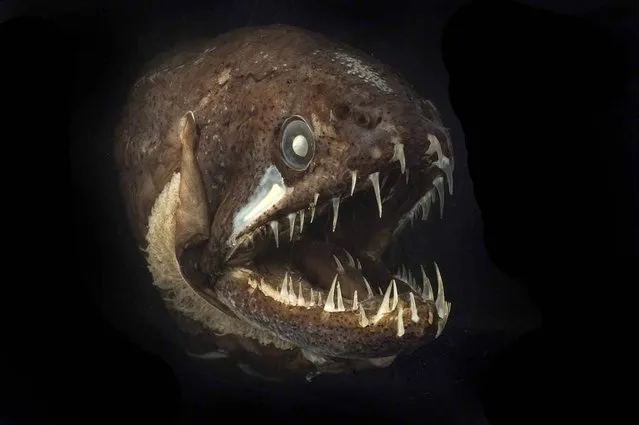
Imagine living in the sea where it is permanently dark, cold, and food is hard to find. For many animals at depth, it may be weeks to months between meals. If you find something to eat, you have to hang on to it

Imagine living in the sea where it is permanently dark, cold, and food is hard to find. For many animals at depth, it may be weeks to months between meals. If you find something to eat, you have to hang on to it. This is why so many deep-sea fishes have lots of big teeth. This dragonfish, spotted off the coast of Australia, even has teeth on its tongue. They would be terrifying animals ... if they weren’t the size of a banana. (Photo by Julian Finn/Museum Victoria)
Details
21 May 2012 12:14:00
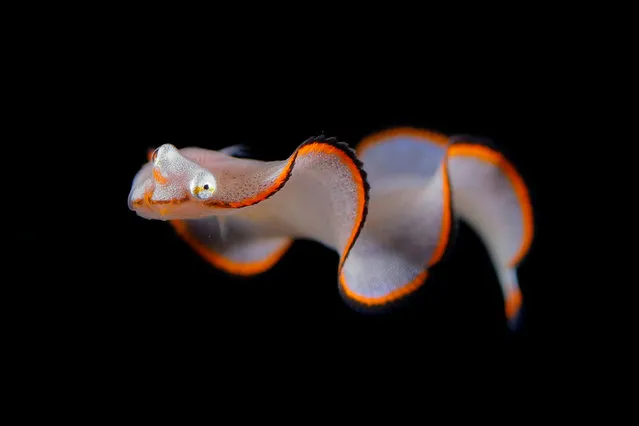
Batesian mimicry by a Soleichthys fish larva. (Photo by Ryo Minemizu/The Guardian)

Ryo Minemizu, one of Japan’s emerging stars in the field of marine life photography and the 2017 winner of the Nikkei National Geographic photography prize, captures the beauty and complexity of plankton that drift in our planet’s oceans and other bodies of water in meticulous detail. Here: Batesian mimicry by a Soleichthys fish larva. (Photo by Ryo Minemizu/The Guardian)
Details
21 Aug 2018 00:05:00
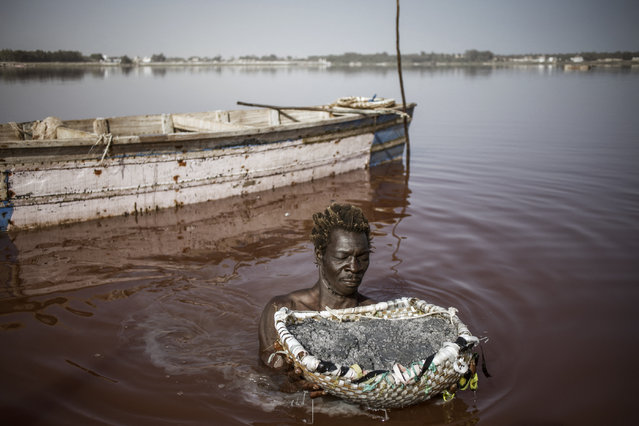
Toure, a Gambian salt harvester, holds a basket filled with  the salt collected from the crust of the bottom of the Lake Retba (Pink Lake) in Senegal on March 16, 2021. Lake Retba, divided from the Atlantic Ocean by a narrow corridor of dunes, owes its name to the pink waters caused by the Dunaliella salina algae and is known for its high salt content, up to 40% in some areas. (Photo by Marco Longari/AFP Photo)

Toure, a Gambian salt harvester, holds a basket filled with the salt collected from the crust of the bottom of the Lake Retba (Pink Lake) in Senegal on March 16, 2021. Lake Retba, divided from the Atlantic Ocean by a narrow corridor of dunes, owes its name to the pink waters caused by the Dunaliella salina algae and is known for its high salt content, up to 40% in some areas. (Photo by Marco Longari/AFP Photo)
Details
24 Mar 2021 10:29:00
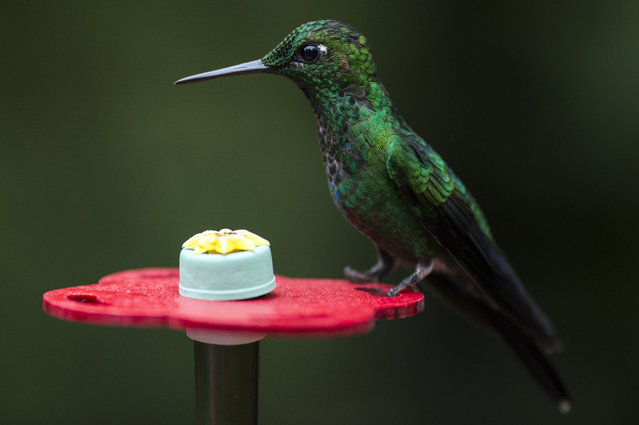
A Green Crowned Brilliant is pictured at a Hummingbird feeding station on January 15, 2016 in Alajuela Costa Rica. (Photo by Dan Kitwood/Getty Images)

A Green Crowned Brilliant is pictured at a Hummingbird feeding station on January 15, 2016 in Alajuela Costa Rica. Of the 338 known species of Hummingbird worldwide there are around 50 in Costa Rica. Hummingbirds are named for the distinctive sound made by their tiny beating wings, and are admired for their vibrantly coloured iridescent plumage. Their ability to hover, with wings beating between 12 and 90 times a second, and to fly backwards makes them different from all other birds. (Photo by Dan Kitwood/Getty Images)
Details
05 Feb 2016 10:45:00
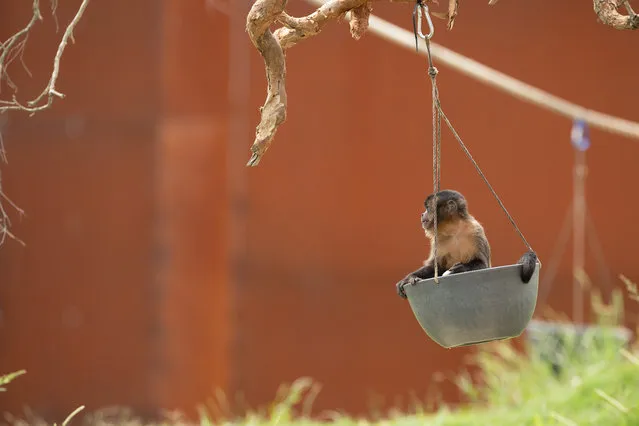
A Tufted Capuchin sits in a hanging food tray on a tree in it's enclosure at Sydney Zoo on February 24, 2020 in Sydney, Australia. Sydney Zoo, located at Bungarribee Park in Western Sydney, is the first new zoo to be built in Sydney in more than 100 years. The Zoo opened to the public on 7 December 2019. (Photo by Mark Kolbe/Getty Images)

A Tufted Capuchin sits in a hanging food tray on a tree in it's enclosure at Sydney Zoo on February 24, 2020 in Sydney, Australia. Sydney Zoo, located at Bungarribee Park in Western Sydney, is the first new zoo to be built in Sydney in more than 100 years. The Zoo opened to the public on 7 December 2019. (Photo by Mark Kolbe/Getty Images)
Details
01 Mar 2020 00:03:00
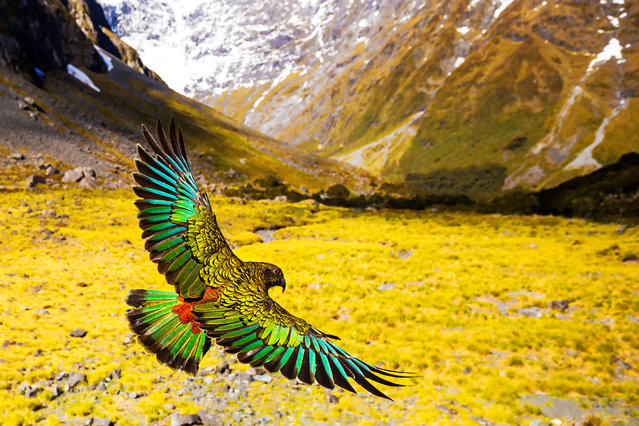
Kea are the only true alpine parrots in the world and thrive as cunning opportunists in the freezing conditions of the Southern Alps. Kea are thought to have developed their wide array of food-finding strategies during the last great ice age, where they learned to adapt using their unusual powers of curiosity. (Photo by Tom Walker/BBC Pictures/The Guardian)

Kea are the only true alpine parrots in the world and thrive as cunning opportunists in the freezing conditions of the Southern Alps. Kea are thought to have developed their wide array of food-finding strategies during the last great ice age, where they learned to adapt using their unusual powers of curiosity. (Photo by Tom Walker/BBC Pictures/The Guardian)
Details
19 Jul 2016 13:03:00
A policeman chases away a farmer during a protest against the newly passed farm bills at Singhu border near Delhi, India, November 27, 2020. (Photo by Danish Siddiqui/Reuters)

A policeman chases away a farmer during a protest against the newly passed farm bills at Singhu border near Delhi, India, November 27, 2020. (Photo by Danish Siddiqui/Reuters)
Details
09 Dec 2020 00:05:00