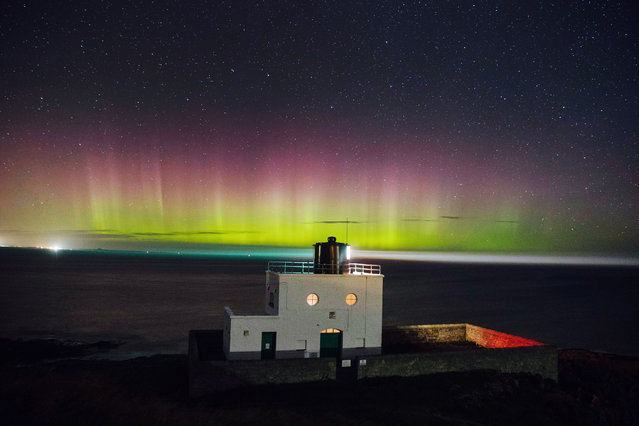
The northern lights, or aurora borealis, appear in the sky over the Bamburgh lighthouse at Stag Rock in Northumberland, England on September 28, 2016. (Photo by Owen Humphreys/PA Wire via ZUMA Press)
Defined according to wikipedia it is “a recent and informal geologic chronological term that serves to mark the evidence and extent of human activities that have had a significant global impact on the Earth’s ecosystems. The term was coined by ecologist Eugene Stoermer but has been widely popularized by the Nobel Prize-winning atmospheric chemist Paul Crutzen.”
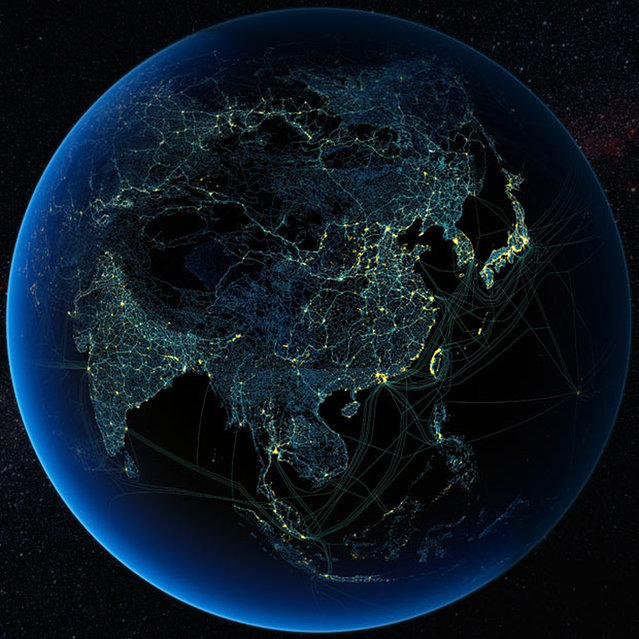
The images here where created by Felix Pharand-Deschenes depicting how various human influences, from road and rail, to internet cables and airlines create significant patterns covering the Earth. What can we learn from these patterns in how they are influencing the environment
Tattoo artist Tokyo Hiro draws a scorpion to be tattooed on a customer at the Tattoo the Earth Festival August 9, 2002 in Oakland, California. The Tattoo the Earth festival focuses on the tattooing culture and is the largest tattoo event of its kind. (Photo by Justin Sullivan/Getty Images)
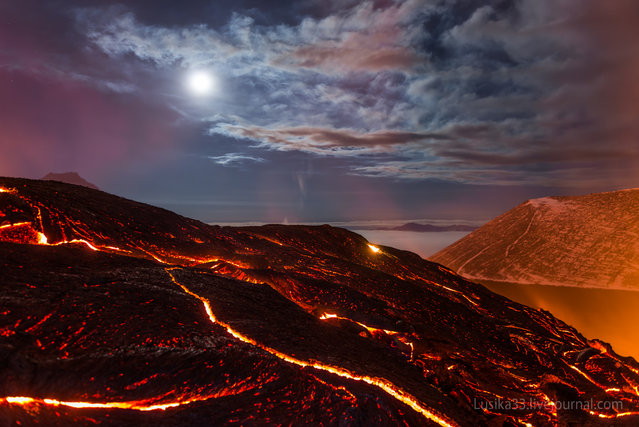
Take a look at this stunning photo of Tolbachik, an active volcanic complex on the Kamchatka Peninsula in far eastern Russia. Lava fountains and rivers ran through the area for months after the eruption began with the opening of two Tolbachik fissures in November of 2012. In the midst of this activity, photographers Luda and Andrey (lusika33) took a trip down to see that stunning hell valley on earth. (Photo by lusika33)
Seven-year-old Dihan Awallidan from Garut, West Java, is not like other boys his age. While most children crave chocolate and candy, Dihan is addicted to cigarettes. The second-grader picked up the habit at the age of 3 and now smokes up to three packs a day, using the pocket money he gets from his enabling parents to feed his addiction. (Photo by Rezza Estily/JG Photo)
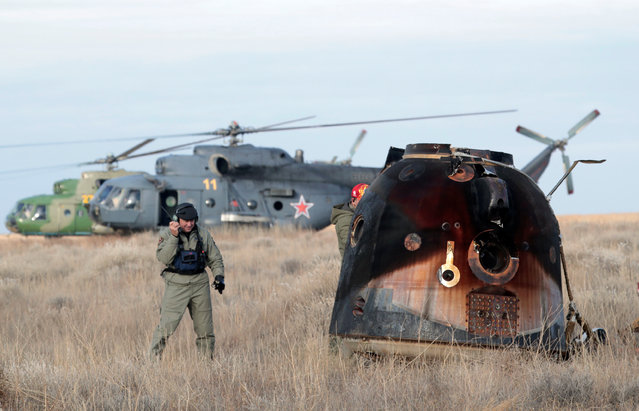
A Russian Soyuz MS space capsule stands on the ground shortly after its landing with International Space Station (ISS) crew members Kate Rubins of the U.S., Anatoly Ivanishin of Russia and Takuya Onishi of Japan, as a rescue helicopter lands nearby, outside the town of Dzhezkazgan (Zhezkazgan), Kazakhstan, October 30, 2016. (Photo by Dmitri Lovetsky/Reuters)
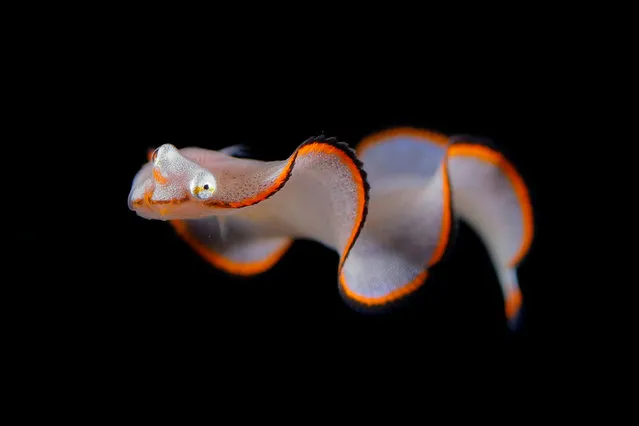
Ryo Minemizu, one of Japan’s emerging stars in the field of marine life photography and the 2017 winner of the Nikkei National Geographic photography prize, captures the beauty and complexity of plankton that drift in our planet’s oceans and other bodies of water in meticulous detail. Here: Batesian mimicry by a Soleichthys fish larva. (Photo by Ryo Minemizu/The Guardian)