Loading...
Done
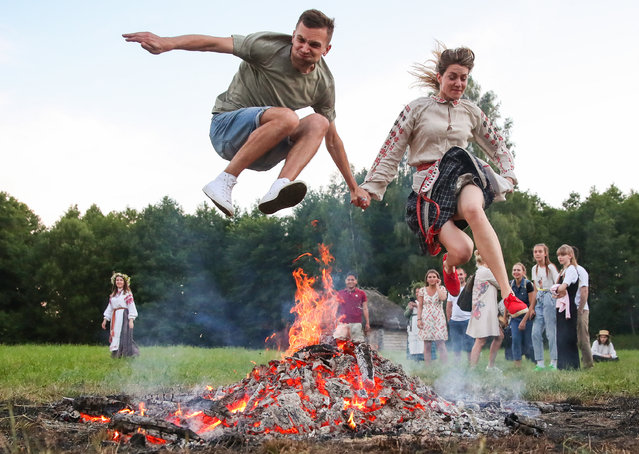
A man and a woman jump over a bonfire during Ivan Kupala Day celebrations held by the Belarusian State Museum of Folk Architecture and Rural Lifestyle in the village of Ozertso near Minsk, Belarus on July 4, 2020. Ivan Kupala Day, also known as Ivana-Kupala or Kupala Night, is a traditional pagan holiday celebrated in eastern Slavic cultures. Various rituals are traditionally performed on Kupala Night, including making flower wreaths, fortune-telling, jumping over bonfires, and burning a wheel-like effigy symbolizing the sun. (Photo by Natalia Fedosenko/TASS)

A man and a woman jump over a bonfire during Ivan Kupala Day celebrations held by the Belarusian State Museum of Folk Architecture and Rural Lifestyle in the village of Ozertso near Minsk, Belarus on July 4, 2020. Ivan Kupala Day, also known as Ivana-Kupala or Kupala Night, is a traditional pagan holiday celebrated in eastern Slavic cultures. Various rituals are traditionally performed on Kupala Night, including making flower wreaths, fortune-telling, jumping over bonfires, and burning a wheel-like effigy symbolizing the sun. (Photo by Natalia Fedosenko/TASS)
Details
23 Jan 2021 09:53:00
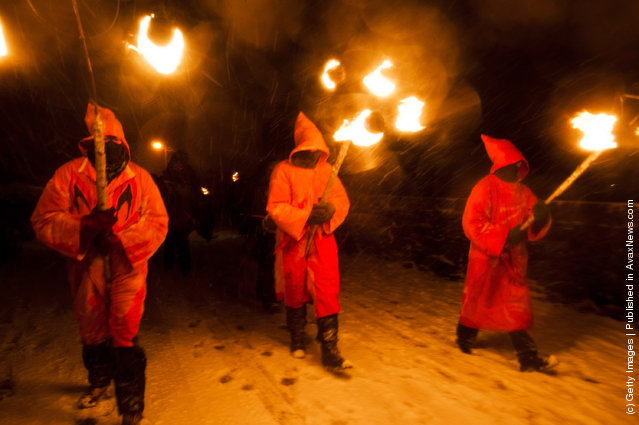
Enthusiasts Enjoy The Marsden Imbolc Fire Festival 2012

Hooded torch bearers lead the winter procession through the snow on February 4, 2012 in Huddersfield, England. Imbolc is a pagan festival that marks the half way point between the winter solstice and the spring equinox. Imbolc festivals celebrates the awakening of the land and the growing power of the Sun. (Photo by Bethany Clarke/Getty Images)
Details
06 Feb 2012 12:32:00
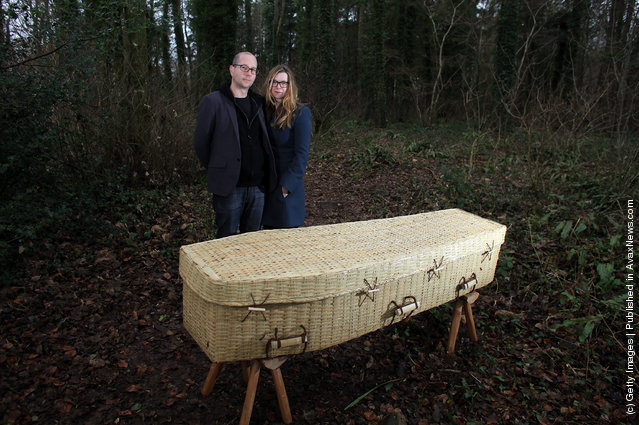
Eco-Friendly Coffins

Claire and Rupert Callender of the Green Funeral Company pose for a photograph with a environmentally friendly coffin in woodland close to their office at Dartington Hall Estate on February 4, 2011 near Torquay, England. The Devon-based company operates as funeral directors and undertakers throughout the South West, offers an ecological alternative to traditional funerals, with coffins made from ecologically friendly materials such as wicker and bamboo, and can arrange funerals that encompass diverse religious and spiritual beliefs everything from a Catholic Requiem Mass, to a Pagan ritual at a stone circle on Bodmin Moor. (Photo by Matt Cardy/Getty Images)
Details
16 Aug 2011 11:04:00
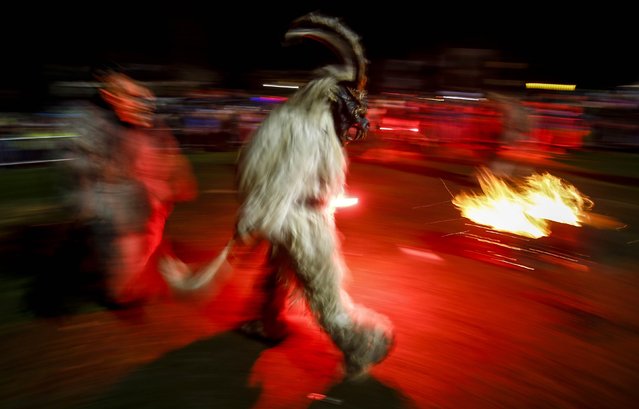
A man dressed in a traditional Perchten costume and mask performs during a Perchten festival in the western Austrian village of Huben November 22, 2014. (Photo by Dominic Ebenbichler/Reuters)

A man dressed in a traditional Perchten costume and mask performs during a Perchten festival in the western Austrian village of Huben November 22, 2014. Each year in November and January people in the western Austria regions dress up in Perchten (also known in some regions as Krampus or Tuifl) costumes and parade through the streets to perform a 1,500 year-old pagan ritual to disperse the ghosts of winter. (Photo by Dominic Ebenbichler/Reuters)
Details
24 Nov 2014 13:50:00
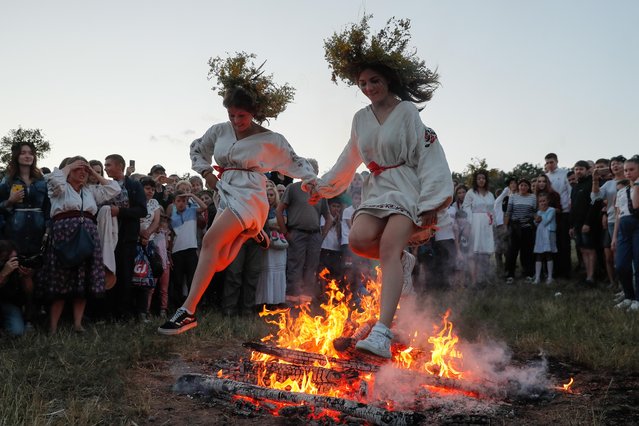
Ukrainians jump over a bonfire in Kiev, Ukraine, 06 July 2019, as they celebrate the traditional pagan holiday of Ivana Kupala. Ivana Kupala is celebrated, during the summer solstice, on the shortest night of the year, marking the beginning of summer and is celebrated in Ukraine, Belarus, Poland and Russia. People sing and dance around bonfires, play games and perform traditional rituals. Young people jump over bonfires in order to test their bravery. Couples holding hands jump over the flames to test their love. If the couple does not succeed it is predicted to split up. Traditionally, children and young unmarried women wear wreaths of wild flowers on their heads to symbolize purity. (Photo by Sergey Dolzhenko/EPA/EFE)

Ukrainians jump over a bonfire in Kiev, Ukraine, 06 July 2019, as they celebrate the traditional pagan holiday of Ivana Kupala. Ivana Kupala is celebrated, during the summer solstice, on the shortest night of the year, marking the beginning of summer and is celebrated in Ukraine, Belarus, Poland and Russia. People sing and dance around bonfires, play games and perform traditional rituals. Young people jump over bonfires in order to test their bravery. Couples holding hands jump over the flames to test their love. If the couple does not succeed it is predicted to split up. Traditionally, children and young unmarried women wear wreaths of wild flowers on their heads to symbolize purity. (Photo by Sergey Dolzhenko/EPA/EFE)
Details
13 Jan 2020 00:05:00
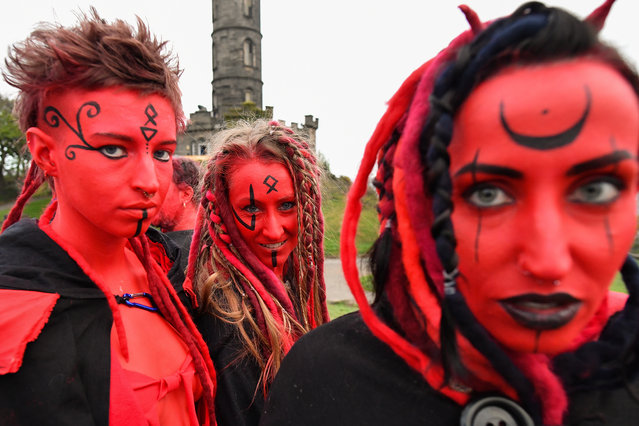
Beltane Fire Society performers celebrate the coming of summer by participating in the Beltane Fire Festival on Calton Hill April 30, 2019 in Edinburgh, Scotland. (Photo by Jeff J. Mitchell/Getty Images)

Beltane Fire Society performers celebrate the coming of summer by participating in the Beltane Fire Festival on Calton Hill April 30, 2019 in Edinburgh, Scotland. The event celebrates the ending of winter and is a revival of the ancient Celtic and Pagan festival of Beltane, the Gaelic name for the month of May. This years festival was highlighting climate change, with the central character The May Queen being seen to express her rage at the damage done to Earth. (Photo by Jeff J. Mitchell/Getty Images)
Details
03 May 2019 00:03:00
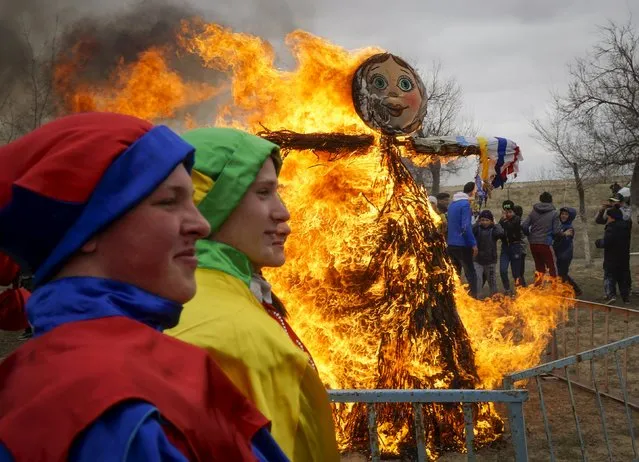
Artists watch burning an effigy of Lady Maslenitsa as they celebrate Maslenitsa, or Pancake Week, in Baikonur, Kazakhstan, March 13, 2016. (Photo by Shamil Zhumatov/Reuters)

Artists watch burning an effigy of Lady Maslenitsa as they celebrate Maslenitsa, or Pancake Week, in Baikonur, Kazakhstan, March 13, 2016. Maslenitsa is widely viewed as a pagan holiday marking the end of winter and is celebrated with pancake eating and shows of strength, while the Orthodox Church considers it as the week of feasting before Lent. (Photo by Shamil Zhumatov/Reuters)
Details
14 Mar 2016 10:37:00
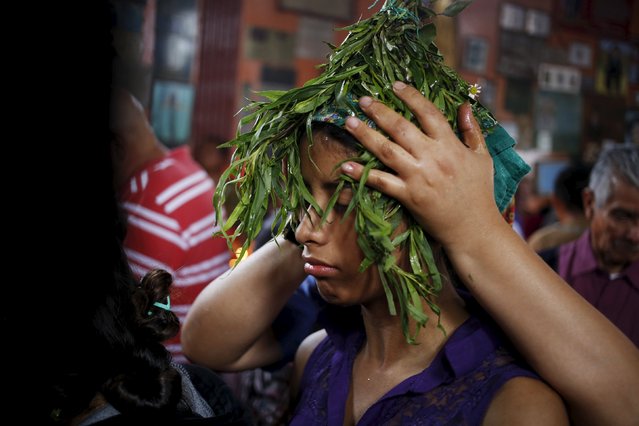
A woman receives a traditional cleansing in the church of San Simon in Iztapa, Chimaltenango, Guatemala, October 28, 2015. (Photo by Jorge Dan Lopez/Reuters)

A woman receives a traditional cleansing in the church of San Simon in Iztapa, Chimaltenango, Guatemala, October 28, 2015. People in Guatemala revere San Simon, also known by his Mayan name Maximon o Ry Laj Man, on October 28 annually. For some devotees, San Simon is synonymous with prosperity and happiness, while others associate him with witchcraft, paganism and a protector for drunkards. Since the 19th century, devotees have offered money, liquor or tobacco in exchange for his blessings. (Photo by Jorge Dan Lopez/Reuters)
Details
01 Nov 2015 08:03:00