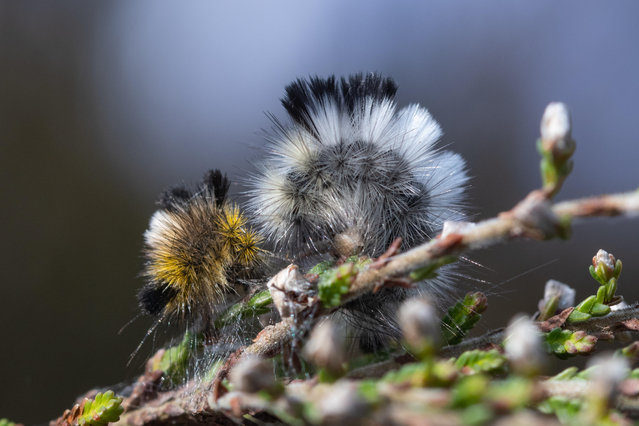
A pale tussock moth (Calliteara pudibunda) larva or caterpillar just after moulting on heather on Hankley Common, Surrey, England on April 30, 2019. (Photo by Gillian Pullinger/Alamy Stock Photo)
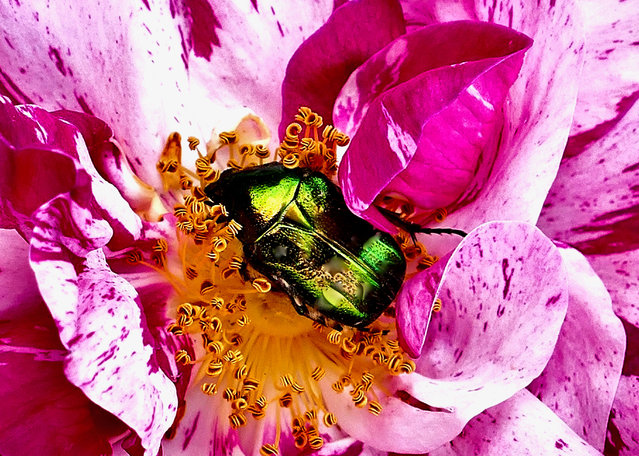
A rose chafer in Oxfordshire, UK on July 8, 2024. The beetles are often seen on flowers in the garden and are sometimes maligned for munching their way through these plants. However, they are an important detritivore as they feed on dead and decaying matter and recycle its nutrients, which makes a helpful addition to any compost. (Photo by Geoffrey Swaine/Rex Features/Shutterstock)
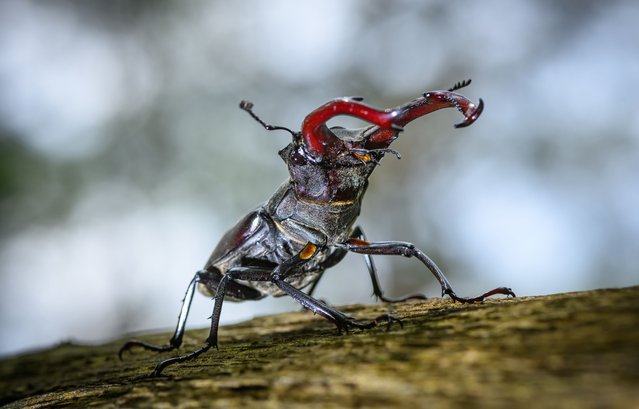
A male stag beetle walks on a branch in an oak forest near the Spree River in Kersdorf, Brandenburg, Germany, on June 8, 2025. (Photo by Patrick Pleul/picture alliance via Getty Images)
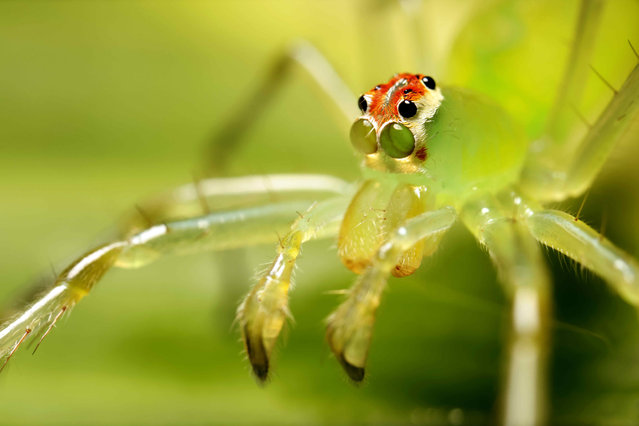
A green jumping spider (Lyssomanes viridis), in a forested area of Cerro de la Muerte, in San Jose, Costa Rica, 20 May 2025. International Day for Biological Diversity is celebrated every 22 May around the world. (Photo by Jeffrey Arguedas/EPA/EFE)
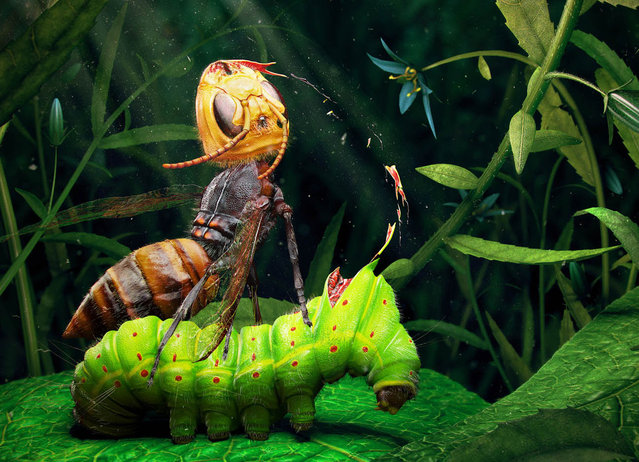
Hornets are insects that are the largest eusocial wasps. Some species can reach up to 5.5 cm (2.2 in) in length. The true hornets make up the genus Vespa and are distinguished from other vespines by the width of the vertex (part of the head behind the eyes), which is proportionally larger in Vespa and by the anteriorly rounded gasters (the section of the abdomen behind the wasp waist). The best known species is the European hornet (Vespa crabro), about 2–3.5 cm in length, widely distributed throughout Europe, Russia, North America and Northeast Asia.
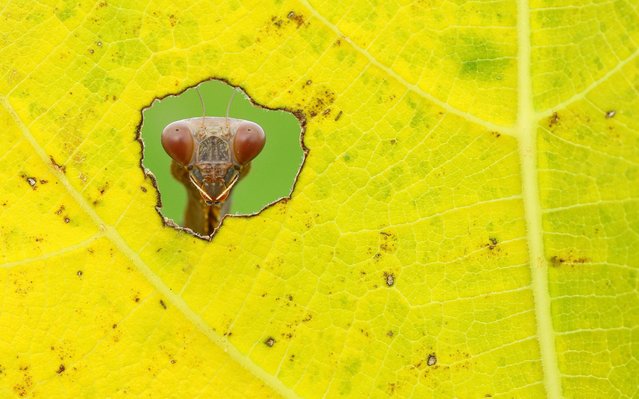
“Window of Autumn” by Hasan Baglar taken in Nicosia, Cyprus, which has come first in the All About Plants Section for the RHS Photographic Competition 2019. (Photo by Hasan Baglar/RHS/PA Wire Press Association)
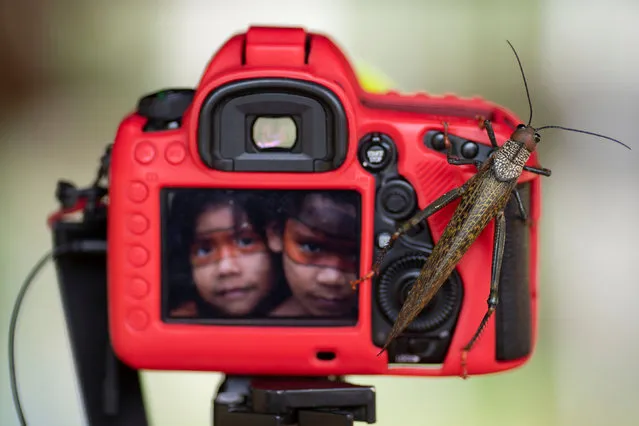
A grasshopper rests on a photographic camera during a meeting in the village of Alto Jamari called to face the threat of armed land grabbers invading the Uru-eu-wau-wau Indigenous Reservation near Campo Novo de Rondonia, Brazil on January 30, 2019. (Photo by Ueslei Marcelino/Reuters)
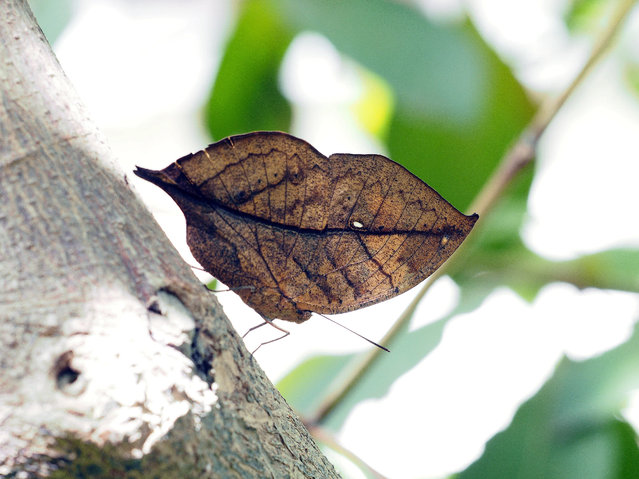
A Dead Leaf butterfly (Kallima inachu formosana, also called Orange Oakleaf Butterfly) rests on a tree trunk at the Taipei Zoo in Taipei, Tawian, 03 August 2019. Dead Leaf butterfly can be found in Tropical Asia from India to Japan. When its wings close, it resembles a dead leaf, providing camouflage against predators including birds, ants, spiders and wasps. (Photo by David Chang/EPA/EFE)