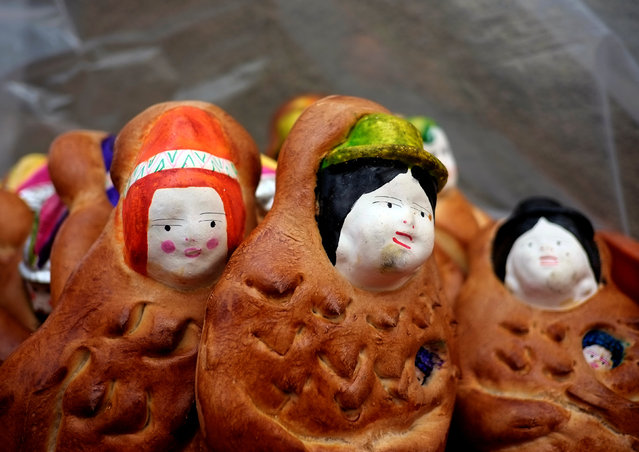
“T'antawawas” (children's bread) are displayed in a popular market to commemorate All Saints Day in La Paz, October 30, 2016. (Photo by David Mercado/Reuters)
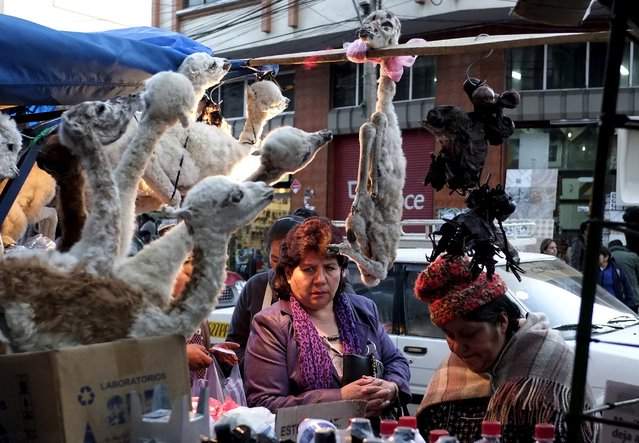
A woman (C) shops for an offering at the witch doctor's street in La Paz, July 31, 2015. According to Andean culture, the all the month of August is a time to give offerings to “Pachamama” to give thanks for their farms and health. The Aymaras use coca leaves, candies, animal fat, llama fetuses, some dried fruits, powdered minerals and alcohol during these rituals. (Photo by David Mercado/Reuters)
Winti spiritual leader Ramon Mac-Nack (2nd L) looks on as as his bride Melissa Karwafodi (2nd R) hands a gourd to a Maroon priest (L) as they are wedded in the first Winti marriage ever to be held in public, in district Para, Suriname, November 16, 2015. The Winti religion, which formed centuries ago out of elements of different religious traditions that African slaves brought with them to Suriname, was considered a form idolatry and prohibited by law since the days of slavery until it was finally officially recognized in 1971. (Photo by Ranu Abhelakh/Reuters)
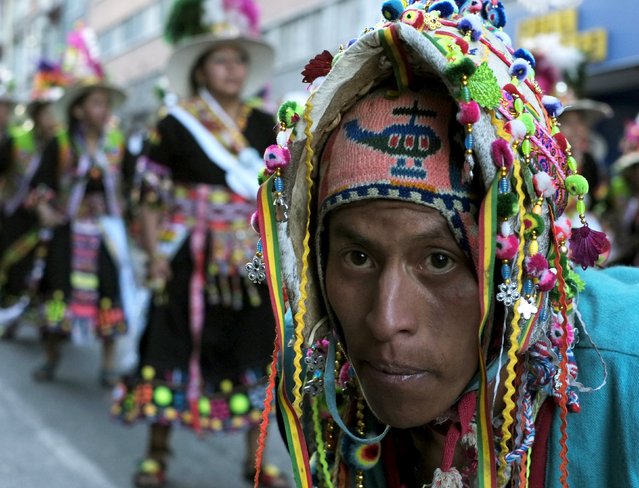
Thinku dancers perform during the "Senor del Gran Poder" (Lord of Great Power) parade in La Paz, May 30, 2015. According to local media, thousands of dancers participated in this annual pagan religious celebration. REUTERS/David Mercado
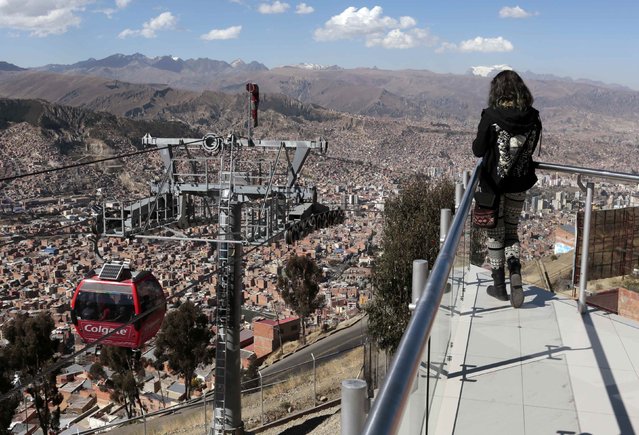
A woman looks at La Paz city from the Jacha Qhatu cable car station in El Alto, July 23, 2015. Bolivia already has the largest urban cable car system in the world. Now the booming country is tripling the size of the network and will soon have nine lines whizzing above the administrative capital of La Paz. (Photo by David Mercado/Reuters)
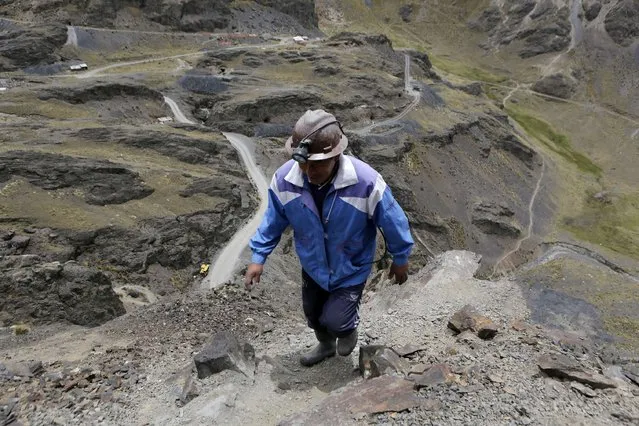
A mine worker is seen outside “The Progreso” gold mine near La Paz, November 13, 2014. According to local media, the president of the Central Bank of Bolivia (BCB) Marcelo Zabalaga said on Thursday that the falling price of oil and minerals in the international market will not affect the national economy. (Photo by David Mercado/Reuters)
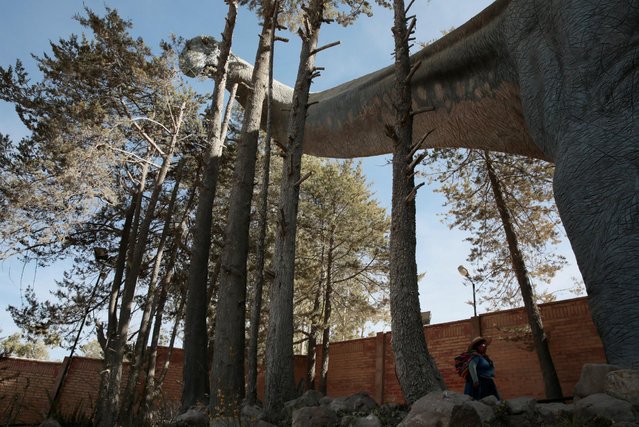
A visitor walks underneath a replica of a Titanosaur at the Cretaceous park in Cal Orcko, on the outskirts of Sucre, Bolivia, July 22, 2016. A footprint measuring over a meter wide that was made by a meat-eating predator some 80 million years ago has been discovered in Bolivia, one of the largest of its kind ever found. (Photo by David Mercado/Reuters)
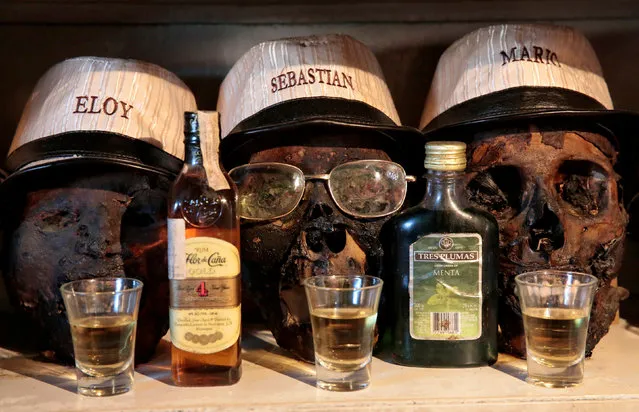
Skulls are seen at the witch doctor kiosk during the day of offerings to the “Pachamama” (Mother Earth) in El Alto, Bolivia, August 1, 2016. Pachamama is a goddess revered by the indigenous people of the Andes. She is also known as the earth/time mother. In Inca mythology, Pachamama is a fertility goddess who presides over planting and harvesting, embodies the mountains, and causes earthquakes. (Photo by David Mercado/Reuters)