Loading...
Done
American actress Nicola Peltz poses on the red carpet as she arrives for the world premiere of the movie “Transformers 4: Age of Extinction” in Hong Kong Thursday, June 19, 2014. The latest installment in the blockbuster series of “Transformers” films is making its world premier not in the usual entertainment hubs of Los Angeles or New York but in the wealthy Chinese metropolis of Hong Kong, the latest sign of Hollywood's increasing focus on China's booming film market. (Photo by Kin Cheung/AP Photo)

American actress Nicola Peltz poses on the red carpet as she arrives for the world premiere of the movie “Transformers 4: Age of Extinction” in Hong Kong Thursday, June 19, 2014. The latest installment in the blockbuster series of “Transformers” films is making its world premier not in the usual entertainment hubs of Los Angeles or New York but in the wealthy Chinese metropolis of Hong Kong, the latest sign of Hollywood's increasing focus on China's booming film market. (Photo by Kin Cheung/AP Photo)
Details
21 Jun 2014 12:26:00
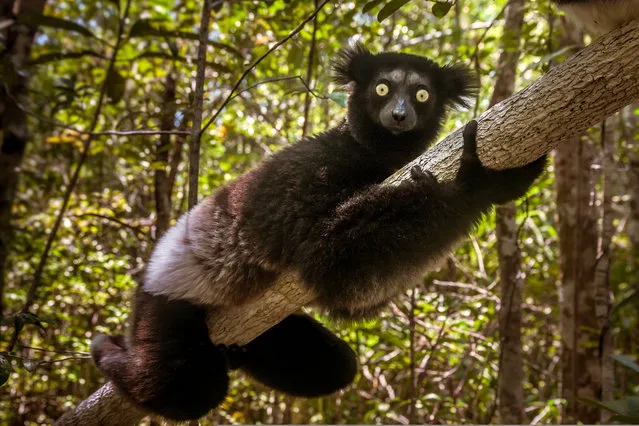
The secretive indri (Indri indri) of Madagascar, the largest living lemur. It is also critically endangered and highly evolutionarily distinct with no close relatives, which makes its branch one of most precarious on the mammal evolutionary tree. In the likely event that the indri goes extinct, we will lose 19m years of unique evolutionary history from the mammal tree of life. (Photo by Pierre-Yves Babelon/Aarhus University)

The secretive indri (Indri indri) of Madagascar, the largest living lemur. It is also critically endangered and highly evolutionarily distinct with no close relatives, which makes its branch one of most precarious on the mammal evolutionary tree. In the likely event that the indri goes extinct, we will lose 19m years of unique evolutionary history from the mammal tree of life. (Photo by Pierre-Yves Babelon/Aarhus University)
Details
18 Nov 2018 00:02:00
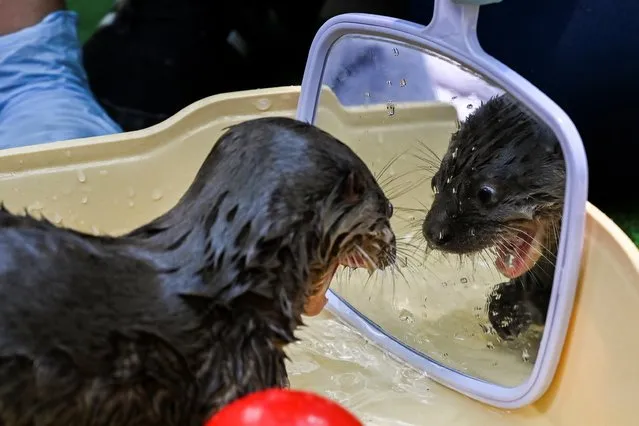
A river otter (lontra longicaudis) of 6-weeks-old looks in the mirror during a bath in the Animal Welfare Unit of the Zoo in Cali, Colombia, on October 22, 2019. The baby otter was found abandoned brought to the Cali Zoo for breeding, for its extensive experience in raising these species. According to the International Union for Conservation of Nature the river otter (lontra longicaudis) are in danger of extinction, because of mining, agriculture, pollution of rivers and housing construction in their habitat. (Photo by Luis Robayo/AFP Photo)

A river otter (lontra longicaudis) of 6-weeks-old looks in the mirror during a bath in the Animal Welfare Unit of the Zoo in Cali, Colombia, on October 22, 2019. The baby otter was found abandoned brought to the Cali Zoo for breeding, for its extensive experience in raising these species. According to the International Union for Conservation of Nature the river otter (lontra longicaudis) are in danger of extinction, because of mining, agriculture, pollution of rivers and housing construction in their habitat. (Photo by Luis Robayo/AFP Photo)
Details
27 Oct 2019 00:03:00
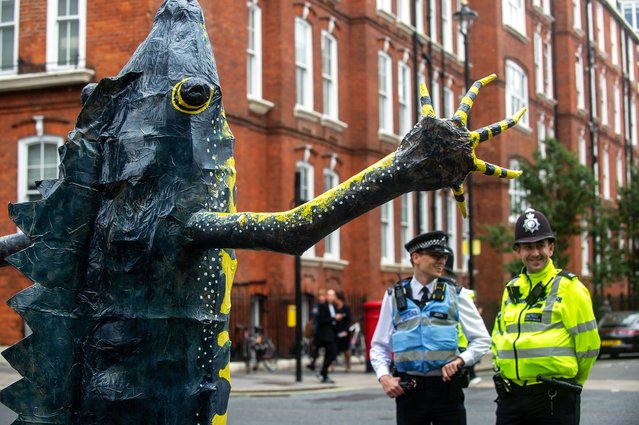
Hundreds of people from a range of NGOs and campaign groups protest to demand the immediate restoration of nature at DEFRA – Department for Environment Food & Rural Affairs on September 28, 2023 in London, England. The 2023 State of Nature Report revealed that approximately one in six species in Great Britain, including turtle doves and hazel dormice, are at risk of extinction, citing climate change, intensive farming, and pollution as major threats, with a 19% average decline in monitored plant and animal populations since 1970. (Photo by Guy Smallman/Getty Images)

Hundreds of people from a range of NGOs and campaign groups protest to demand the immediate restoration of nature at DEFRA – Department for Environment Food & Rural Affairs on September 28, 2023 in London, England. The 2023 State of Nature Report revealed that approximately one in six species in Great Britain, including turtle doves and hazel dormice, are at risk of extinction, citing climate change, intensive farming, and pollution as major threats, with a 19% average decline in monitored plant and animal populations since 1970. (Photo by Guy Smallman/Getty Images)
Details
09 Dec 2024 04:11:00
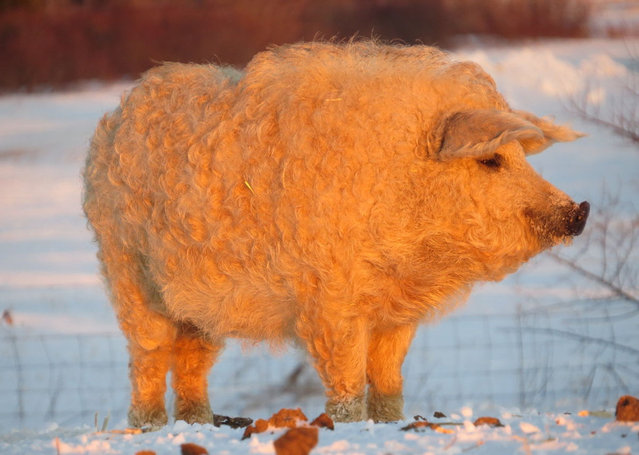
Mangalitsa The Hairy Pig

When you look at the picture of a furry pig that resembles a sheep from a distance, you may think that this may be the result of the work of some crazy scientist that tinkered with the pig’s genome. However, in this case, this is not true. Mangalica is a natural breed of pigs, which were bred in Europe for their lard. This breed of pigs is very unique, since the only other breed of pigs which had a long coat was Loncolnshire Curly Coat, which is now extinct. In the past, these pigs were quite popular, since they were able to produce a lot of lard. However, when the demand for pig lard dwindled, the population of these pigs rapidly decreased, making it a “rare breed”.
Details
01 Dec 2014 13:42:00
A topless climate activist Laura Amherst, 31, from Extinction Rebellion protests in Soho, London, United Kingdom on August 25, 2021. The event is part of the “Impossible Rebellion” protest to “target the root cause of the climate and ecological crisis” and are ongoing for two weeks until the Government agrees to stop all new fossil fuel investments. (Photo by Stephen Chung/Alamy Live News)

A topless climate activist Laura Amherst, 31, from Extinction Rebellion protests in Soho, London, United Kingdom on August 25, 2021. The event is part of the “Impossible Rebellion” protest to “target the root cause of the climate and ecological crisis” and are ongoing for two weeks until the Government agrees to stop all new fossil fuel investments. (Photo by Stephen Chung/Alamy Live News)
Details
26 Aug 2021 08:36:00
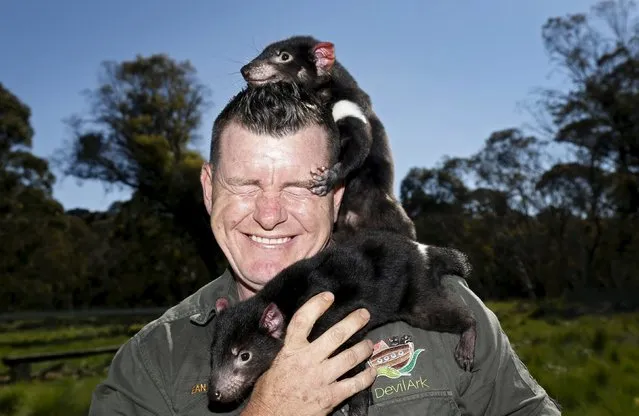
Devil Ark manager Dean Reid reacts as Tasmanian Devil joeys climb on him before the first shipment of healthy and genetically diverse devils to the island state of Tasmania leave the Devil Ark sanctuary in Barrington Tops on Australia's mainland, November 17, 2015. The largest group so far of disease-free Tasmanian devils has been released in the wild, as part of plans to save the carnivorous marsupials from a cancer threatening them with extinction. (Photo by Jason Reed/Reuters)

Devil Ark manager Dean Reid reacts as Tasmanian Devil joeys climb on him before the first shipment of healthy and genetically diverse devils to the island state of Tasmania leave the Devil Ark sanctuary in Barrington Tops on Australia's mainland, November 17, 2015. The largest group so far of disease-free Tasmanian devils has been released in the wild, as part of plans to save the carnivorous marsupials from a cancer threatening them with extinction. (Photo by Jason Reed/Reuters)
Details
21 Nov 2015 08:05:00
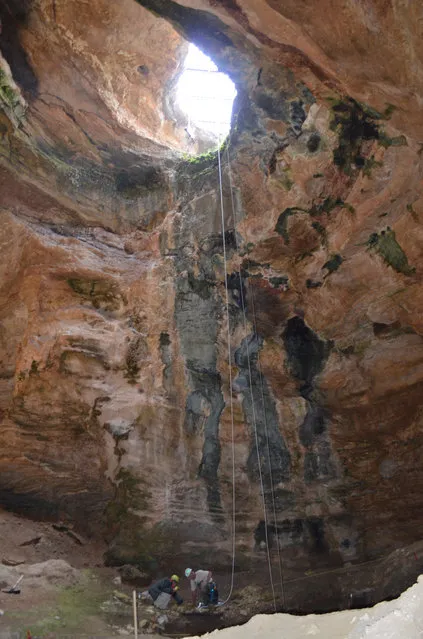
This July 2014 image provided by the Bureau of Land Management shows the interior of the Natural Trap Cave in north-central Wyoming. The cave holds the remains of tens of thousands of animals, including many now-extinct species, from the late Pleistocene period tens of thousands of years ago. Scientists have resumed digging for the first time in more than 30 years. (Photo by AP Photo/Bureau of Land Management)

This July 2014 image provided by the Bureau of Land Management shows the interior of the Natural Trap Cave in north-central Wyoming. The cave holds the remains of tens of thousands of animals, including many now-extinct species, from the late Pleistocene period tens of thousands of years ago. Scientists have resumed digging for the first time in more than 30 years. (Photo by AP Photo/Bureau of Land Management)
Details
10 Aug 2014 10:35:00