Loading...
Done
Boys dressed in historical uniforms stand before a military parade in Red Square in Moscow November 7, 2014. The parade marked the anniversary of the 1941 parade when Soviet soldiers marched through the Red Square towards the front lines of World War Two. (Photo by Maxim Shemetov/Reuters)

Boys dressed in historical uniforms stand before a military parade in Red Square in Moscow November 7, 2014. The parade marked the anniversary of the 1941 parade when Soviet soldiers marched through the Red Square towards the front lines of World War Two. (Photo by Maxim Shemetov/Reuters)
Details
07 Nov 2014 12:38:00
Sydney Welcomes Summer Solstice From The Tower Eye

In this handout image provided by Sydney Tower Eye, a visitor scans the skyline and harbour of Sydney from a viewing platform at the Sydney Tower Eye, on December 16, 2011 in Sydney, Australia. Sydney is suffering from its coldest start to summer since 1960. (Photo by Eugene Tan/Hausmann Communications via Getty Images)
Details
22 Dec 2011 12:32:00
A combination of pictures shows people taking photos of themselves in Tiananmen Square as they celebrate National Day marking the 67th anniversary of the founding of the People's Republic of China, in Beijing October 1, 2016. (Photo by Damir Sagolj/Reuters)

A combination of pictures shows people taking photos of themselves in Tiananmen Square as they celebrate National Day marking the 67th anniversary of the founding of the People's Republic of China, in Beijing October 1, 2016. (Photo by Damir Sagolj/Reuters)
Details
03 Oct 2016 09:31:00
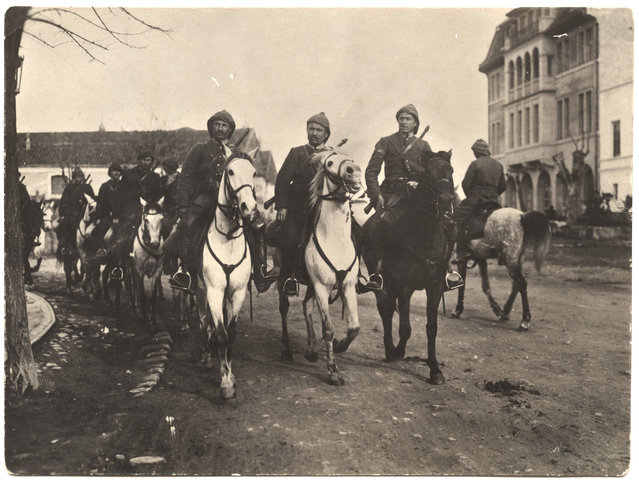
Turkish army, including cavalry, infantry and artillery. (Photo by Dr. P.A. Smithe/National World War I Museum, Kansas City, Mo.)

Dr. P.A. Smithe was sent by the American Red Cross as a doctor and surgeon to work at a hospital in Vienna. He sailed to Europe in December 1915 and returned home in August 1916, according to his daughter, who donated his images to the National World War I Museum. Photo: Turkish army, including cavalry, infantry and artillery. (Photo by Dr. P.A. Smithe/National World War I Museum, Kansas City, Mo.)
Details
29 Jul 2014 11:53:00
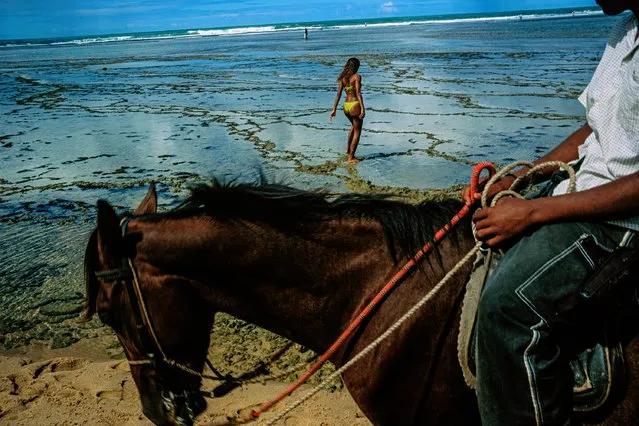
Praia du Forte, Bahia. “This was the lead picture for a National Geographic story on Bahia, because it was both mysterious as well as a “geography” picture showing where the slaves arrived from Nigeria. Beach pictures seem like they should be easy to take, but for me they are actually quite difficult. Too easy to fall into cliche. When I saw the kid coming on the horse, I quickly ran to see if I could make something with a woman in a bikini that was not a bikini shot”. (Photo by David Alan Harvey/The Guardian)

Praia du Forte, Bahia. “This was the lead picture for a National Geographic story on Bahia, because it was both mysterious as well as a “geography” picture showing where the slaves arrived from Nigeria. Beach pictures seem like they should be easy to take, but for me they are actually quite difficult. Too easy to fall into cliche. When I saw the kid coming on the horse, I quickly ran to see if I could make something with a woman in a bikini that was not a bikini shot”. (Photo by David Alan Harvey/The Guardian)
Details
20 Aug 2016 11:35:00
New York through the eyes of a Road Bicycle

My transport of choice in NYC is definitely a road bike. When you cycle on the streets you see city and it’s habitants in a very different point of view. Let me share with you some photos I took last year – NYC through the eyes of a road bike.

Tim Sklyarov
Details
06 Jan 2014 11:27:00


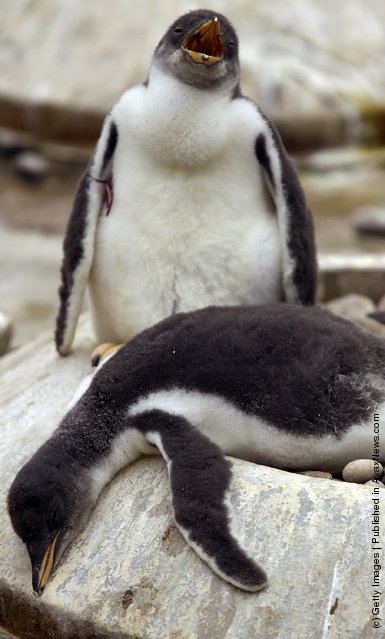
Adult gentoo penguins keep an eye on their newly born chick at Edinburgh Zoo on June 10, 2011 in Edinburgh, Scotland. The gentoo chicks which started hatching in early May are looked after by both parents who regurgitate part digested food. When the chicks are hungry they peck the beaks of their parents to signal feeding time. (Photo by Jeff J Mitchell/Getty Images)
Details
11 Jun 2011 12:26:00
Heterochromia in Animals: Pets With Different Colored Eyes

“In anatomy, heterochromia refers to a difference in coloration, usually of the iris (but also of hair or skin). Although infrequently seen in humans, complete heterochromia is more frequently observed in other species, where it almost always involves one blue eye”. – Wikipedia (Photo by StooMathiesen)
Details
24 Jun 2012 12:47:00