Singer/rapper Nicki Minaj performs on ABC's “Good Morning America” at Rumsey Playfield, Central Park on August 5, 2011 in New York City. (Photo by Jemal Countess/Getty Images)
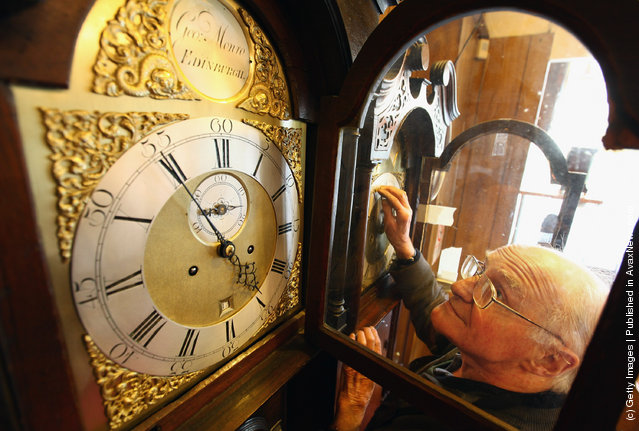
Archie McQuater, 82-year-old clockmaker at Craiglea clocks, adjusts a clock face to British Summer Time (BST) on March 25, 2011 in Edinburgh, Scotland. Clocks will be put forward by one hour at 1:00 AM GMT on Sunday March 27, 2011 officially the start of British Summer Time. British Summer Time will end this year on October 30. (Photo by Jeff J Mitchell/Getty Images)
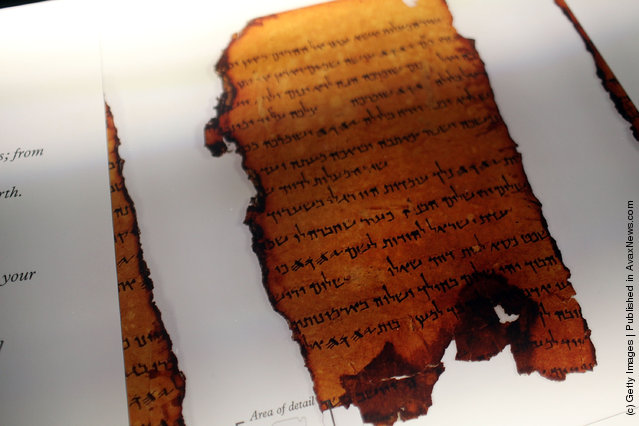
A copy of part of the Dead Sea Scrolls is displayed at the “Dead Sea Scrolls: Life and Faith in Biblical Times” exhibition at Discovery Times Square on December 16, 2011 in New York City. (Photo by Spencer Platt/Getty Images)
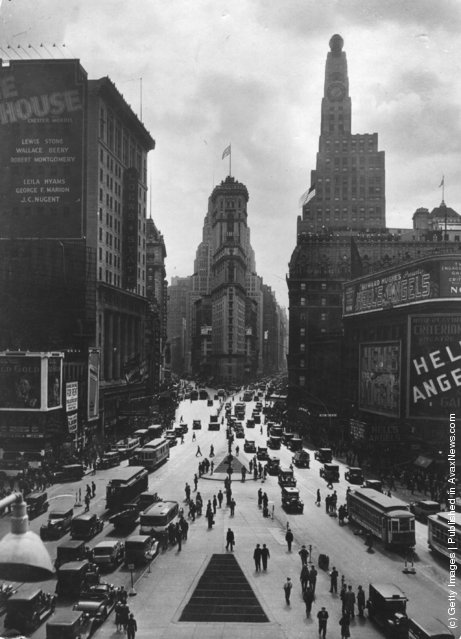
Looking towards the Times Building on Times Square, the Paramount Building is on the right, and Seventh Avenue on the left crossing Broadway. (Photo by General Photographic Agency/Getty Images). Circa 1930
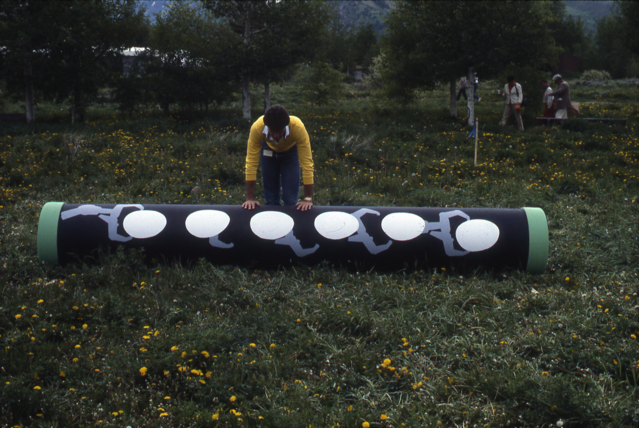
Guadalajara-based artist Gonzalo Lebrija created a public art installation in the parking lot (1430 Delgany Street, Denver, CO 80202) across from the Museum of Contemporary Art Denver (MCA Denver) in the summer of 2010. The installation, entitled History of Suspended Time: Monument for the Impossible, was developed as a dual collaboration with MCA Denver's museum-wide exhibition, Energy Effects: Art & Artifacts from the Landscape of Glorious Excess, as well as Denver's inaugural 2010 Biennial of the Americas, an international event that celebrated the culture, ideas and people of the Western Hemisphere.
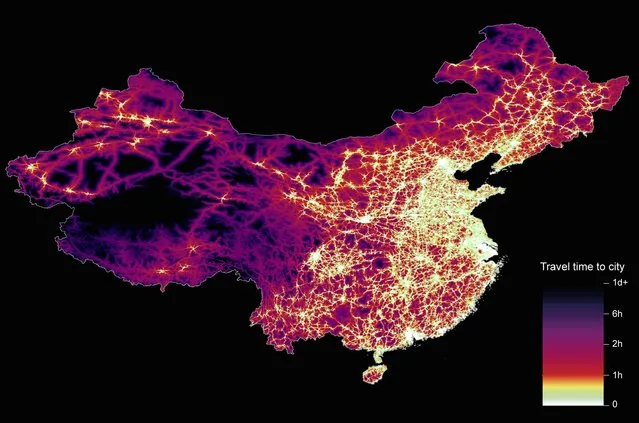
From Britain to China to Mali, new maps showing travel times to the nearest urban centre reveal huge differences between countries. Using Open Street Map and Google, a University of Oxford team have created a visual breakdown that suggests major inequalities when it comes to commuting. Here: China. The dataset used for China was unique as it relied solely on Open Street Map, due to restrictions on accessing Google data. The population is densely concentrated in the east and accessibility is increased, whereas rural provinces in the west remain remote. (Photo by Daniel Weiss/Jennifer Rozier/Malaria Atlas Project/University of Oxford)
In 1983, Steve Jobs and his team who were attending a conference in Aspen, decided to bury a capsule that could be opened by future generations or roughly twenty years later. However, they forgot where the capsule was buried and therefore could not follow through with this plan. Recently, National Geographic’s TV Show, “Diggers” inadvertently discovered the capsule.