Loading...
Done
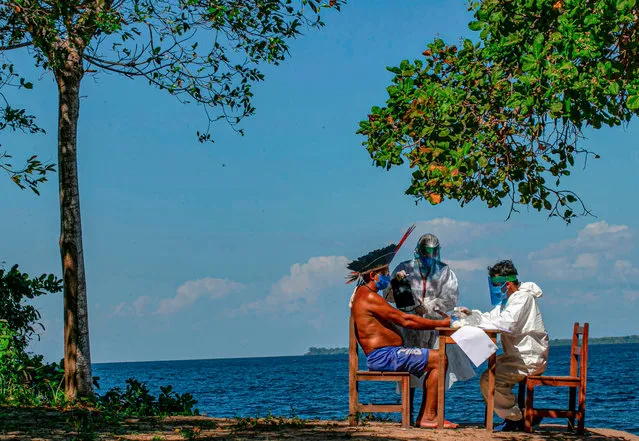
Indigenous nurses from the Special Secretariat for Indigenous Health (Sesai) of the Arapiuns ethnic group and Tapuia ethnic groups perform a rapid COVID-19 test on Chief Domingos from the Arapium tribe on the banks of the lower Tapajos River in the municipality of Santarem in western Para on July 19, 2020. (Photo by Tarso Sarraf/AFP Photo)

Indigenous nurses from the Special Secretariat for Indigenous Health (Sesai) of the Arapiuns ethnic group and Tapuia ethnic groups perform a rapid COVID-19 test on Chief Domingos from the Arapium tribe on the banks of the lower Tapajos River in the municipality of Santarem in western Para on July 19, 2020. (Photo by Tarso Sarraf/AFP Photo)
Details
22 Jul 2020 00:07:00
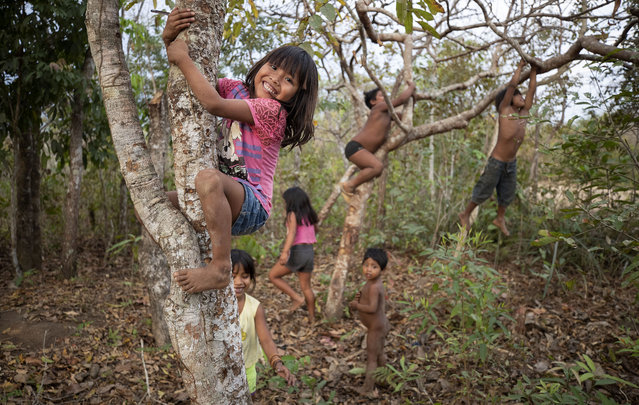
In this August 26, 2019 photo, children of the Nambikwara Sarare tribe climb trees as they play in their indigenous reserve in the southwestern Amazon, near Conquista D'Oeste, in the Brazilian state of Mato Grosso. About 98% of all Brazil’s indigenous lands lie within the Amazon. (Photo by Andre Penner/AP Photo)

In this August 26, 2019 photo, children of the Nambikwara Sarare tribe climb trees as they play in their indigenous reserve in the southwestern Amazon, near Conquista D'Oeste, in the Brazilian state of Mato Grosso. About 98% of all Brazil’s indigenous lands lie within the Amazon. (Photo by Andre Penner/AP Photo)
Details
31 Aug 2019 00:01:00
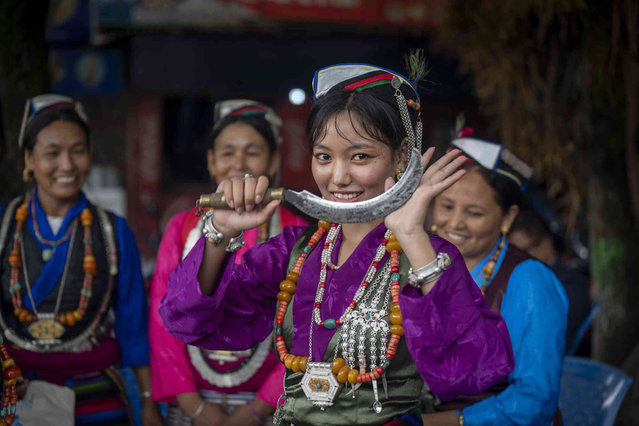
Nepal's indigenous women in traditional attire gather to participate in a rally to mark the International Day of the World's Indigenous People in Kathmandu, Nepal, Friday, August 9, 2024. (Photo by Niranjan Shrestha/AP Photo)

Nepal's indigenous women in traditional attire gather to participate in a rally to mark the International Day of the World's Indigenous People in Kathmandu, Nepal, Friday, August 9, 2024. (Photo by Niranjan Shrestha/AP Photo)
Details
24 Aug 2024 04:48:00
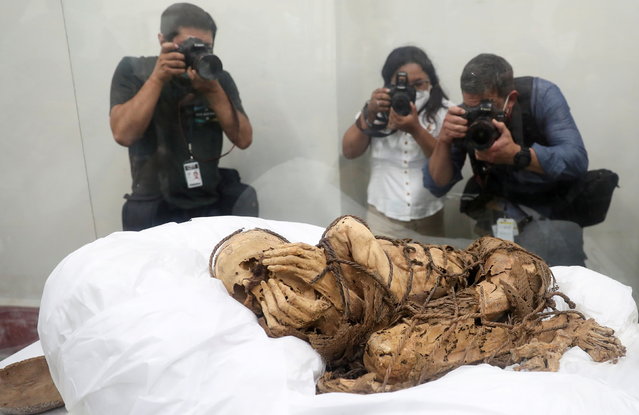
Members of the media take pictures of the pre-Inca “Mummy of Cajamarquilla”, which is presumed to be between 800 and 1200 years old, in Lima, Peru December 7, 2021. The “Mummy of Cajamarquilla” found by archaeologists from San Marcos inside a burial chamber of about three meters long and a depth of 1.40 meters in the Cajamarquilla archaeological site, east of Lima. (Photo by Sebastian Castaneda/Reuters)

Members of the media take pictures of the pre-Inca “Mummy of Cajamarquilla”, which is presumed to be between 800 and 1200 years old, in Lima, Peru December 7, 2021. The “Mummy of Cajamarquilla” found by archaeologists from San Marcos inside a burial chamber of about three meters long and a depth of 1.40 meters in the Cajamarquilla archaeological site, east of Lima. (Photo by Sebastian Castaneda/Reuters)
Details
09 Dec 2021 09:05:00
Patients from the Larco Herrera Psychiatric Hospital wear costumes in the likeness of the first governor and founder of the Inca civilization, Manco Capac, right, and his wife Mama Ocllo, during the hospital's Independence Day parade in Lima, Peru, Wednesday, July 22, 2015. (Photo by Martin Mejia/AP Photo)

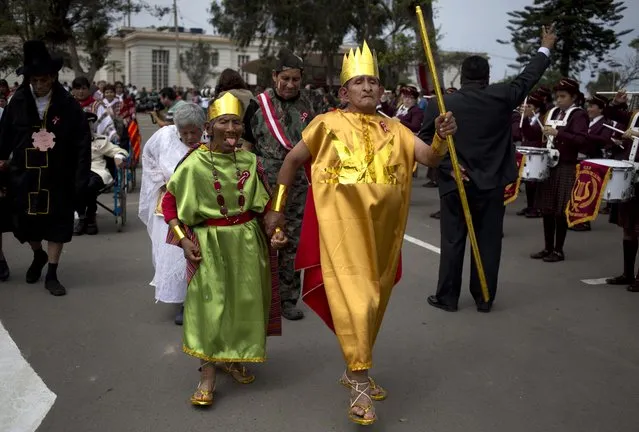
Patients from the Larco Herrera Psychiatric Hospital wear costumes in the likeness of the first governor and founder of the Inca civilization, Manco Capac, right, and his wife Mama Ocllo, during the hospital's Independence Day parade in Lima, Peru, Wednesday, July 22, 2015. The parade is held on the hospital's campus every year ahead of the Andean nation's official Independence Day celebrations on July 28. (Photo by Martin Mejia/AP Photo)
Details
23 Jul 2015 10:52:00
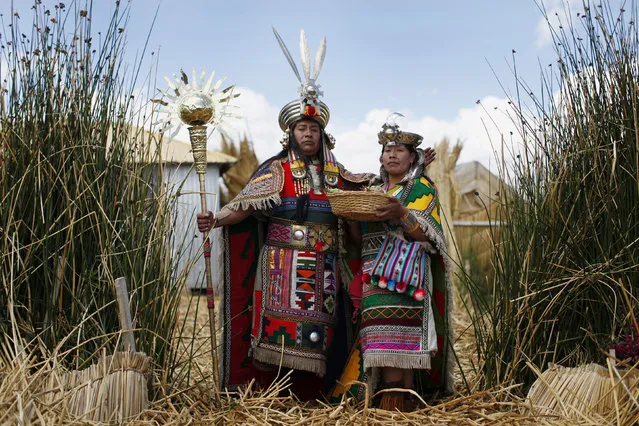
An Andean man and a woman, depicting Inca's legendary characters Manco Capac and Mama Ocllo, pose for a portrait in a Uros island at Lake Titicaca before a re-enactment in Puno November 5, 2014. The Uros islands are a group of 70 man-made totora reed islands floating on the lake, which according to Peru's tourism board iPeru is the world's highest navigable lake at over 4,000 meters above sea level. (Photo by Enrique Castro-Mendivil/Reuters)

An Andean man and a woman, depicting Inca's legendary characters Manco Capac and Mama Ocllo, pose for a portrait in a Uros island at Lake Titicaca before a re-enactment in Puno November 5, 2014. The Uros islands are a group of 70 man-made totora reed islands floating on the lake, which according to Peru's tourism board iPeru is the world's highest navigable lake at over 4,000 meters above sea level. The Uros people fish and hunt, but tourism is their main source of livelihood. (Photo by Enrique Castro-Mendivil/Reuters)
Details
07 Nov 2014 12:52:00
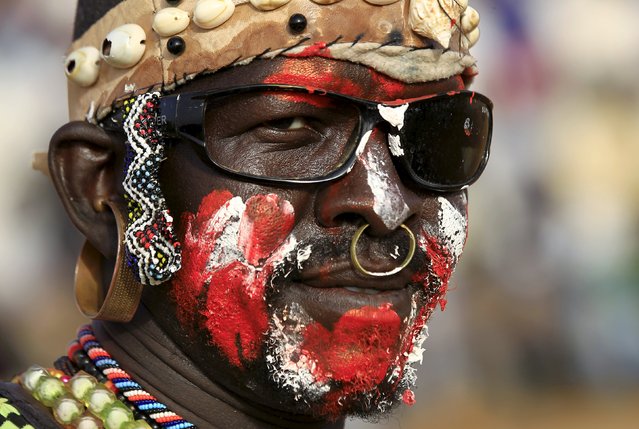
A wrestler from the Nuba Mountains tribe is seen during a celebration of their cultural heritage, as part of ongoing events to commemorate the International Day of the World's Indigenous Peoples, in Omdurman August 15, 2015. (Photo by Mohamed Nureldin Abdallah/Reuters)

A wrestler from the Nuba Mountains tribe is seen during a celebration of their cultural heritage, as part of ongoing events to commemorate the International Day of the World's Indigenous Peoples, in Omdurman August 15, 2015. The International Day of the World's Indigenous Peoples is observed on August 9 annually. (Photo by Mohamed Nureldin Abdallah/Reuters)
Details
16 Aug 2015 12:48:00
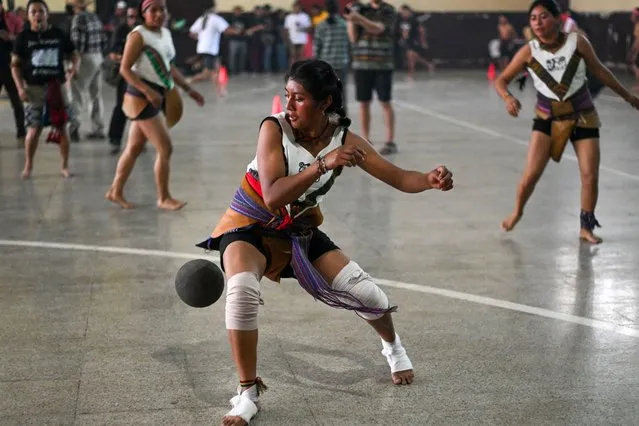
An indigenous woman kicks the ball during a Mayan ball game match in Tecpan, Guatemala on March 23, 2024. Dressed in shorts, girdle and uncovered torso, members of eleven teams from the Guatemalan indigenous departments of Chimaltenango, Quiche, Solola and Quetzaltenango, as well as one from El Salvador, commemorated the March equinox with a tournament of the ancestral Mayan ball game on Saturday. (Photo by Photo by Johan Ordonez/AFP Photo)

An indigenous woman kicks the ball during a Mayan ball game match in Tecpan, Guatemala on March 23, 2024. Dressed in shorts, girdle and uncovered torso, members of eleven teams from the Guatemalan indigenous departments of Chimaltenango, Quiche, Solola and Quetzaltenango, as well as one from El Salvador, commemorated the March equinox with a tournament of the ancestral Mayan ball game on Saturday. (Photo by Photo by Johan Ordonez/AFP Photo)
Details
01 Apr 2024 06:05:00