Loading...
Done
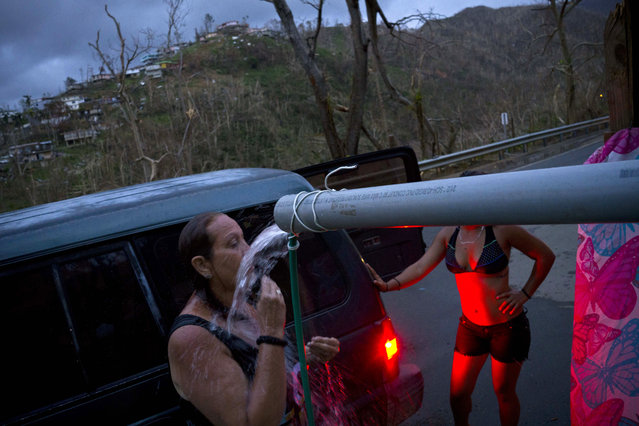
People affected by Hurricane Maria bathe in water piped from a creek in the mountains, in Naranjito, Puerto Rico, Thursday, September 28, 2017. Residents of the area drive to the pipes to bathe because they were left without water supplies by the damage caused by Hurricane Maria. The pipe was set up by a neighbor who ran it from a creek in his property to the side of the road in order to help those left without water. (Photo by Ramon Espinosa/AP Photo)

People affected by Hurricane Maria bathe in water piped from a creek in the mountains, in Naranjito, Puerto Rico, Thursday, September 28, 2017. Residents of the area drive to the pipes to bathe because they were left without water supplies by the damage caused by Hurricane Maria. The pipe was set up by a neighbor who ran it from a creek in his property to the side of the road in order to help those left without water. (Photo by Ramon Espinosa/AP Photo)
Details
29 Sep 2017 07:45:00
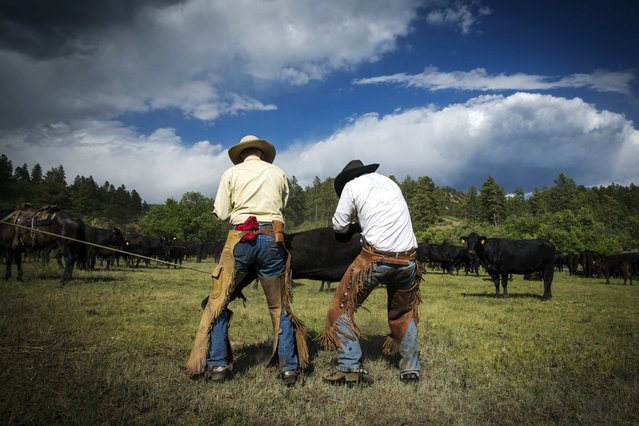
Cowboys Wyatt Williams (R) and David Thompson work to restrain a calf in order to give it medicine near Ignacio, Colorado June 12, 2014. The land where the cattle graze is leased from the Forest Service by third-generation rancher Steve Pargin. Several times a year, he and a crew led by his head cowboy, David Thompson, spend a week or more herding cattle from mountain range to mountain range to prevent them from causing damage to fragile ecosystems by staying in a single area too long. (Photo by Lucas Jackson/Reuters)

Cowboys Wyatt Williams (R) and David Thompson work to restrain a calf in order to give it medicine near Ignacio, Colorado June 12, 2014. The land where the cattle graze is leased from the Forest Service by third-generation rancher Steve Pargin. Several times a year, he and a crew led by his head cowboy, David Thompson, spend a week or more herding cattle from mountain range to mountain range to prevent them from causing damage to fragile ecosystems by staying in a single area too long. (Photo by Lucas Jackson/Reuters)
Details
15 Jul 2014 11:04:00
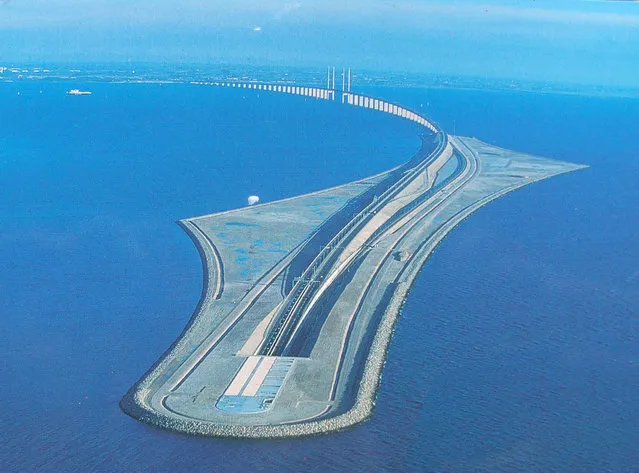
Oresund Bridge

The Öresund or Øresund Bridge is a double-track railway and dual carriageway bridge-tunnel across the Øresund strait between Scania (southernmost Sweden) and Denmark. The bridge runs nearly 8 km (5 miles) from the Swedish coast to the artificial island of Peberholm, which lies in the middle of the strait. The remainder of the link is by a 4 km (2.5 mile) tunnel from Peberholm to the Danish island of Amager. The Øresund Bridge is the longest combined road and rail bridge in Europe, and connects two major metropolitan areas: Copenhagen, the Danish capital city, and the major Swedish city of Malmö. It connects the road and rail networks of Scandinavia with those of Central and Western Europe.
Details
10 Sep 2013 11:23:00
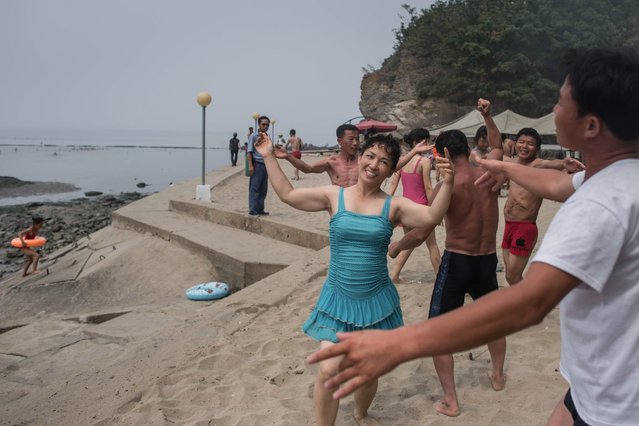
A photo taken on July 22, 2017 shows beach- goers dancing at the West Sea Barrage beach outside the coastal city of Nampo, southwest of Pyongyang. (Photo by Ed Jones/AFP Photo)

A photo taken on July 22, 2017 shows beach- goers dancing at the West Sea Barrage beach outside the coastal city of Nampo, southwest of Pyongyang. The West Sea Barrage beach features as a stopping point for foreign tourists, and is a destination for North Korean work groups from the neighbouring area. The beach lies at the end of an eight- kilometre- long barrage that separates the sea from the Taedong River, which runs through Pyongyang. (Photo by Ed Jones/AFP Photo)
Details
04 Aug 2017 09:09:00
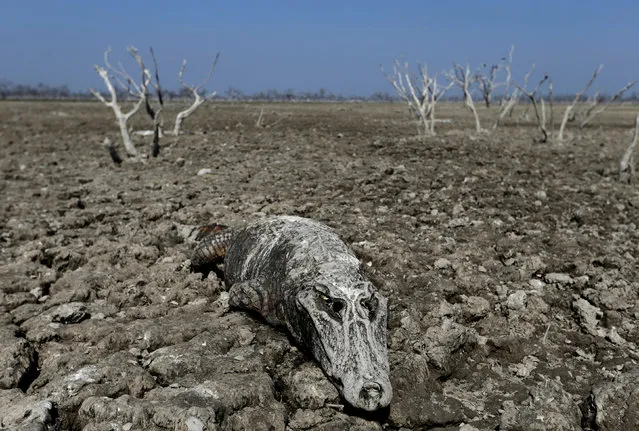
The carcass of a yacare caiman lies in the dried-up river bed of the Pilcomayo river in Boqueron, Paraguay, August 14, 2016. In Paraguay, alongside the Pilcomayo River, black vultures flew over a shrinking pond where a group of crocodilian reptiles known as yacare caimans sought refuge. Water from the river, which divides Paraguay and Argentina in the area of the Gran Chaco, was scarce. This is not an uncommon sight in the region of General Diaz, about 700 kilometres (435 miles) northwest of the country's capital Asuncion, where the Pilcomayo's waters form lakes and streams that give life to capybaras, birds and caimans. “The river's situation is critical. No water is forecast to enter the basin until December, as happens every year”, said Alcides Gonzalez, a resident of the area. (Photo by Jorge Adorno/Reuters)

The carcass of a yacare caiman lies in the dried-up river bed of the Pilcomayo river in Boqueron, Paraguay, August 14, 2016. In Paraguay, alongside the Pilcomayo River, black vultures flew over a shrinking pond where a group of crocodilian reptiles known as yacare caimans sought refuge. Water from the river, which divides Paraguay and Argentina in the area of the Gran Chaco, was scarce. This is not an uncommon sight in the region of General Diaz, about 700 kilometres (435 miles) northwest of the country's capital Asuncion, where the Pilcomayo's waters form lakes and streams that give life to capybaras, birds and caimans. (Photo by Jorge Adorno/Reuters)
Details
03 Nov 2016 12:40:00
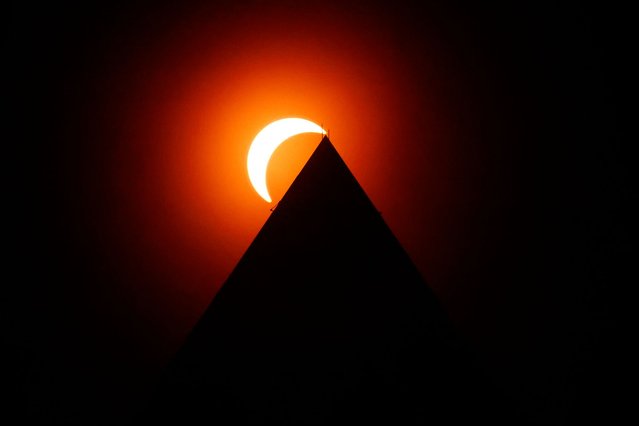
The solar eclipse is seen above the Washington Monument on April 08, 2024 in Washington, DC. People have traveled to areas across North America that are in the “path of totality” in order to experience the eclipse today. The next total solar eclipse that can be seen from a large part of North America won't happen until 2044. (Photo by Chip Somodevilla/Getty Images)

The solar eclipse is seen above the Washington Monument on April 08, 2024 in Washington, DC. People have traveled to areas across North America that are in the “path of totality” in order to experience the eclipse today. The next total solar eclipse that can be seen from a large part of North America won't happen until 2044. (Photo by Chip Somodevilla/Getty Images)
Details
20 May 2024 02:29:00
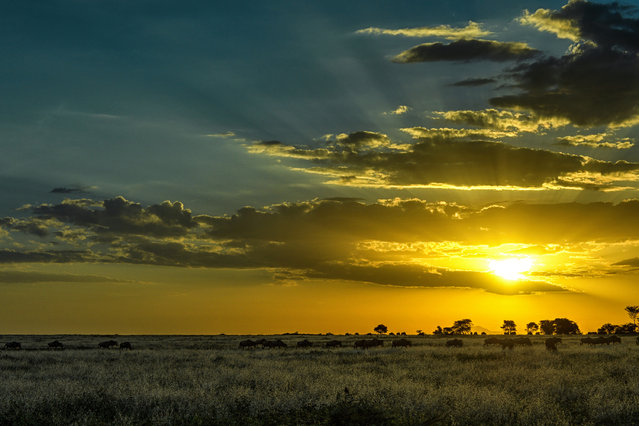
Using his camera skills, Marc meters the background sky in order to achieve the beautiful black silhouettes of the wildlife, Africa, 2010-2016. A photographer has travelled around Africa for six years to capture striking silhouettes of lions, giraffes and birds. Australian wildlife photographer, Marc Mol took the series of pictures in various areas of Africa; including Botswana and Kenya to Tanzania and Zambia. Whether grazing, hunting or resting, the animals' daily activities are transformed into something majestic when cast against golden evenings and pink dawns. (Photo by Marc Mol/Barcroft Images)

Using his camera skills, Marc meters the background sky in order to achieve the beautiful black silhouettes of the wildlife, Africa, 2010-2016. (Photo by Marc Mol/Barcroft Images)
Details
10 Jan 2017 13:36:00
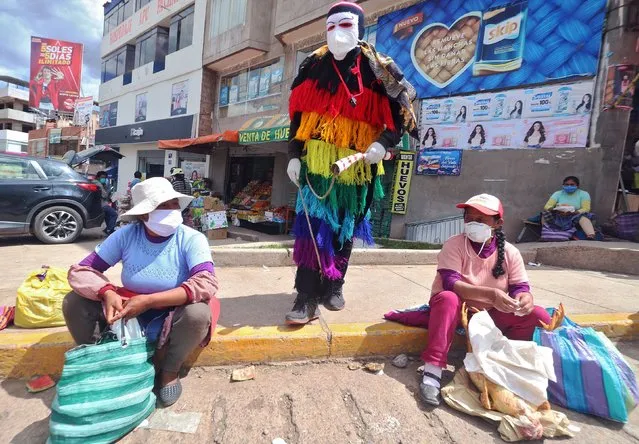
A man dressed in Andean attire as “Ukukus” or “Pabluchas”, a traditional character that acts as a vigilante imposing social order, uses a whip as a threat to force people to maintain their distance and remind them to wear face masks and gloves as a preventive measure against the novel coronavirus COVID-19, in the Vinocanchon market area in San Jeronimo district, close to the Peruvian Andean city of Cusco, on May 2, 2020. The government has identified public markets as major hotspots of the new coronavirus in Peru, where 40,459 confirmed cases and 1,124 deaths were reported on May 1. (Photo by Jose Carlos Angulo/AFP Photo)

A man dressed in Andean attire as “Ukukus” or “Pabluchas”, a traditional character that acts as a vigilante imposing social order, uses a whip as a threat to force people to maintain their distance and remind them to wear face masks and gloves as a preventive measure against the novel coronavirus COVID-19, in the Vinocanchon market area in San Jeronimo district, close to the Peruvian Andean city of Cusco, on May 2, 2020. The government has identified public markets as major hotspots of the new coronavirus in Peru, where 40,459 confirmed cases and 1,124 deaths were reported on May 1. (Photo by Jose Carlos Angulo/AFP Photo)
Details
04 May 2020 00:07:00