Loading...
Done
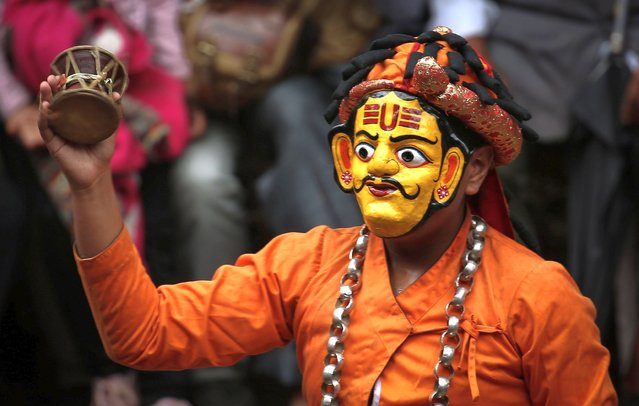
A masked dancer performs as part of “Devi Pyankha” (Devi Dance) to mark the beginning of the Indra Jatra Festival in Kathmandu, Nepal on September 15, 2021. Nepali celebrate the Indra Jatra festival to worship “Indra”, the god of rain and to mark the end of monsoon season. (Photo by Sunil Sharma/ZUMA Press Wire/Rex Features/Shutterstock)

A masked dancer performs as part of “Devi Pyankha” (Devi Dance) to mark the beginning of the Indra Jatra Festival in Kathmandu, Nepal on September 15, 2021. Nepali celebrate the Indra Jatra festival to worship “Indra”, the god of rain and to mark the end of monsoon season. (Photo by Sunil Sharma/ZUMA Press Wire/Rex Features/Shutterstock)
Details
23 Sep 2021 08:21:00
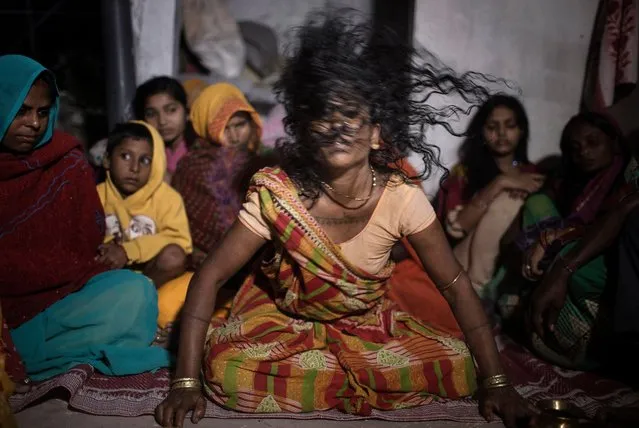
Marani Devi Chaudhary (C), aged 40, performs a ritual in front of shaman Paltan Yadav (unseen) at her home in Rajaur village in Dhanusha district, Nepal, 02 November 2017. The shaman identified Marani Devi to be possessed by their lineage god who was dissatisfied by their worship is thought by the family to have caused them misfortune and is even feared lead to their death. Therefore Marani Devi spent 1,500 USD to perform a healing ritual at the Ghost Festival held at the banks of Kamala River in Dhanusha district two days later. Every family or community has their own sacred god, called 'Kuldevta' in Nepali which means family deity or lineage god. Only family members or people within communities of the same caste can worship to the deity. They have their own rules and regulations of worship which varies from one family and community to another. Being unable to follow the rules and regulations or carry out worship is believed to cause misfortune. (Photo by Narendra Shrestha/EPA/EFE)

Marani Devi Chaudhary (C), aged 40, performs a ritual in front of shaman Paltan Yadav (unseen) at her home in Rajaur village in Dhanusha district, Nepal, 02 November 2017. The shaman identified Marani Devi to be possessed by their lineage god who was dissatisfied by their worship is thought by the family to have caused them misfortune and is even feared lead to their death. (Photo by Narendra Shrestha/EPA/EFE)
Details
17 Nov 2017 06:53:00
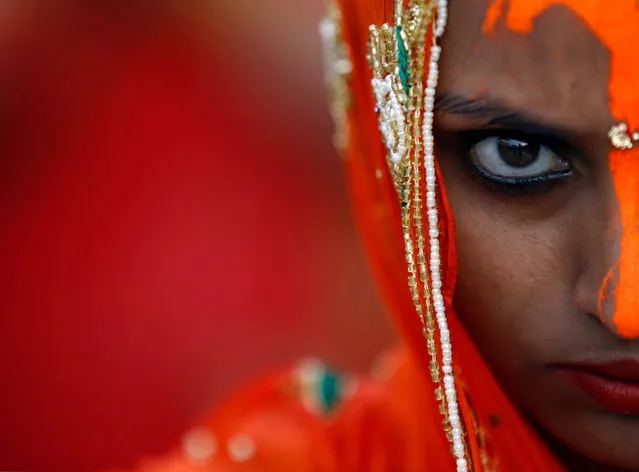
A devotee looks at the camera as she offers prayers to the setting sun during the “Chhath” festival at Bagmati River in Kathmandu, Nepal on October 26, 2017. (Photo by Navesh Chitrakar/Reuters)

A devotee looks at the camera as she offers prayers to the setting sun during the “Chhath” festival at Bagmati River in Kathmandu, Nepal on October 26, 2017. (Photo by Navesh Chitrakar/Reuters)
Details
02 Feb 2018 07:01:00
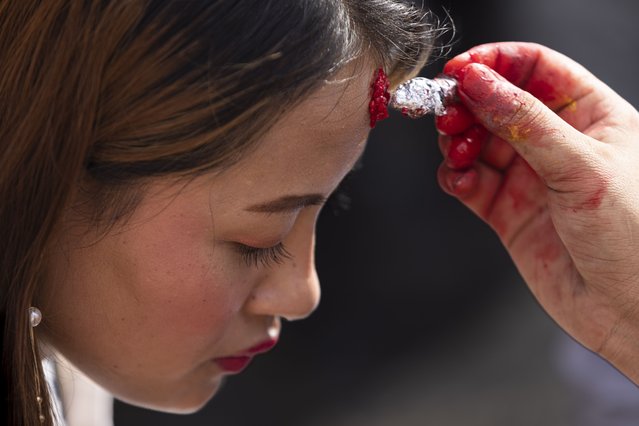
A Nepalese Hindu woman receives TIKA on her forehead while praying to Lord Shiva during the first day of the Sarwan Brata festival, which is observed through prayer and a month of fasting, at the Pashupati Temple in Kathmandu, Nepal, 17 July 2023. Thousands of married and single Nepalese Hindu women gathered in temples on each Monday of the Sawan month (spanning from 17 July to 17 August) to pray for a long and prosperous life of their husbands or for a chance to find a good one. The fasting is undertaken every Monday exclusively by women worshipping Lord Shiva. (Photo by Narendra Shrestha/EPA)

A Nepalese Hindu woman receives TIKA on her forehead while praying to Lord Shiva during the first day of the Sarwan Brata festival, which is observed through prayer and a month of fasting, at the Pashupati Temple in Kathmandu, Nepal, 17 July 2023. (Photo by Narendra Shrestha/EPA)
Details
05 Sep 2023 03:48:00
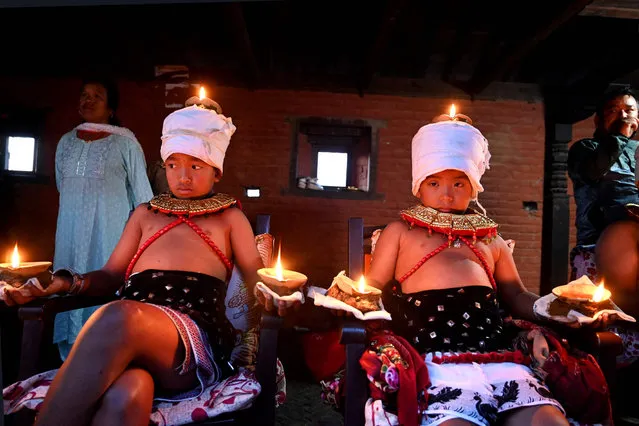
Young devotees carry oil lamps in the early morning of the tenth day celebrations of Hindu Nepali festival “Dashain” at a temple in Bhaktapur on the outskirts of Kathmandu on October 24, 2023. (Photo by Prakash Mathema/AFP Photo)

Young devotees carry oil lamps in the early morning of the tenth day celebrations of Hindu Nepali festival “Dashain” at a temple in Bhaktapur on the outskirts of Kathmandu on October 24, 2023. (Photo by Prakash Mathema/AFP Photo)
Details
10 Nov 2023 05:20:00
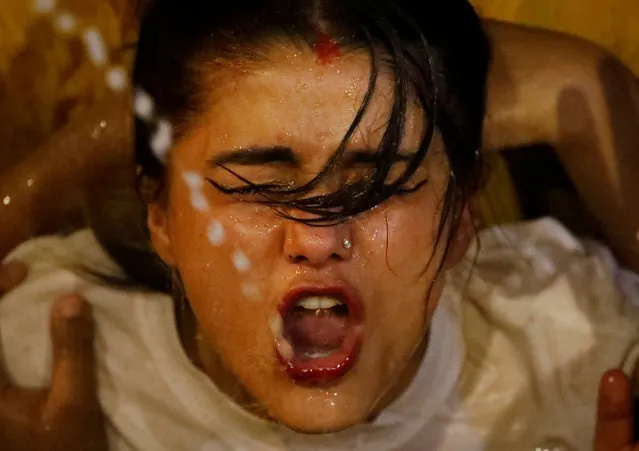
A woman struggles to drink homemade alcohol poured from the mouth of an idol of “Swet Bhairab” during the annual Indra Jatra festival to worship Indra, Kumari and other deities and to mark the end of monsoon season in Kathmandu, Nepal on September 15, 2019. (Photo by Monika Deupala/Reuters)

A woman struggles to drink homemade alcohol poured from the mouth of an idol of “Swet Bhairab” during the annual Indra Jatra festival to worship Indra, Kumari and other deities and to mark the end of monsoon season in Kathmandu, Nepal on September 15, 2019. (Photo by Monika Deupala/Reuters)
Details
21 Oct 2019 00:01:00
A worker stack bricks on his head at a brick factory in Lalitpur January 12, 2015. (Photo by Navesh Chitrakar/Reuters)

A worker stack bricks on his head at a brick factory in Lalitpur January 12, 2015. (Photo by Navesh Chitrakar/Reuters)
Details
16 Jan 2015 12:40:00
Nepalese women farmers spray mud water at each other while planting rice in a paddy field during the National Paddy Day in the village of Jitpur in Kathmandu, Nepal, 30 June 2015. On this day, known as Asar Pandra, farmers begin the annual rice planting season and mark the day with various festivities such as preparing rice meals with muddy water, spreads mud among farmers. (Photo by Narendra Shrestha/EPA)

Nepalese women farmers spray mud water at each other while planting rice in a paddy field during the National Paddy Day in the village of Jitpur in Kathmandu, Nepal, 30 June 2015. On this day, known as Asar Pandra, farmers begin the annual rice planting season and mark the day with various festivities such as preparing rice meals with muddy water, spreads mud among farmers. The Mud being a symbol for a prosperous season. The agricultural sector contributes about 60 per cent to Nepal's gross domestic product. (Photo by Narendra Shrestha/EPA)
Details
01 Jul 2015 13:16:00