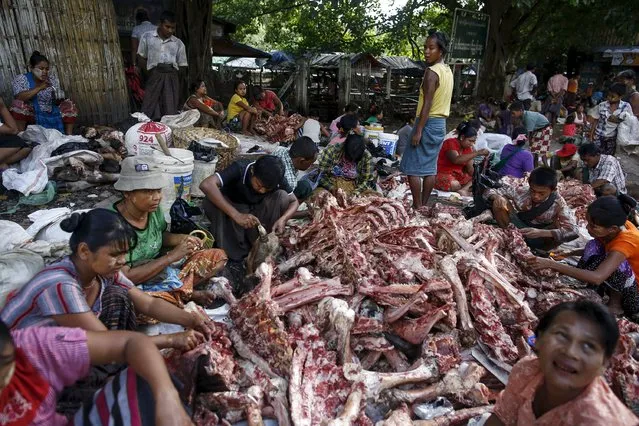
People remove meat from the bones of animals slaughtered for Eid al-Adha after they have been discarded at a garbage dump in Yangon, Myanmar, September 25, 2015. (Photo by Soe Zeya Tun/Reuters)
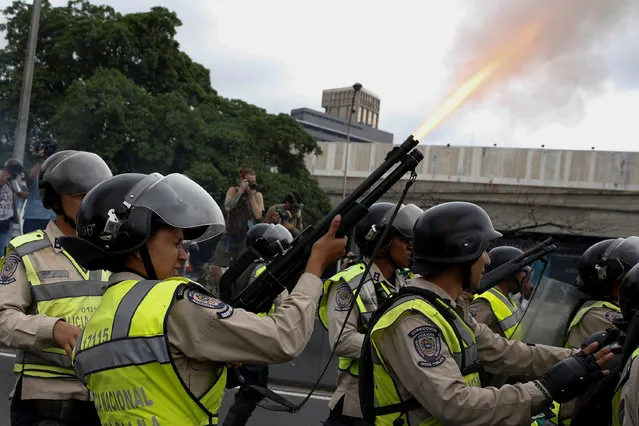
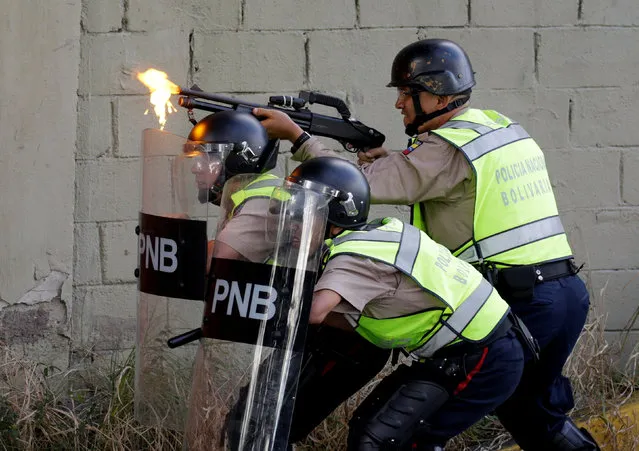
A riot policeman fires into the air during clashes with opposition supporters at a rally demanding a referendum to remove President Nicolas Maduro in Caracas, Venezuela, May 11, 2016. (Photo by Carlos Garcia Rawlins/Reuters)
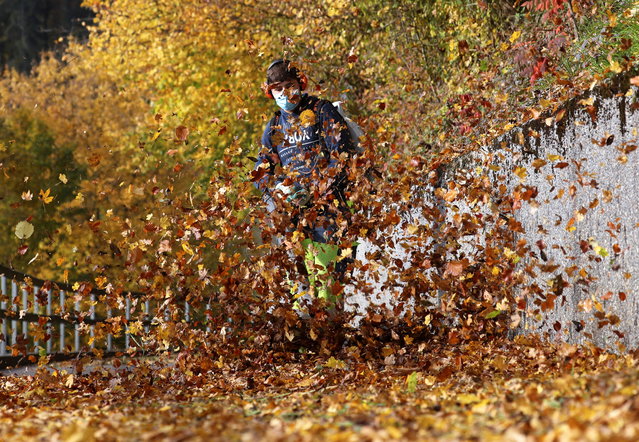
A worker wearing a protective mask uses a blower to remove leafs from a walkway during sunny autumn weather near Stallikon, Switzerland on October 27, 2020. (Photo by Arnd Wiegmann/Reuters)
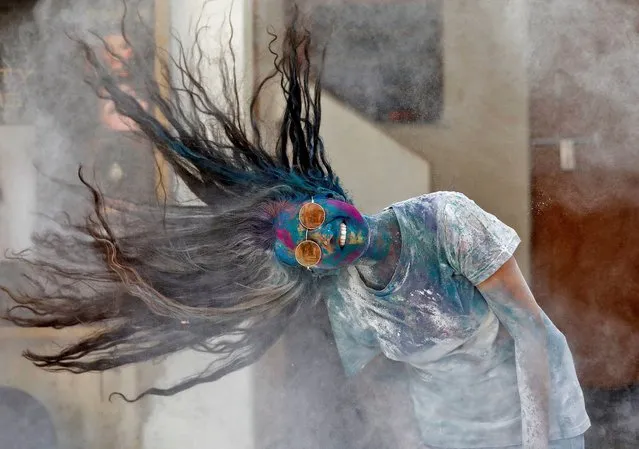
A woman daubed in colours shakes her head to remove the coloured powder during Holi celebrations in Ahmedabad, India on March 18, 2022. (Photo by Amit Dave/Reuters)
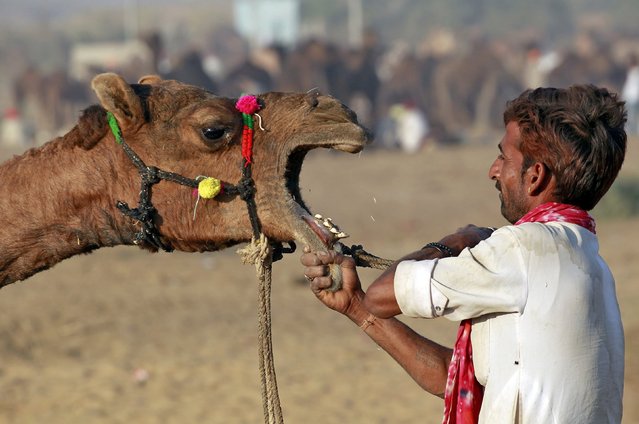
A camel herder removes the rope from the mouth of a camel at the Pushkar Fair in Rajasthan, India, November 22, 2015. Thousands of animals, mainly camels, are brought to the annual fair to be traded. (Photo by Jitendra Prakash/Reuters)
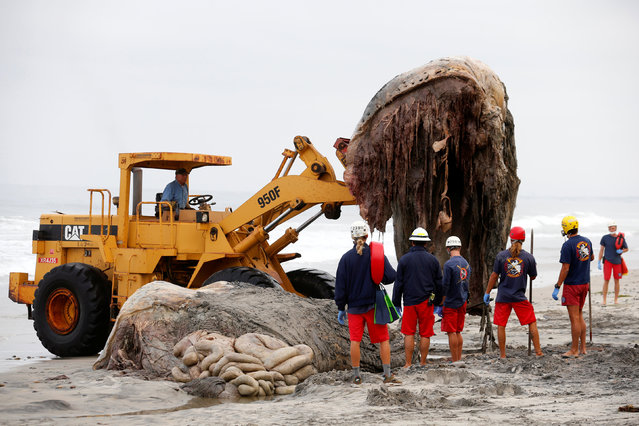
Heavy machinery is used as Encinitas lifeguards work to remove the carcass of a large humpback whale that washed ashore in Leucadia, California, United States, July 18, 2016. (Photo by Mike Blake/Reuters)
Riot police clash with protesters during a rally to demand a referendum to remove Venezuela's President Nicolas Maduro in Caracas, Venezuela, September 1, 2016. (Photo by Marco Bello/Reuters)
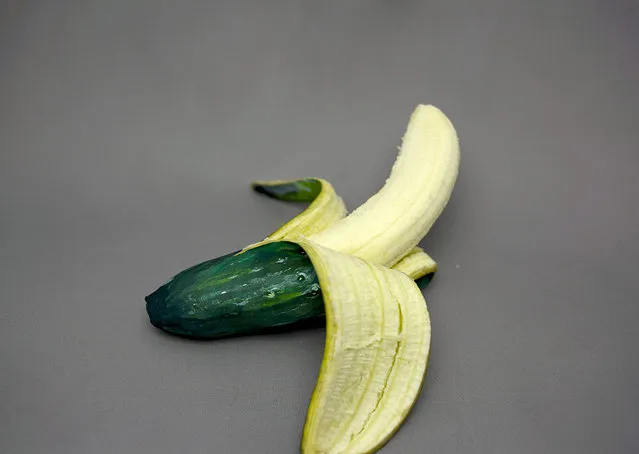
Japanese artist Hikaru Cho is already well-known for her bizarre and realistic body paintings, but now the Tokyo-based artist has applied her talent to everyday food items as well. In her playful “It’s Not What It Seems” series, she turns common foods into other kinds of food using only acrylic paint and her extraordinary talent.