Loading...
Done
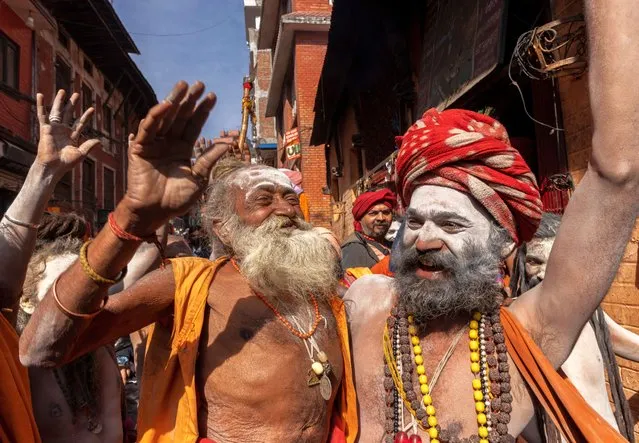
Sadhus take part in a religious roadshow ( Peshwai )  on December 14, 2024 in Allahabad, India. Kumbh Mela in 2025 is a Maha Kumbh, which is a significant Hindu festival celebrated once every 144 years at Prayagraj (Allahabad). Scheduled from January 13 to February 26, 2025, it attracts millions of devotees for ritual bathing at the confluence of the Ganges, Yamuna, and the mythical Saraswati rivers, marking a unique spiritual occasion with enhanced significance compared to regular Kumbh Mela. (Photo by Ritesh Shukla/Getty Images)

Sadhus take part in a religious roadshow (Peshwai) on December 14, 2024 in Allahabad, India. Kumbh Mela in 2025 is a Maha Kumbh, which is a significant Hindu festival celebrated once every 144 years at Prayagraj (Allahabad). Scheduled from January 13 to February 26, 2025, it attracts millions of devotees for ritual bathing at the confluence of the Ganges, Yamuna, and the mythical Saraswati rivers, marking a unique spiritual occasion with enhanced significance compared to regular Kumbh Mela. (Photo by Ritesh Shukla/Getty Images)
Details
26 Dec 2024 01:40:00
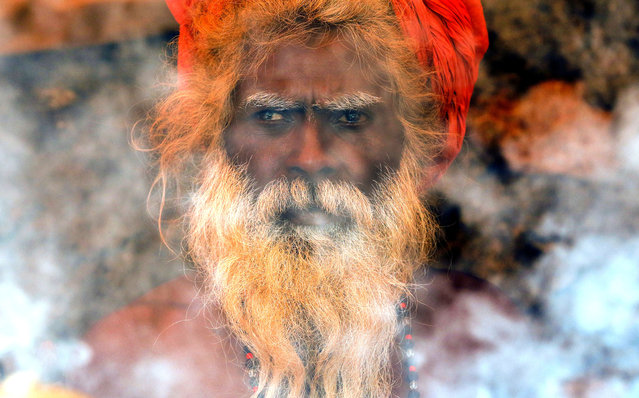
An Indian Sadhu, or Hindu holy man, sits for a community feast at the Sangam, the confluence of the Rivers Ganges, Yamuna and mythical Saraswati, during the annual month-long Magh Mela religious fair in Allahabad, India, Friday, January 16, 2015. (Photo by Rajesh Kumar Singh/AP Photo)

An Indian Sadhu, or Hindu holy man, sits for a community feast at the Sangam, the confluence of the Rivers Ganges, Yamuna and mythical Saraswati, during the annual month-long Magh Mela religious fair in Allahabad, India, Friday, January 16, 2015. Hundreds of thousands of devout Hindus are expected to take holy dips at the confluence during the astronomically auspicious period of over 45 days celebrated as Magh Mela. (Photo by Rajesh Kumar Singh/AP Photo)
Details
17 Jan 2015 11:54:00
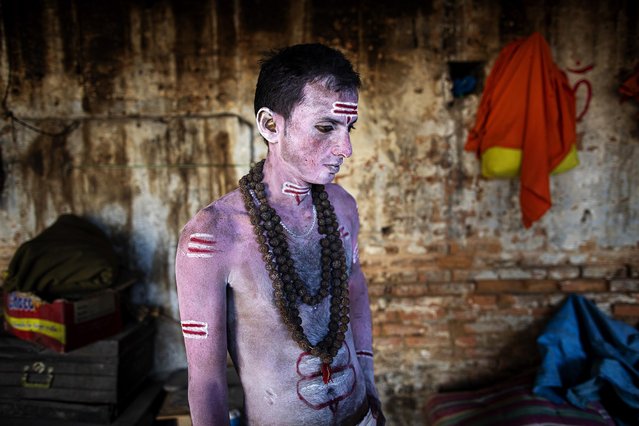
This picture taken on December 31, 2017 shows an Indian sadhu preparing food at a camp at Sangam, ahead of the Magh Mela festival, in Allahabad. The Magh Mela, which is known as a mini-Kumbh Mela, is scheduled to start January 2 and continue until February 13 with auspicious bathing dates throughout the 45 day period. (Photo by Sanjay Kanojia/AFP Photo)

This picture taken on December 31, 2017 shows an Indian sadhu preparing food at a camp at Sangam, ahead of the Magh Mela festival, in Allahabad. The Magh Mela, which is known as a mini-Kumbh Mela, is scheduled to start January 2 and continue until February 13 with auspicious bathing dates throughout the 45 day period. (Photo by Sanjay Kanojia/AFP Photo)
Details
02 Jan 2018 08:38:00
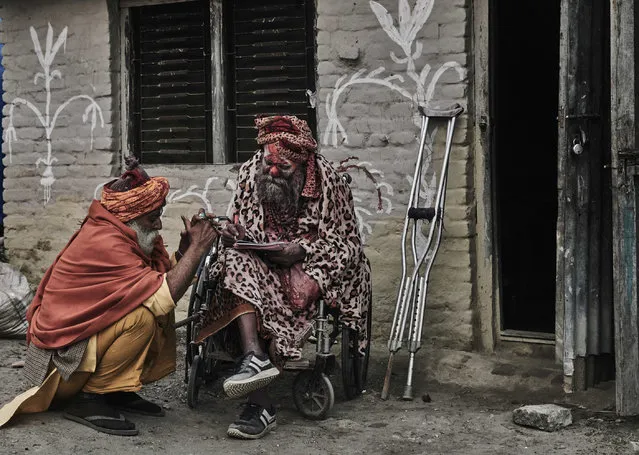
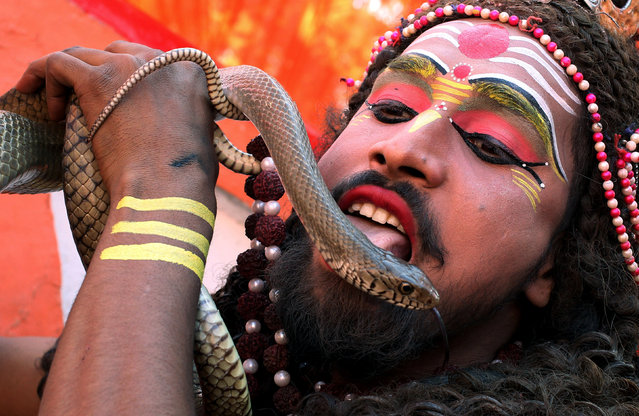
Two holy men with a decorative faces and headdresses, taken in Kathmandu, Nepal. (Photo by Jan Moeller Hansen/Barcroft Images)

Two holy men with a decorative faces and headdresses, taken in Kathmandu, Nepal. Wandering through the cities and forests of Nepal are the holy men, or Sadhus, who have left all materialistic pleasures behind to live a life devoted to God. Their appearances vary from brightly coloured face paints, and decorations, to minimalistic practical clothing, but they all represent the fundamental values and meanings of Hinduism. Danish photographer Jan Moeller Hansen visited the ancient capital city of Kathmandu between 2013 and 2016 and documented the mysterious holy wanderers. (Photo by Jan Moeller Hansen/Barcroft Images)
Details
02 Feb 2017 05:02:00


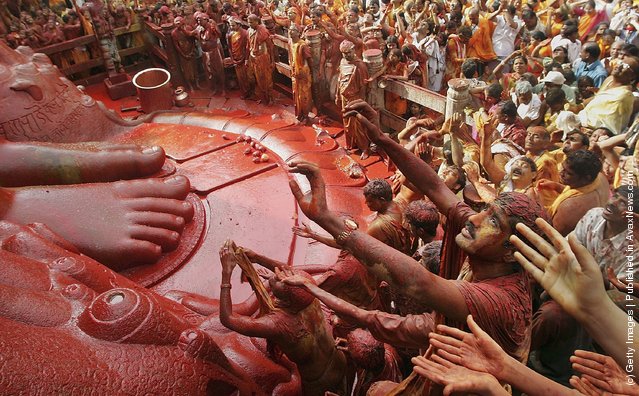
“The Mahamasthakabhisheka (or Mahamasthak Abhishek) is an important Jain festival held once every twelve years in the town of Shravanabelagola in Karnataka state, India. The festival is held in veneration of an immense 18 meter high statue of the Bhagwan (or Saint) Gomateshwara Bahubali. The anointing last took place in February 2006, and the next ceremony will occur in 2018”. – Wikipedia

Photo: A Jain Sadhu (2nd L) and devotees gather and pray at the feet of the monolithic statue of Jain sage Gomateswara during preparations for the Mahamastak Abhisheka ceremony February 7, 2006 in Shravanabelagola, India. The Mahamastak Abhisheka ceremony is held just once every twelve years where the statue will be bathed with milk, yogurt, saffron, gold coins and other religious items. The statue is said to be the world's largest monolith. The ceremony officially runs February 8-19. (Photo by Mario Tama/Getty Images)
Details
21 Jun 2011 12:27:00


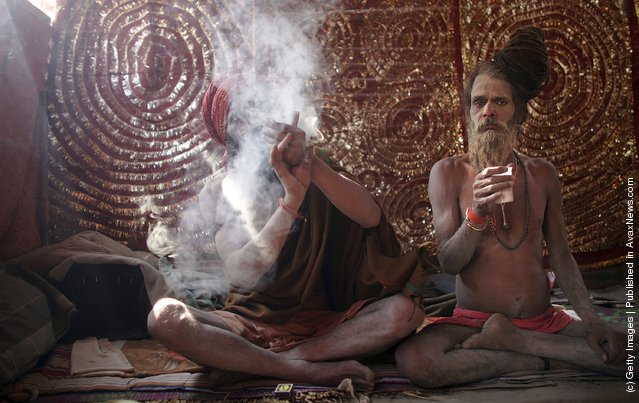
“Kumbh Mela is a mass Hindu pilgrimage in which Hindus gather at the Ganges river. The normal Kumbh Mela is celebrated every 3 years, the Ardh (half) Kumbh Mela is celebrated every six years at Haridwar and Prayag, the Purna (complete) Kumbh takes place every twelve years, at four places (Prayag (Allahabad), Haridwar, Ujjain, and Nashik). The Maha (great) Kumbh Mela which comes after 12 “Purna Kumbh Melas”, or 144 years, is held at Allahabad.

The last Ardh Kumbh Mela was held over a period of 45 days beginning in January 2007, more than 70 million Hindu pilgrims took part in the Ardh Kumbh Mela at Prayag, and on January 15, the most auspicious day of the festival of Makar Sankranti, more than 5 million participated. The previous Maha Kumbh Mela, held in 2001, was attended by around 60 million people, making it at the time the largest gathering anywhere in the world in recorded history”. – Wikipedia

Photo: Sadhus (holy men) smoke at their camp near the ritual site at Sangam, the confluence of the Ganges, Yamuna and mythical Saraswati rivers during the Ardh Kumbh Mela festival (Half Pitcher festival) January 18, 2007 in Allahabad, India. Millions of Hindu pilgrims have flocked to the largest religious gathering in the world which lasts for 45 days in northern India. The festival commemorates the mythical conflict between gods and demons over a pitcher filled with the “nectar of immortality”. Devotees believe that taking a holy dip in the Ganges at this time washes away their sins and paves the path to salvation. (Photo by Mario Tama/Getty Images)

Details
30 Jun 2011 10:27:00
A man dressed as Hindu Lord Shiva performs during a religious procession ahead of the Hindu festival of Maha Shivaratri, in Jammu February 23, 2017. (Photo by Mukesh Gupta/Reuters)

A man dressed as Hindu Lord Shiva performs during a religious procession ahead of the Hindu festival of Maha Shivaratri, in Jammu February 23, 2017. (Photo by Mukesh Gupta/Reuters)
Details
26 Feb 2017 00:05:00
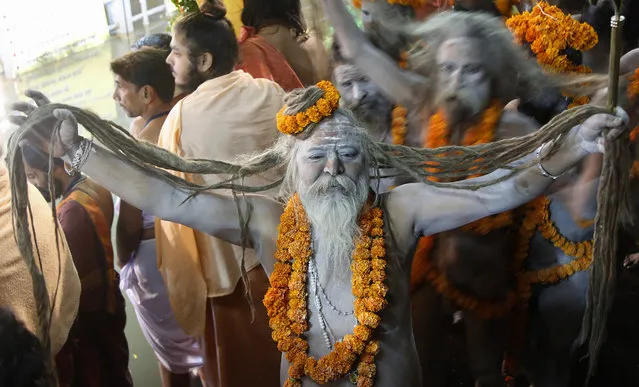
A naked Hindu holy man arrives to bath in the Godavari River during Kumbh Mela, or Pitcher Festival, at Trimbakeshwar in Nasik, India, Saturday, August 29, 2015. (Photo by Rajanish Kakade/AP Photo)

A naked Hindu holy man arrives to bath in the Godavari River during Kumbh Mela, or Pitcher Festival, at Trimbakeshwar in Nasik, India, Saturday, August 29, 2015. Hindus believe taking a dip in the waters of a holy river during the festival, will cleanse them of their sins. According to Hindu mythology, the Kumbh Mela celebrates the victory of gods over demons in a furious battle over a nectar that would give them immortality. (Photo by Rajanish Kakade/AP Photo)
Details
30 Aug 2015 11:34:00