Loading...
Done
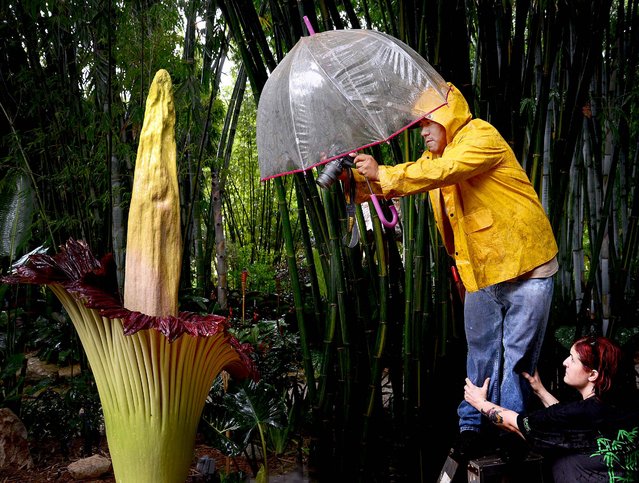
Mateo Santiago, Field Manager at Tropical Bamboo Nursery and Gardens, photographs rain water collecting in the corpse flower as Garden Manager Melanie Benson steadies a ladder. Santiago crinkled his nose up distastefully when he described its odor, which was at its worse Sunday night. “It smelled like a dead rat”. (Photo by Melanie Bell/Palm Beach Daily News)

Mateo Santiago, Field Manager at Tropical Bamboo Nursery and Gardens, photographs rain water collecting in the corpse flower as Garden Manager Melanie Benson steadies a ladder. Santiago crinkled his nose up distastefully when he described its odor, which was at its worse Sunday night. “It smelled like a dead rat”. (Photo by Melanie Bell/Palm Beach Daily News)
Details
23 Jul 2014 09:56:00
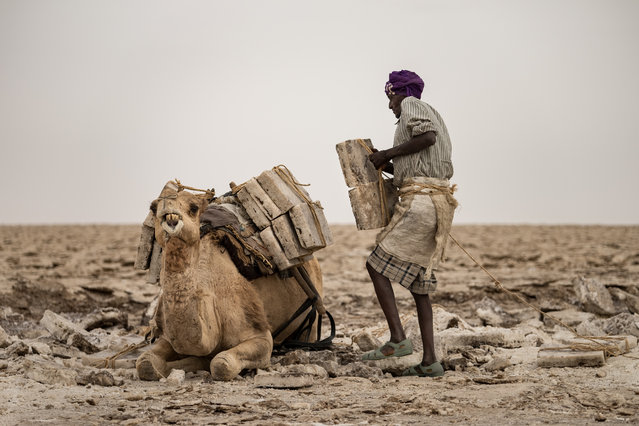
Dromedaries and donkeys are used to transport the salt. (Photo by Joel Santos/Barcroft Images)

Unforgiving temperatures of up to 60℃ (140℉) beat down on these saltminers on a daily basis. The mines, situated in the Afar Triangle in Ethiopia, stretch across 38,000 sq miles and at their lowest point are more than 300ft below sea level. Joel Santos travelled to capture the area’s dry, brutal beauty. Here: Dromedaries and donkeys are used to transport the salt. (Photo by Joel Santos/Barcroft Images)
Details
24 Aug 2016 11:31:00
A cat disrupts between Mexico's Tigres UANL and Real Salt Lake during a quarterfinals match as part of the Leagues Cup 2019 at Rio Tinto Stadium on July 24, 2019 in Sandy, Utah. (Photo by Jeff Swinger/USA TODAY Sports)

A cat disrupts between Mexico's Tigres UANL and Real Salt Lake during a quarterfinals match as part of the Leagues Cup 2019 at Rio Tinto Stadium on July 24, 2019 in Sandy, Utah. (Photo by Jeff Swinger/USA TODAY Sports)
Details
29 Jul 2019 00:03:00
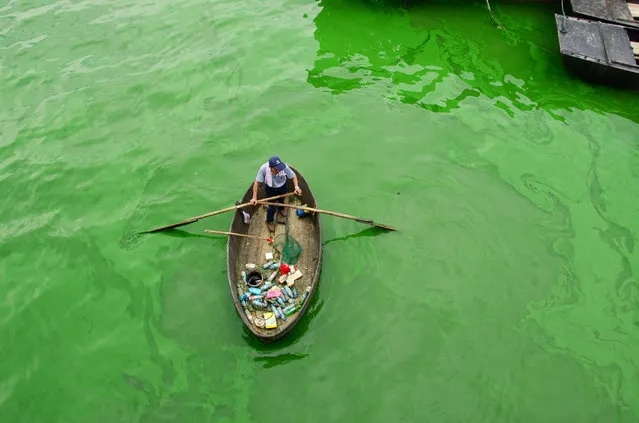
A fisherman boats in Chao Lake where thick cyanobacteria gather on the surface on August 5, 2015 in Chaohu, Anhui Province of China. As high temperature came in summar, part of water in Anhui Province's Chao Lake breeds large tracts of cyanobacteria which not only brought pollution to sense of smell, but also affected people's life. (Photo by ChinaFotoPress/ChinaFotoPress via Getty Images)

A fisherman boats in Chao Lake where thick cyanobacteria gather on the surface on August 5, 2015 in Chaohu, Anhui Province of China. As high temperature came in summar, part of water in Anhui Province's Chao Lake breeds large tracts of cyanobacteria which not only brought pollution to sense of smell, but also affected people's life. (Photo by ChinaFotoPress/ChinaFotoPress via Getty Images)
Details
06 Aug 2015 11:36:00
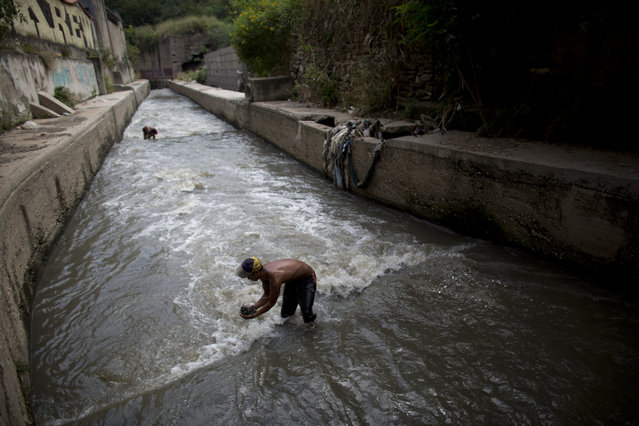
In this November 30, 2017 photo, Douglas scoops up mud from the bottom of the polluted Guaire River, in search of gold and anything valuable he can sell, in Caracas, Venezuela. Some stretches of the river smell of sewer while others emit a toxic odor of fuel, a stench that stays in ones nose for hours after leaving the water. (Photo by Ariana Cubillos/AP Photo)

In this November 30, 2017 photo, Douglas scoops up mud from the bottom of the polluted Guaire River, in search of gold and anything valuable he can sell, in Caracas, Venezuela. Some stretches of the river smell of sewer while others emit a toxic odor of fuel, a stench that stays in ones nose for hours after leaving the water. (Photo by Ariana Cubillos/AP Photo)
Details
11 Jan 2018 07:35:00
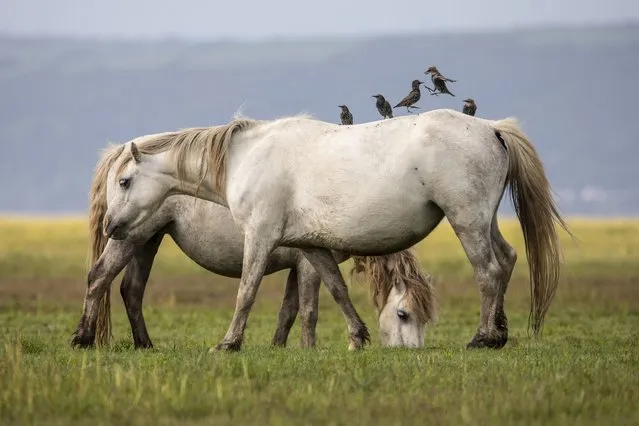
Semi-feral, conservation ponies, graze on the salt marsh's of Gower, Swansea, Wales, United Kingdom on September 7, 2022. (Photo by Joann Randles/Cover Images)

Semi-feral, conservation ponies, graze on the salt marsh's of Gower, Swansea, Wales, United Kingdom on September 7, 2022. (Photo by Joann Randles/Cover Images)
Details
18 Sep 2022 04:43:00


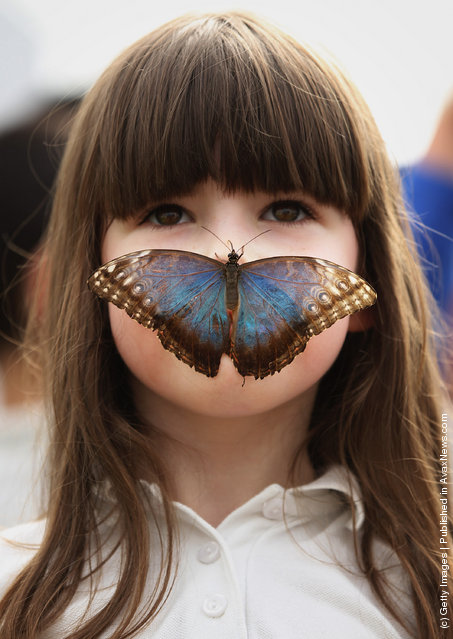
A girl allows a butterfly to be placed on her nose at the Sensational Butterflies exhibition at the Natural History Museum on April 6, 2011 in London, England. The exhibition is divided up into five sensory zones exploring how butterflies see, hear, taste, smell and touch. The display containing hundreds of butterflies runs from April 12 to September 11, 2011. (Photo by Peter Macdiarmid/Getty Images)
Details
07 Apr 2011 08:02:00
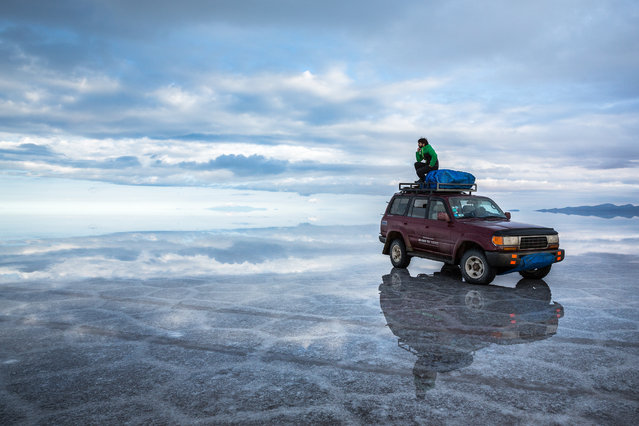
At 10,582 square kilometres, the Bolivian salt flats – otherwise known as Salar de Uyuni – are the largest on the planet and contain between 50 and 70% of the world’s lithium reserves. After exploring Chile and Argentina, photographer Joel Santos decided to travel to Bolivia in January 2017 to check the salt flats off his bucket list. With an electrical storm rolling in, Joel and his two travelling companions were the only souls left on the vast flats and captured the eerie flats without a person in sight. (Photo by Joel Santos/Barcroft Images)

At 10,582 square kilometres, the Bolivian salt flats – otherwise known as Salar de Uyuni – are the largest on the planet and contain between 50 and 70% of the world’s lithium reserves. After exploring Chile and Argentina, photographer Joel Santos decided to travel to Bolivia in January 2017 to check the salt flats off his bucket list. With an electrical storm rolling in, Joel and his two travelling companions were the only souls left on the vast flats and captured the eerie flats without a person in sight. (Photo by Joel Santos/Barcroft Images)
Details
12 Aug 2019 00:03:00