Loading...
Done
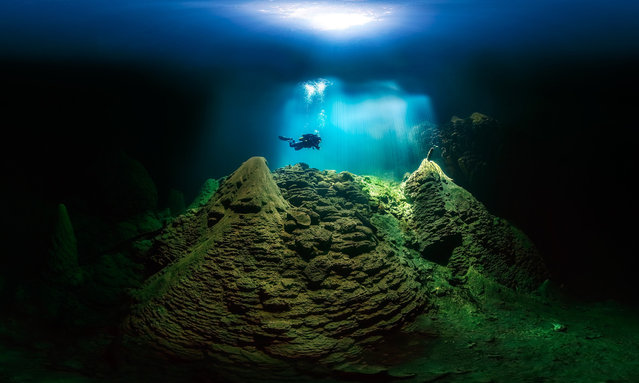
A cave diver in Anhumas Abyss, Bonito, Brazil. (Photo by Marcio Cabral/Epson International Pano Awards 2018)

A cave diver in Anhumas Abyss, Bonito, Brazil. (Photo by Marcio Cabral/Epson International Pano Awards 2018)
Details
19 Nov 2018 00:01:00
Some people prepare to catch offerings thrown by Tengger tribe people into the crater of Bromo volcano to in Probolinggo, East Java province, on June 30, 2018, as part of Yadnya Kasada festival which falls on the 14th day of the Kasada month based on the traditional Hindu lunar calendar. (Photo by Juni Kriswanto/AFP Photo)

Some people prepare to catch offerings thrown by Tengger tribe people into the crater of Bromo volcano to in Probolinggo, East Java province, on June 30, 2018, as part of Yadnya Kasada festival which falls on the 14th day of the Kasada month based on the traditional Hindu lunar calendar. (Photo by Juni Kriswanto/AFP Photo)
Details
03 Jul 2018 10:16:00
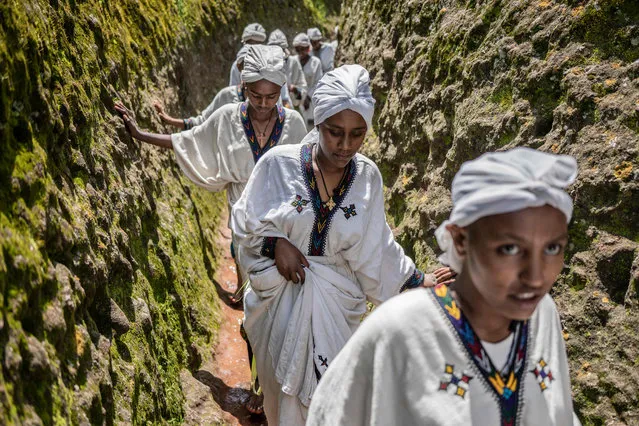
Young women walk through the cave of Saint George during Ashenda festival, at Saint George Church, in Lalibela, Ethiopia, on August 22, 2022. (Photo by Amanuel Sileshi/AFP Photo)

Young women walk through the cave of Saint George during Ashenda festival, at Saint George Church, in Lalibela, Ethiopia, on August 22, 2022. (Photo by Amanuel Sileshi/AFP Photo)
Details
27 Aug 2022 04:21:00
Dressers make last minute adjustments to the costumes of dancers performing as horses during a press preview of American artist Nick Cave's first major work shown in Australia, entitled HEARD.SYD in Sydney, November 8, 2016. (Photo by Jason Reed/Reuters)

Dressers make last minute adjustments to the costumes of dancers performing as horses during a press preview of American artist Nick Cave's first major work shown in Australia, entitled HEARD.SYD in Sydney, November 8, 2016. Over several days the live art performance will feature 30 “horses” dancing to live percussion beats in suits made from coloured raffia plant fibres. (Photo by Jason Reed/Reuters)
Details
09 Nov 2016 06:16:00
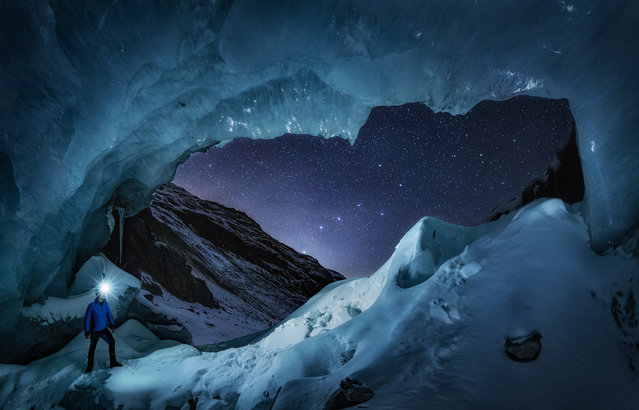
“Mr Big Dipper”, Nicholas Roemmelt (Denmark). A stargazer observes the constellation of the Big Dipper perfectly aligned with the window of the entrance to a large glacier cave in Engadin, Switzerland. This is a panorama of two pictures, and each is a stack of another two pictures: one for the stars and another one for the foreground, but with no composing or time blending. (Photo by Nicholas Roemmelt/National Maritime Museum/The Guardian)

“Mr Big Dipper”, Nicholas Roemmelt (Denmark). A stargazer observes the constellation of the Big Dipper perfectly aligned with the window of the entrance to a large glacier cave in Engadin, Switzerland. This is a panorama of two pictures, and each is a stack of another two pictures: one for the stars and another one for the foreground, but with no composing or time blending. (Photo by Nicholas Roemmelt/National Maritime Museum/The Guardian)
Details
27 Jul 2017 06:50:00
Tree trunks and rocks are set up to support a leaning wall of Li Yonghua's damaged cave house in an area where land is sinking next to a coal mine, in Helin village of Xiaoyi, China's Shanxi province, August 2, 2016. (Photo by Jason Lee/Reuters)

Tree trunks and rocks are set up to support a leaning wall of Li Yonghua's damaged cave house in an area where land is sinking next to a coal mine, in Helin village of Xiaoyi, China's Shanxi province, August 2, 2016. (Photo by Jason Lee/Reuters)
Details
15 Aug 2016 11:49:00
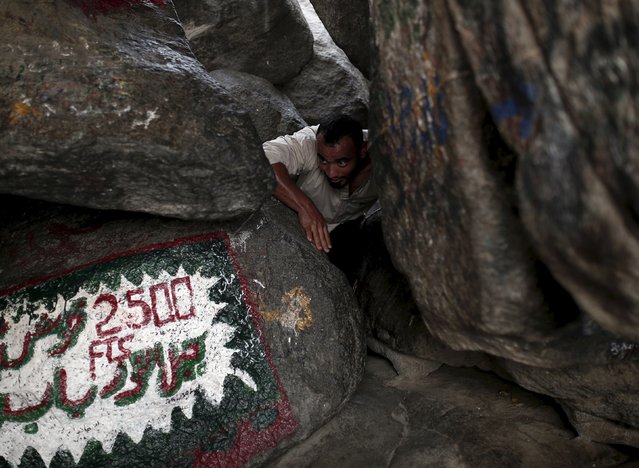
A Muslim pilgrim makes his way to Hera cave, where Muslims believe Prophet Mohammad received the first words of the Koran through Gabriel, at the top of Mount Al-Noor during the annual haj pilgrimage in the holy city of Mecca, September 21, 2015. (Photo by Ahmad Masood/Reuters)

A Muslim pilgrim makes his way to Hera cave, where Muslims believe Prophet Mohammad received the first words of the Koran through Gabriel, at the top of Mount Al-Noor during the annual haj pilgrimage in the holy city of Mecca, September 21, 2015. (Photo by Ahmad Masood/Reuters)
Details
23 Sep 2015 08:01:00
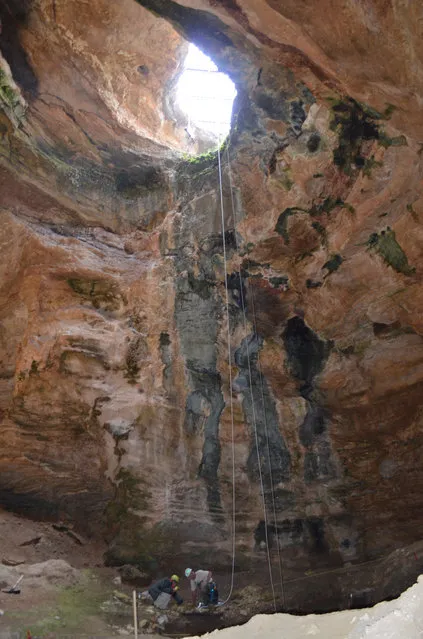
This July 2014 image provided by the Bureau of Land Management shows the interior of the Natural Trap Cave in north-central Wyoming. The cave holds the remains of tens of thousands of animals, including many now-extinct species, from the late Pleistocene period tens of thousands of years ago. Scientists have resumed digging for the first time in more than 30 years. (Photo by AP Photo/Bureau of Land Management)

This July 2014 image provided by the Bureau of Land Management shows the interior of the Natural Trap Cave in north-central Wyoming. The cave holds the remains of tens of thousands of animals, including many now-extinct species, from the late Pleistocene period tens of thousands of years ago. Scientists have resumed digging for the first time in more than 30 years. (Photo by AP Photo/Bureau of Land Management)
Details
10 Aug 2014 10:35:00