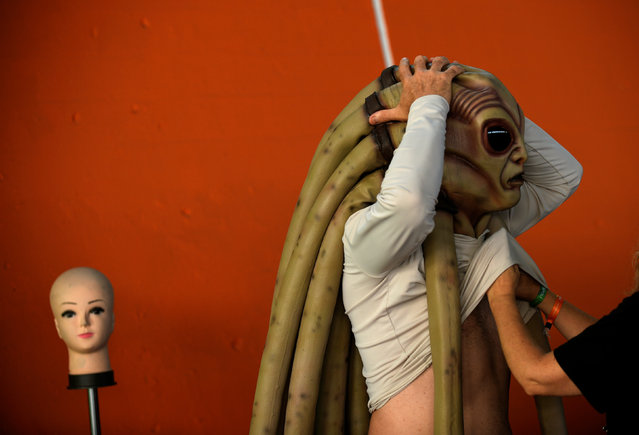
A cosplayer prepares before the start of the parade during the Metropoli (Media Culture and Entertainment Festival) in Gijon, northern Spain, July 3, 2016. (Photo by Eloy Alonso/Reuters)
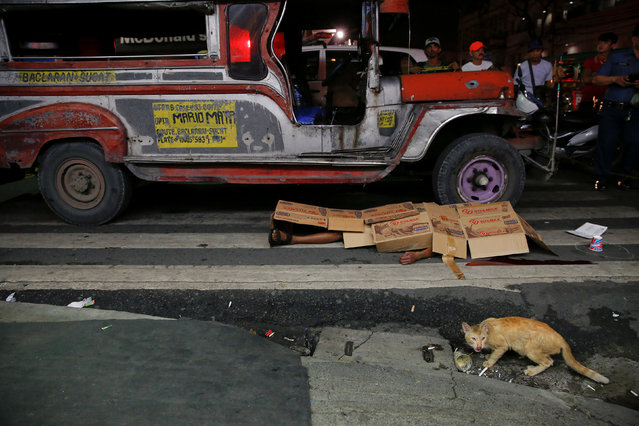
A cat walks in front of the body of a man killed by unknown gunmen in Manila, Philippines early October 18, 2016. A sign on a cardboard found near the body reads, “Pusher Ako, Wag Tularan”, which translates to “I am a (drug) pusher, don't be like me”. (Photo by Damir Sagolj/Reuters)
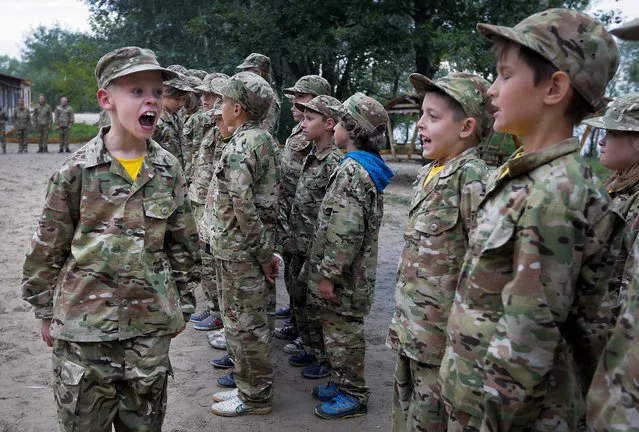
In this photo taken on Friday, July 14, 2017, a student at a paramilitary camp for children calls the rank to attention outside Kiev, Ukraine. As the deadly conflict in eastern Ukraine entered its third year, some parents in Ukraine are anxious to make sure their children are ready to fight it, instead of swimming and playing volleyball. (Photo by Efrem Lukatsky/AP Photo)
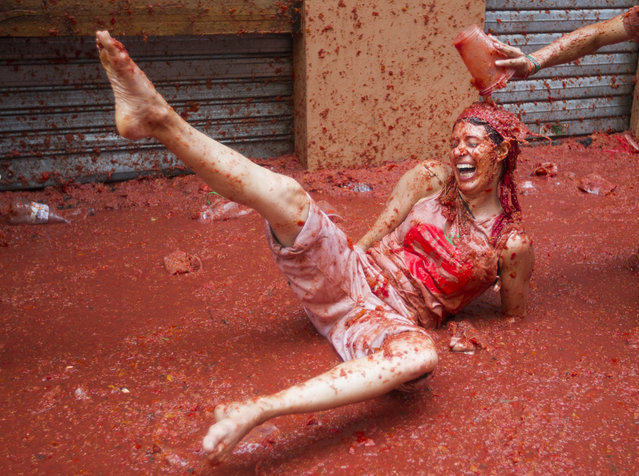
A reveller covered in tomato pulp takes part in the annual “Tomatina” festival in the eastern town of Bunol, on August 30, 2017. The iconic fiesta – which celebrates its 72nd anniversary and is billed at “the world's biggest food fight” – has become a major draw for foreigners, in particular from Britain, Japan and the United States. (Photo by Jaime Reina/AFP Photo)
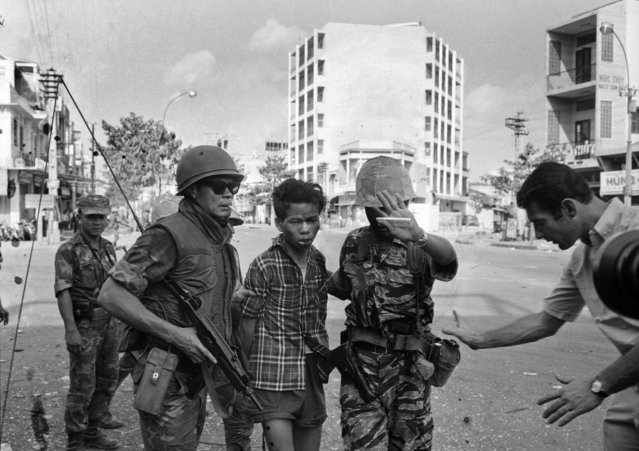
South Vietnamese forces escort suspected Viet Cong officer Nguyen Van Lem (also known as Bay Lop) on a Saigon street February 1, 1968, early in the Tet Offensive. Moments later, Lem was executed by Gen. Nguyen Ngoc Loan, chief of the national police. (Photo by Eddie Adams/AP Photo)
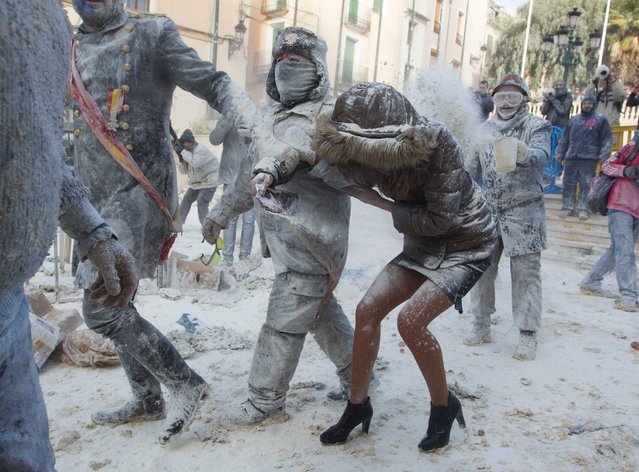
Revellers dressed in mock military garb take part in the “Els Enfarinats” battle in the southeastern Spanish town of Ibi on December 28, 2017. During this 200-year-old traditional festival participants known as Els Enfarinats (those covered in flour) dress in military clothes and stage a mock coup d'etat as they battle using flour, eggs and firecrackers outside the town hall as part of the celebrations of the Day of the Innocents. (Photo by Jaime Reina/AFP Photo)
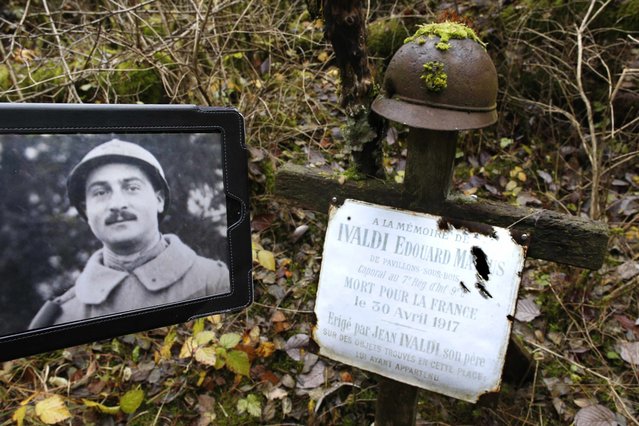
A portrait of French WWI soldier Edouard Marius Ivaldi is displayed on a tablet, in this illustration picture, alongside his battlefield grave memorial, a wooden cross with a battlefield helmet in Champagne, eastern France, November 3, 2015. (Photo by Charles Platiau/Reuters)