Loading...
Done
Spectacular images offering insight into the lives of the Huaorani people in the Ecuadorian Amazon have been revealed showing how they use traditional methods to hunt monkeys for food. The stunning pictures were taken by conservation photographer Pete Oxford from Torquay, Devon in the Ecuadorian Amazon. “The Huaorani Indians are a forest people highly in tune with their environment. Many are now totally acculturated since the 1950s by missionaries”, said Pete. “Today they face radical change to their culture to the proximity of oil exploration within their territory and the Yasuni National Park and Biosphere Reserve, they are vastly changed. Some still live very traditionally and for this shoot, through my Huaorani friend, a direct relative of those photographed he wanted to depict them as close to their original culture as possible. They still largely hunt with blow pipes and spears eating a lot of monkeys and peccaries”. The Huaorani are also known as the Waorani, Waodani or the Waos and are native Amerindians. Their lands are located between the Curaray and Napo rivers and speak the Huaorani language. Pete says that during his visit he was welcomed into the group and hopes that ancient cultures can be saved. Here: The tribe were seen celebrating after a hunter returned to camp with a wild pig. (Photo by Pete Oxford/Mediadrumworld.com)

Spectacular images offering insight into the lives of the Huaorani people in the Ecuadorian Amazon have been revealed showing how they use traditional methods to hunt monkeys for food. The stunning pictures were taken by conservation photographer Pete Oxford from Torquay, Devon in the Ecuadorian Amazon. Here: The tribe were seen celebrating after a hunter returned to camp with a wild pig. (Photo by Pete Oxford/Mediadrumworld.com)
Details
20 Jan 2017 07:58:00
circa 1925:  A Zulu woman playing the piano while a group of others sit and listen.  (Photo by General Photographic Agency/Getty Images)

“The Zulu are the largest South African ethnic group, with an estimated 10–11 million people living mainly in the province of KwaZulu-Natal. Small numbers also live in Zimbabwe, Zambia, and Mozambique. Their language, Zulu, is a Bantu language; more specifically, part of the Nguni subgroup. The Zulu Kingdom played a major role in South African history during the 19th and 20th centuries. Under apartheid, Zulu people were classed as third-class citizens and suffered from state-sanctioned discrimination. They remain today the most numerous ethnic group in South Africa, and now have equal rights along with all other citizens”. – Wikipedia.

Photo: A Zulu woman playing the piano while a group of others sit and listen (to put it briefly, Englishmen scoff over Zulu). South Africa, circa 1925. (Photo by General Photographic Agency)

Details
03 Feb 2014 09:40:00
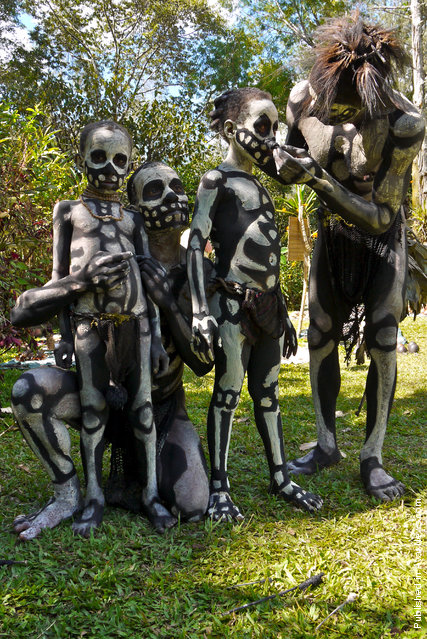
Chimbu Tribe And The Skeleton Body Painting

Skeleton bodypainting in Chimbu tribe. Village Mindima, Simbu (a Highlands Region province in Papua New Guinea), September 14, 2009. (Photo by Rita Willaert; Source: Flickr)
Details
26 Apr 2012 13:39:00
Models Mei Jiang and Camille Razat pose backstage prior to the “Le Defile Walk Your Worth” By L'Oreal Paris Womenswear Spring/Summer 2023 show as part of Paris Fashion Week on October 02, 2022 in Paris, France. (Photo by Francois Durand/Getty Images for L'Oréal Paris)

Models Mei Jiang and Camille Razat pose backstage prior to the “Le Defile Walk Your Worth” By L'Oreal Paris Womenswear Spring/Summer 2023 show as part of Paris Fashion Week on October 02, 2022 in Paris, France. (Photo by Francois Durand/Getty Images for L'Oréal Paris)
Details
18 Dec 2023 22:42:00
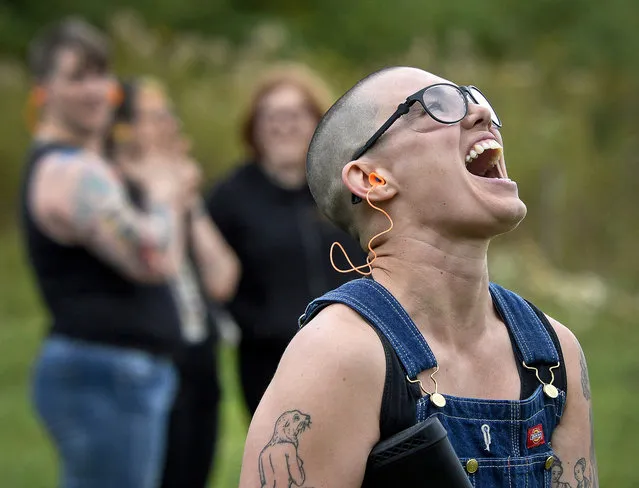
Colombia supporters having fun during the FIFA Women's World Cup Australia & New Zealand 2023 Group H match between Germany and Colombia at Sydney Football Stadium on July 30, 2023 in Sydney, Australia. (Photo by Carl Recine/Reuters)

Colombia supporters having fun during the FIFA Women's World Cup Australia & New Zealand 2023 Group H match between Germany and Colombia at Sydney Football Stadium on July 30, 2023 in Sydney, Australia. (Photo by Carl Recine/Reuters)
Details
10 Oct 2024 03:48:00
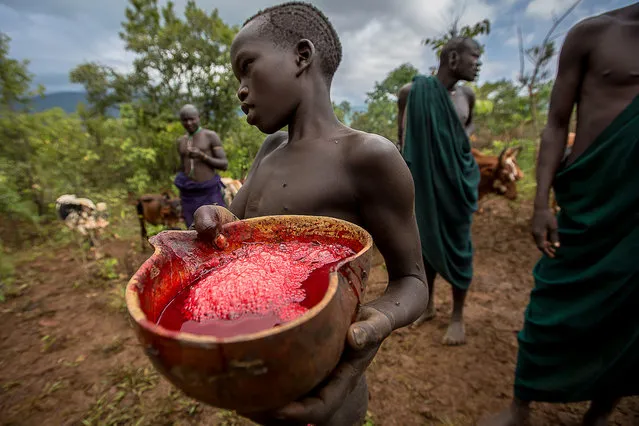
Surma tribe at a blood drinking ritual

“Suri tribes boys are collecting the blood of a cow in a calabash the vein of the animal was opened with a bow and an arrow. Like most pastoralists the Surma people are drinking fresh blood which is from the cow vein. Only some minutes after the wound at the vein is closed again the animals are back with their herd”. (Photo and caption by Anthony Pappone)
Details
17 Nov 2013 11:12:00
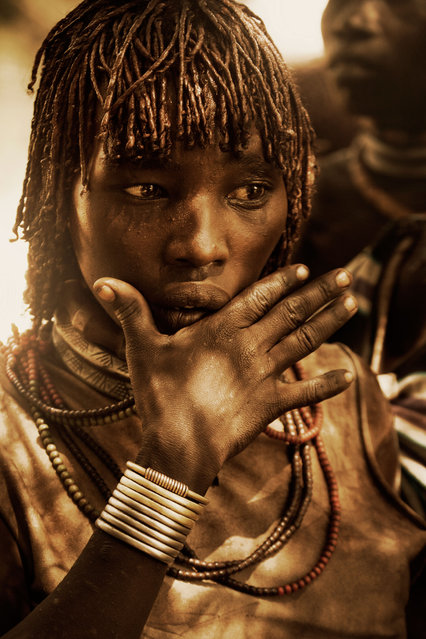
The Hamar people traditionally use red ocher clay to braid the hair of their women. (Photo by Diego Arroyo)

During his time in Ethiopia, New York-based art director and photographer Diego Arroyo spent time with the Hamar, Mursi, Dassanech, and Arbore Tribes. They, along with several others tribes, make up the 200,000 people situated in Africa’s Great Rift Valley. The people of the Omo Valley are still primarily herders and farmers, living an isolated and simple life. While they have yet to be truly touched by globalization, they could soon disappear. Their way of life is being threatened by a massive hydroelectric dam. (Photo by Diego Arroyo)
Details
13 Aug 2014 10:00:00
Gun-Toting Animals By Xiau Fong
Tempering the violence of modern weaponry with charmingly rendered creatures, artist Xiau-Fong Wee captures a dark humor in her quirky drawings. While some of the weapons appear terrifyingly realistic, others such as in the ray gun wielding bunny portrait, speaks more to the fantastical worlds of science fiction. The anthropomorphic dispositions of the spectacle-wearing creatures also range in merry reverie to stern seriousness, adding to the delightful nature of these well-executed portraits. View more of the drawings below.
Details
27 Jul 2013 08:08:00