Loading...
Done
A view of traditional bolinhos de bacalhau (fried codfish balls) in Rio de Janeiro, Brazil, May 7, 2016. (Photo by Sergio Moraes/Reuters)

If the most popular foods of Rio de Janeiro have one thing in common, it is their informality. You can find fine restaurants in the city, but they do not set Rio apart from other places. What does set it apart, and what invariably brings its residents, known as "Cariocas," together is the unpretentious food they eat in bright, loud, crowded bars and restaurants, on busy street corners, or after a day at the beach. Here: A view of traditional bolinhos de bacalhau (fried codfish balls) in Rio de Janeiro, Brazil, May 7, 2016. (Photo by Sergio Moraes/Reuters)
Details
05 Aug 2016 13:20:00
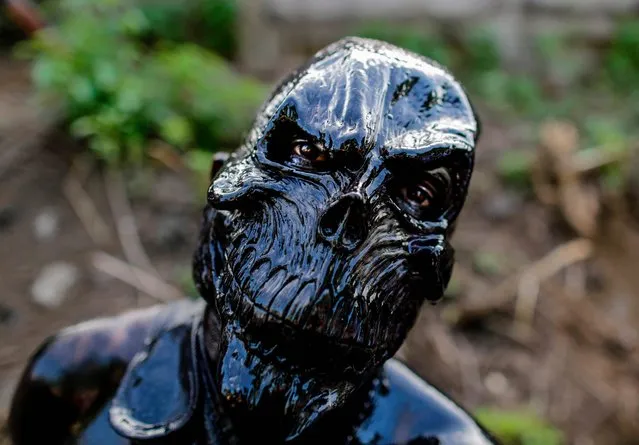
A catholic faithful smeared in burnt oil, takes part in the opening of the ten-day celebration of the Santo Domingo de Guzman festival in Managua, on August 1, 2019. (Photo by Inti Ocon/AFP Photo)

A catholic faithful smeared in burnt oil, takes part in the opening of the ten-day celebration of the Santo Domingo de Guzman festival in Managua, on August 1, 2019. In Central America the black devil, or El Cadejo, is an evil dog-like spirit with glowing red eyes that locals believe eats new born puppies. (Photo by Inti Ocon/AFP Photo)
Details
06 Aug 2019 00:01:00
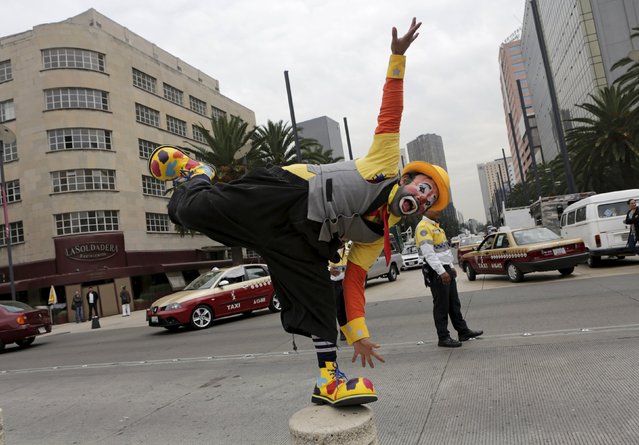
A clown performs next to the Monument to the Revolution as he takes part in the Latin American Clown Convention in Mexico City, Mexico, October 21, 2015. (Photo by Henry Romero/Reuters)

A clown performs next to the Monument to the Revolution as he takes part in the Latin American Clown Convention in Mexico City, Mexico, October 21, 2015. The convention will be held from October 19 to 22 in Mexico City. (Photo by Henry Romero/Reuters)
Details
25 Oct 2015 08:03:00
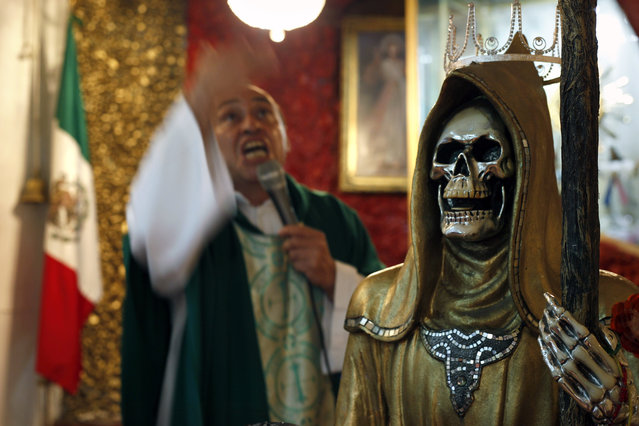
In this February 19, 2017 photo, a statue of the Death Saint stands inside Mercy Church as Juan Carlos Avila Mercado gives a service, on the edge of Mexico City's Tepito neighborhood. “She chooses them and has always been with us”, said Avila, who says he is a Catholic priest, but who is not listed among the archdiocese's priests. “We are born and we die with death”. (Photo by Marco Ugarte/AP Photo)

In this February 19, 2017 photo, a statue of the Death Saint stands inside Mercy Church as Juan Carlos Avila Mercado gives a service, on the edge of Mexico City's Tepito neighborhood. “She chooses them and has always been with us”, said Avila, who says he is a Catholic priest, but who is not listed among the archdiocese's priests. “We are born and we die with death”. (Photo by Marco Ugarte/AP Photo)
Details
14 Mar 2017 00:01:00
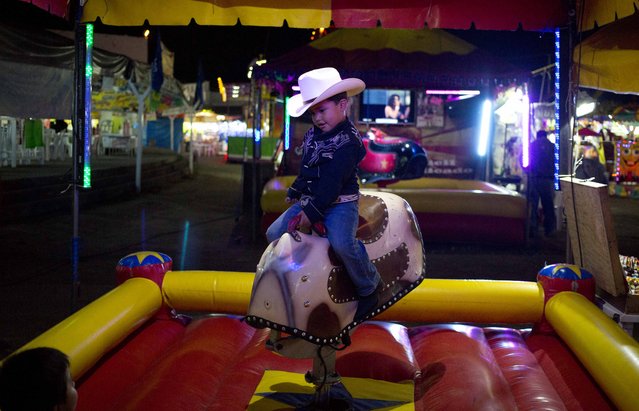
In this March 18, 2015 photo, a boy rides a mechanical bull for children at the Texcoco Fair on the outskirts of Mexico City. In Mexico, these types of fairs date back to Spanish colonial times, and in some smaller communities they are organized around the feast days of Roman Catholic saints. (Photo by Eduardo Verdugo/AP Photo)

In this March 18, 2015 photo, a boy rides a mechanical bull for children at the Texcoco Fair on the outskirts of Mexico City. In Mexico, these types of fairs date back to Spanish colonial times, and in some smaller communities they are organized around the feast days of Roman Catholic saints. (Photo by Eduardo Verdugo/AP Photo)
Details
28 Apr 2015 13:45:00
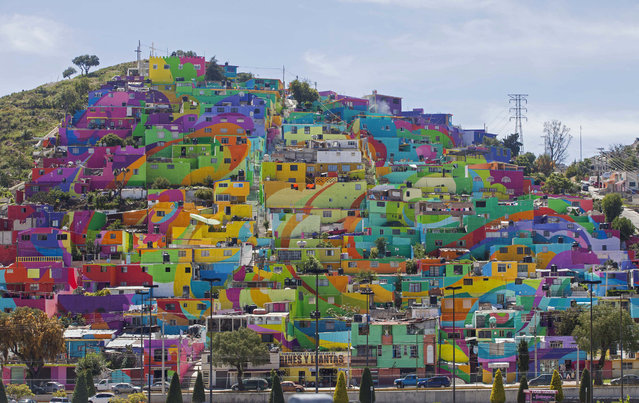
Hundreds of houses painted in bright colors in what organizers claim is Mexico's largest mural, is part of a government-sponsored project is called Pachuca Paints Itself, in the Palmitas neighborhood, in Pachuca, Mexico, Thursday, July 30, 2015. German Crew is the artist collective responsible for painting the mural project. Director Enrique Gomez, who goes by MYBE, said the crew has painted 1,500 square meters with 20,000 liters of paint. (Photo by Sofia Jaramillo/AP Photo)

Hundreds of houses painted in bright colors in what organizers claim is Mexico's largest mural, is part of a government-sponsored project is called Pachuca Paints Itself, in the Palmitas neighborhood, in Pachuca, Mexico, Thursday, July 30, 2015. German Crew is the artist collective responsible for painting the mural project. Director Enrique Gomez, who goes by MYBE, said the crew has painted 1,500 square meters with 20,000 liters of paint. Working hand-in-hand with residents, muralists have painted the facades of 200 homes bright lavender, lime green, incandescent orange – hues more commonly found in a bag of Skittles than in the drab, cement-and-cinderblock neighborhoods where many of Mexico's poor live. The project aims to bring the community together and rehabilitate the area. (Photo by Sofia Jaramillo/AP Photo)
Details
03 Aug 2015 12:02:00
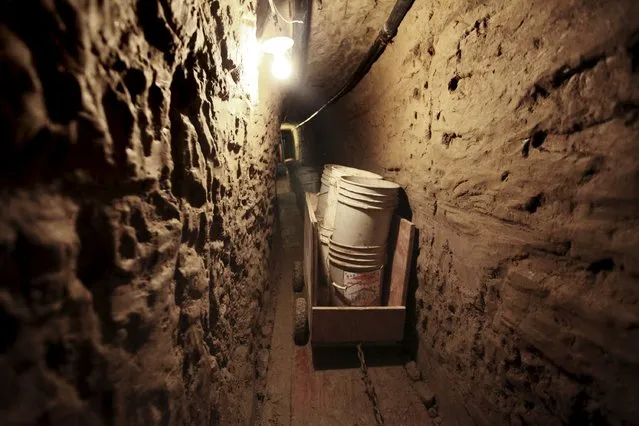
A makeshift cart with containers is seen at a suspected drug tunnel under construction during a media tour by Mexican Army in Tijuana April 7, 2015. Mexican soldiers foiled the construction of a suspected drug tunnel underneath a house near the U.S. border, arresting nine people and impounding a truck used to clear debris, the Army said on Tuesday. (Photo by Reuters/Stringer)

A makeshift cart with containers is seen at a suspected drug tunnel under construction during a media tour by Mexican Army in Tijuana April 7, 2015. Mexican soldiers foiled the construction of a suspected drug tunnel underneath a house near the U.S. border, arresting nine people and impounding a truck used to clear debris, the Army said on Tuesday. Wired with lights, the tunnel was being built next to the Tijuana border crossing, south of San Diego, California, and near a Mexican air force installation as well as a regional federal police facility. (Photo by Reuters/Stringer)
Details
09 Apr 2015 13:25:00
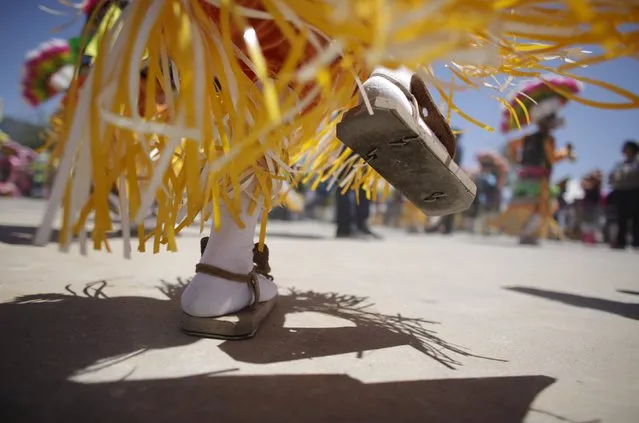
Matachines dancers participate in a religious festival in Saltillo, Mexico, April 17, 2016. Matachines dancing is a masked dance introduced by Spanish missionaries, and has been adopted by cultures from Peru to northern Mexico. It is performed to show respect to Mother Mary or the Guadalupe Virgin, a saint, or to simply worship God. (Photo by Daniel Becerril/Reuters)

Matachines dancers participate in a religious festival in Saltillo, Mexico, April 17, 2016. Matachines dancing is a masked dance introduced by Spanish missionaries, and has been adopted by cultures from Peru to northern Mexico. It is performed to show respect to Mother Mary or the Guadalupe Virgin, a saint, or to simply worship God. (Photo by Daniel Becerril/Reuters)
Details
19 Apr 2016 13:27:00