Loading...
Done
What Ali Wore By Zoe Spawton

Every morning at 9:05 AM sharp, a strikingly dapper octogenarian saunters by Zoe Spawton's coffee shop on his way to work in the Berlin borough of Neukölln. That man's name is Ali. He is an 83-year-old Turkish tailor who has been living in Germany for the past 44 years. He has 18 kids, and an impeccable sense of style.
Details
05 Apr 2013 10:44:00
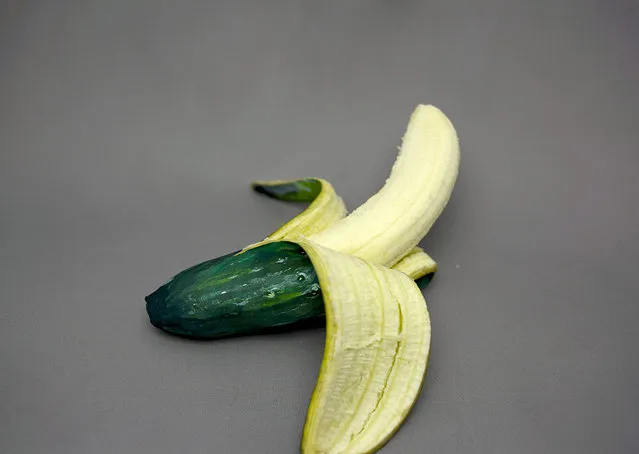
It’s Not What It Seems By Artist Hikaru Cho

Japanese artist Hikaru Cho is already well-known for her bizarre and realistic body paintings, but now the Tokyo-based artist has applied her talent to everyday food items as well. In her playful “It’s Not What It Seems” series, she turns common foods into other kinds of food using only acrylic paint and her extraordinary talent.
Details
22 Mar 2014 11:32:00


The same way as their real life counterparts, online casinos try to attract new players and maintain their existing player base by offering fair games, good conditions and solid bonuses and promotions. While offline establishments have the advantage of being able to offer a free meal or drink, vouchers and other gifts to their players, online casinos have only two ways or rewarding their customers: money and free playtime.
Details
15 Sep 2014 13:35:00
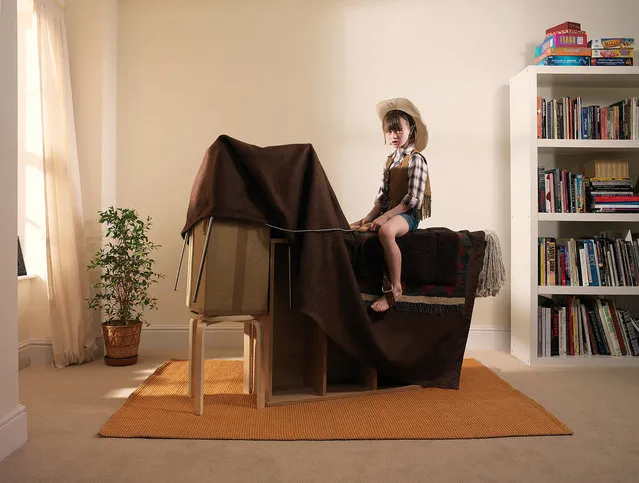
Kids At Home and At Play by Tim MacPherson

Tim Macpherson is a UK based advertising photographer who started his career shooting Editorial for magazines. His works are published in best advertising photographers book Lurzers. He works for The sunday times, Nikon, phillips etc. Photoset is short, but very creative.
Details
25 Jun 2015 05:37:00
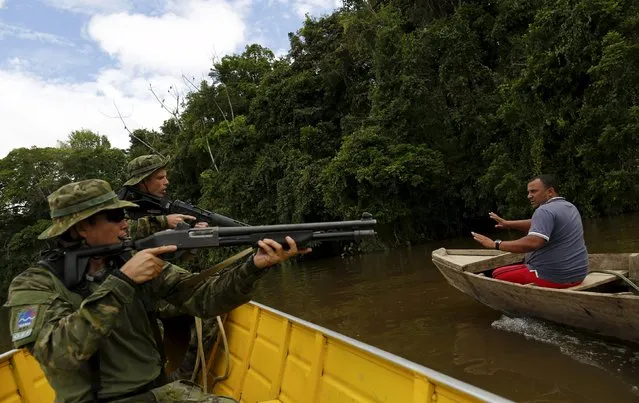
A gold prospector is detained by agents of Brazil’s environmental agency on the Uraricoera River during an operation against illegal gold mining on indigenous land, in the heart of the Amazon rainforest, in Roraima state, Brazil April 15, 2016. (Photo by Bruno Kelly/Reuters)

A gold prospector is detained by agents of Brazil’s environmental agency on the Uraricoera River during an operation against illegal gold mining on indigenous land, in the heart of the Amazon rainforest, in Roraima state, Brazil April 15, 2016. At over 9.5 million hectares, the Yanomami territory is twice the size of Switzerland and home to around 27,000 indians. The land has legally belonged to the Yanomami since 1992, but illegal miners continue to plague the area, sawing down trees and poisoning rivers with mercury in their lust for gold. (Photo by Bruno Kelly/Reuters)
Details
27 Apr 2016 10:01:00
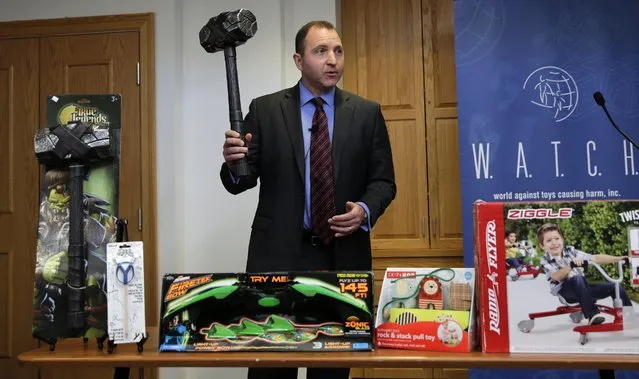
James Swartz, director of World Against Toys Causing Harm Inc., holds up toy battle hammer at Children's Franciscan Hospital in Boston, Wednesday, November 19, 2014. The consumer watchdog group has released its annual list of what it considers to be the 10 most unsafe toys as the holiday season approaches. (Photo by Charles Krupa/AP Photo)

A light-up bow whose arrows are advertised as flying up to 145 feet and the “Catapencil” – a pencil with a miniature slingshot-style launcher on its end – are on an annual list of unsafe toys released Wednesday by a Massachusetts-based consumer watchdog group. World Against Toys Causing Harm, or W.A.T.C.H., issued the “10 Worst Toys” list to remind parents and consumers of the potential hazards in some toys as the holiday shopping season gets underway. (Photo by Charles Krupa/AP Photo)
Details
21 Nov 2014 12:41:00
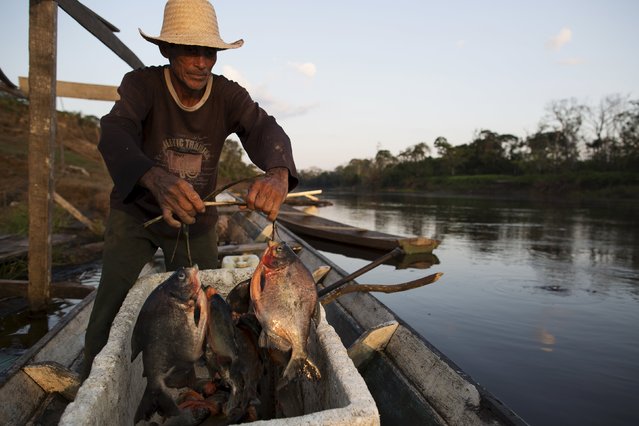
Francisco da Silva Vale, 61, cools off fish with ice produced on solar-powered ice machines at Vila Nova do Amana community in the Sustainable Development Reserve, in Amazonas state, Brazil, September 23, 2015. Three solar-powered machines, are producing about ninety kilos of ice per day, in a region with poor access to electric energy, which used to be produced only with diesel oil, in the Amazon rain forest. (Photo by Bruno Kelly/Reuters)

Francisco da Silva Vale, 61, cools off fish with ice produced on solar-powered ice machines at Vila Nova do Amana community in the Sustainable Development Reserve, in Amazonas state, Brazil, September 23, 2015. Three solar-powered machines, are producing about ninety kilos of ice per day, in a region with poor access to electric energy, which used to be produced only with diesel oil, in the Amazon rain forest. (Photo by Bruno Kelly/Reuters)
Details
10 Oct 2015 08:03:00
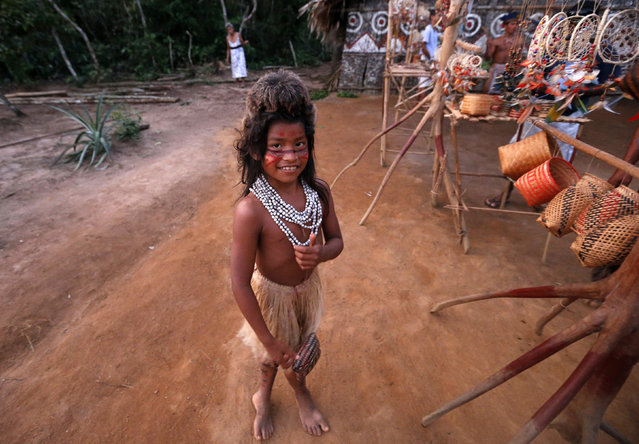
A girl of the Amazonian Tatuyo tribe poses while waiting to sell crafts to tourists in her village in the Rio Negro (Black River) near Manaus city, a World Cup host city, June 23, 2014. Because of their proximity to host city Manaus and their warm welcome, the Tatuyo have enjoyed three weeks of brisk business thanks to the World Cup. Usually, they host between 10 and 30 tourists a day. During the World Cup, this number has rocketed to 250 a day, They have become richer and other communities now come to them to sell them juices and fishes. (Photo by Andres Stapff/Reuters)

A girl of the Amazonian Tatuyo tribe poses while waiting to sell crafts to tourists in her village in the Rio Negro (Black River) near Manaus city, a World Cup host city, June 23, 2014. Because of their proximity to host city Manaus and their warm welcome, the Tatuyo have enjoyed three weeks of brisk business thanks to the World Cup. Usually, they host between 10 and 30 tourists a day. During the World Cup, this number has rocketed to 250 a day, They have become richer and other communities now come to them to sell them juices and fishes. (Photo by Andres Stapff/Reuters)
Details
27 Jun 2014 10:30:00