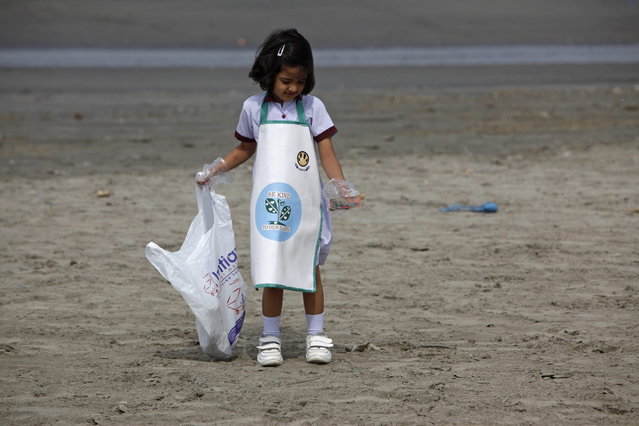
A schoolgirl collects rubbish from Karachi's Clifton beach early morning April 22, 2013, during a cleaning campaign as part of the commemoration of Earth Day. (Photo by Akhtar Soomro/Reuters)
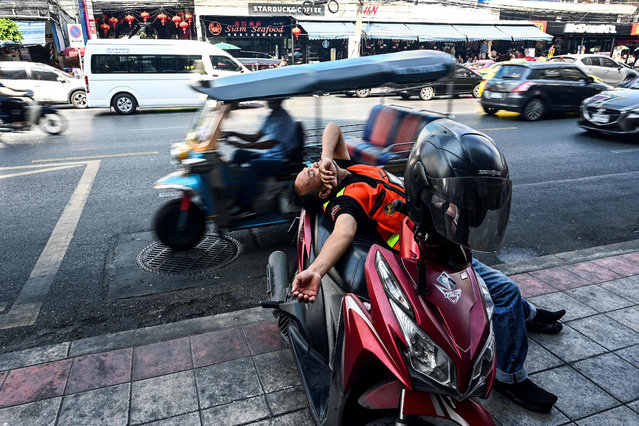
A motorcycle-taxi driver takes a nap while leaning on his bike along a street in Bangkok, Thailand on February 17, 2019. (Photo by Jewel Samad/AFP Photo)
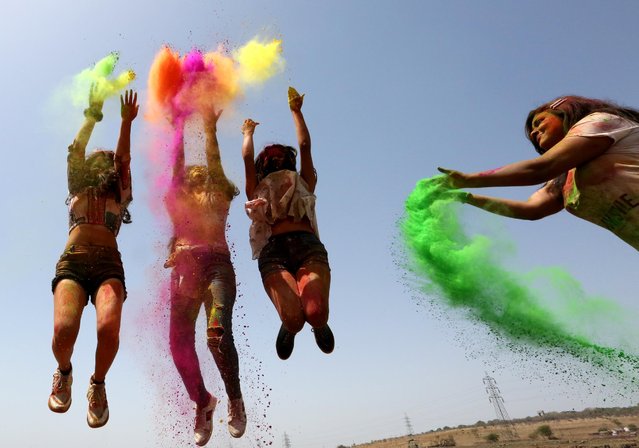
Indian girls apply colored powder on each other as they wear protective masks as a precautionary measure against coronavirus, during Holi festival celebrations in Bhopal, India, 26 March 2021. Holi marks the beginning of the spring season. Holi will be celebrated as the Hindu spring festival of colors across the country on 29 March. (Photo by Sanjeev Gupta/EPA/EFE)
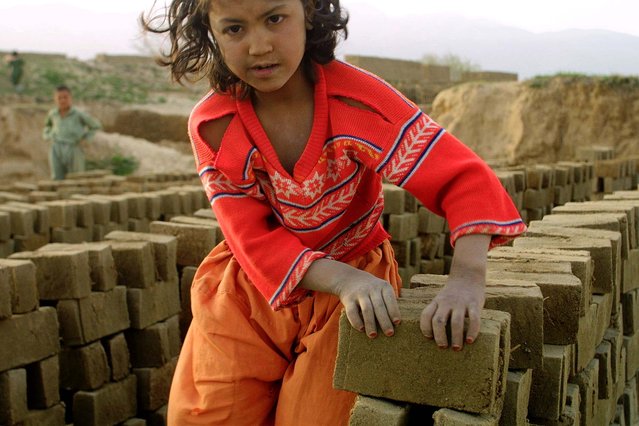
An Afghan girl makes a pile of unbaked bricks near the road passing through the Shamali Plains, about 10 kilometers (6 miles), west of Bagram, Afghanistan, Wednesay April 9, 2003. Children assist parents in their job to supplement family income. (Photo by Gurinder Osan/AP Photo)
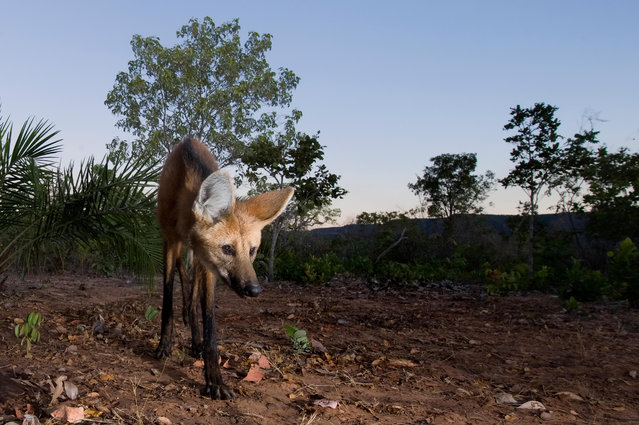
Global wildlife populations will decline by 67% by 2020 unless urgent action is taken to reduce human impact on species and ecosystems, warns the biennial Living Planet Index report from WWF (World Wide Fund for Nature) and ZSL (Zoological Society of London). From elephants to eels, here are some of the wildlife populations most affected by human activity. Here: The maned wolf is among the large mammals in the Brazilian Cerrado that are threatened by the increasing conversion of grasslands into farmland for grazing and growing crops. (Photo by Ben Cranke/Nature Picture Library/Alamy Stock Photo)
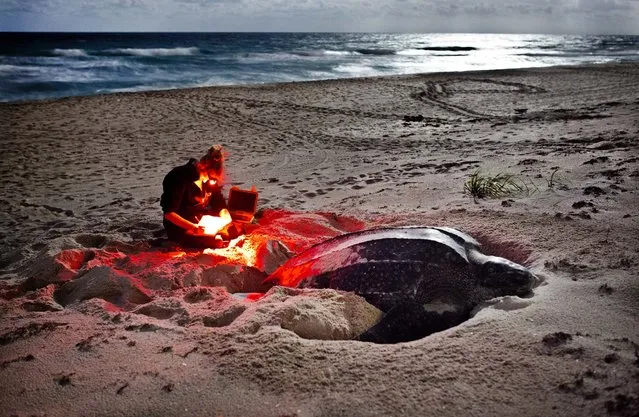
Biologist Kelly Martin records her measurements of Electra, a 5 1/2 foot leatherback turtle nesting on the beach behind the Seminole Golf Club course in Juno Beach. Martin uses a red light which is invisible to turtles. (Photo by Greg Lovett/The Palm Beach Post)