Loading...
Done
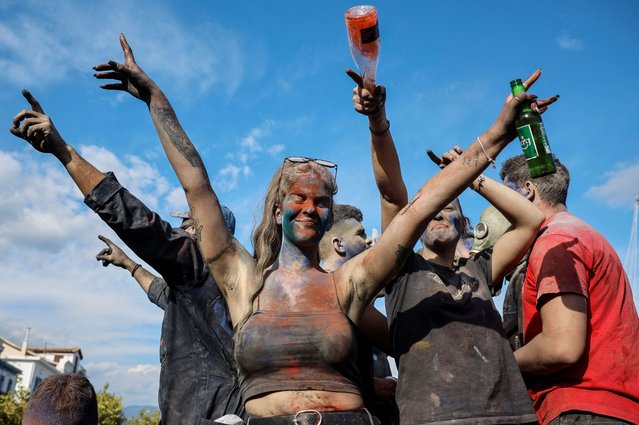
Revellers participate in a colourful “flour war”, celebrating the “Ash Monday” or “Clean Monday”, a traditional festivity marking the end of the carnival season and the start of the 40-day Lent period until the Orthodox Easter, in the town of Galaxidi, Greece, on March 18, 2024. (Photo by Louisa Gouliamaki/Reuters)

Revellers participate in a colourful “flour war”, celebrating the “Ash Monday” or “Clean Monday”, a traditional festivity marking the end of the carnival season and the start of the 40-day Lent period until the Orthodox Easter, in the town of Galaxidi, Greece, on March 18, 2024. (Photo by Louisa Gouliamaki/Reuters)
Details
12 Jun 2025 03:41:00
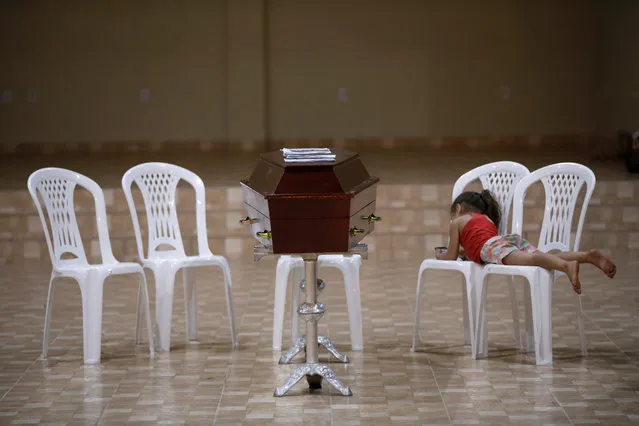
A relative of murdered prisoner, lies on a chair next to his coffin  during a wake after a prison riot in the city of Altamira, Para state, Brazil on July 30, 2019. (Photo by Bruno Kelly/Reuters)

A relative of murdered prisoner, lies on a chair next to his coffin during a wake after a prison riot in the city of Altamira, Para state, Brazil on July 30, 2019. At least 57 prisoners were killed by other inmates during clashes between organized crime groups in the Altamira prison in northern Brazil Monday with 16 of the victims being decapitated, according to prison officials. (Photo by Bruno Kelly/Reuters)
Details
02 Aug 2019 00:05:00
A follower of the Afro-Brazilian religion Umbanda pays tribute for Iemanja, goddess of the sea, in Copacabana Beach in Rio de Janeiro, Brazil December 29, 2017. (Photo by Ricardo Moraes/Reuters)

A follower of the Afro-Brazilian religion Umbanda pays tribute for Iemanja, goddess of the sea, in Copacabana Beach in Rio de Janeiro, Brazil December 29, 2017. Hundreds of practitioners of Brazil's Afro-Brazilian Candomble and Umbanda faiths have gathered at Rio de Janeiro's Copacabana beach to honor Yemanja. Worshippers were mostly dressed in white as they launched their offerings to Iemanja: small boats with flowers and bowls with candles and fruits. (Photo by Ricardo Moraes/Reuters)
Details
30 Dec 2017 06:22:00
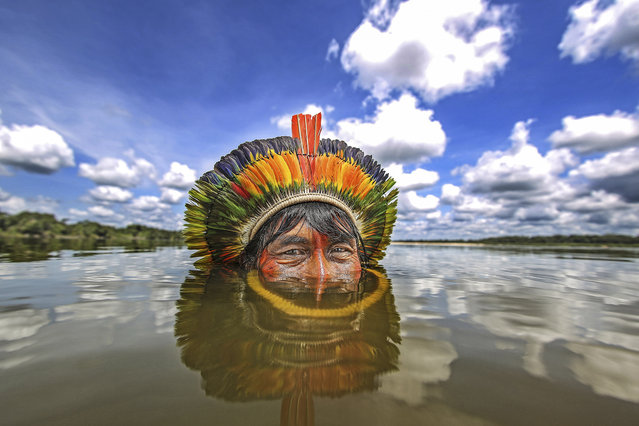
Bej indian in the Xingu river, state of Mato Grosso, Brazil on December 20, 2015 .(Photo by Ricardo Stuckert/Caters News Agency)

These images offer a rare glimpse of life within remote Brazilian tribes. Award winning photographer Ricardo, 47, said: “The pictures show the traditional way of life of these people who live in harmony with nature. The photos provide an overview of the contemporary situation of the indigenous people in Brazil”. Here: Bej indian in the Xingu river, state of Mato Grosso, Brazil on December 20, 2015 .(Photo by Ricardo Stuckert/Caters News Agency)
Details
12 Dec 2017 06:46:00
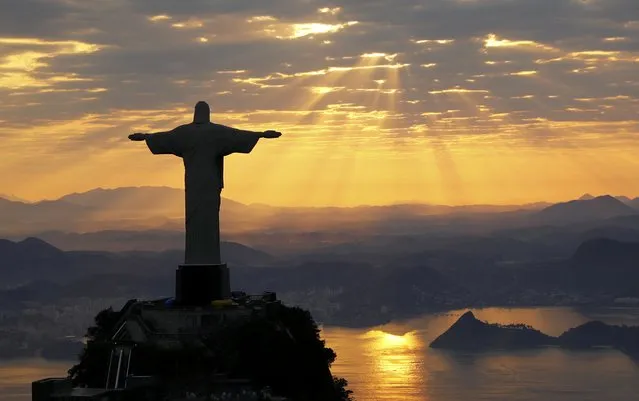
Jesus Christ The Redeemer is seen during sunrise in Rio de Janeiro, Brazil August 2, 2016. (Photo by Wolfgang Rattay/Reuters)

Jesus Christ The Redeemer is seen during sunrise in Rio de Janeiro, Brazil August 2, 2016. Christ the Redeemer is an Art Deco statue of Jesus Christ in Rio de Janeiro, Brazil, created by Polish-French sculptor Paul Landowski and built by the Brazilian engineer Heitor da Silva Costa, in collaboration with the French engineer Albert Caquot. The face was created by the Romanian artist Gheorghe Leonida1. (Photo by Kai Pfaffenbach/Reuters)
Details
03 Aug 2016 11:33:00
A flight attendant wearing a Brazil soccer team jersey demonstrates the emergency mask on an airplane travelling from Kunming to Hangzhou June 23, 2014. A Chinese airline company renovated the cabin of one of its flights then dressed the flight attendants with soccer jerseys as a way to celebrate the 2014 Brazil World Cup and hoping to attract more customers, local media reported. (Photo by Wong Campion/Reuters)

A flight attendant wearing a Brazil soccer team jersey demonstrates the emergency mask on an airplane travelling from Kunming to Hangzhou June 23, 2014. A Chinese airline company renovated the cabin of one of its flights then dressed the flight attendants with soccer jerseys as a way to celebrate the 2014 Brazil World Cup and hoping to attract more customers, local media reported. (Photo by Wong Campion/Reuters)
Details
25 Jun 2014 06:22:00
The winner of the Miss Tattoo Brazil 2014 contest, Bruna Barros, shows a tattoo that says 'My body, my rules' during Tattoo Week, the largest convention of art in the skin of Latin America, in Sao Paulo, Brazil, 14 July 2017. A tattooed woman beauty pageant, the new trends and techniques of the tattoo world, body piercing and the environment of the art of definitively painting the body, are all due to be addressed during the seventh edition of the “Tattoo Week Sao Paulo“. (Photo by Sebastiao Moreira/EPA)

The winner of the Miss Tattoo Brazil 2014 contest, Bruna Barros, shows a tattoo that says 'My body, my rules' during Tattoo Week, the largest convention of art in the skin of Latin America, in Sao Paulo, Brazil, 14 July 2017. A tattooed woman beauty pageant, the new trends and techniques of the tattoo world, body piercing and the environment of the art of definitively painting the body, are all due to be addressed during the seventh edition of the “Tattoo Week Sao Paulo“. (Photo by Sebastiao Moreira/EPA)
Details
19 Jul 2017 08:30:00
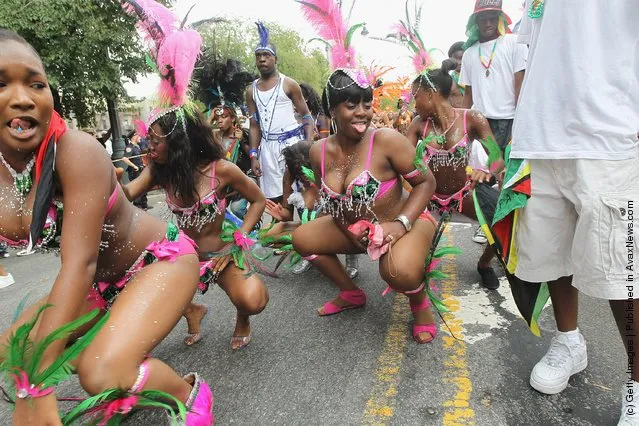
New Yorkers Celebrate At West Indian Day Parade

“The Labor Day Parade (or West Indian Carnival), is an annual celebration held on American Labor Day (the first Monday in September), in Crown Heights, Brooklyn, New York. Ms. Jessie Waddell and some of her West Indian friends started the Carnival in Harlem in the 1920s by staging costume parties in large enclosed places like the Savoy, Renaissance and Audubon Ballrooms due to the cold wintry weather of February. This is the usual time for the pre-Lenten celebrations held in most countries around the world. However, because of the very nature of Carnival, and the need to parade in costume to music, indoor confinement did not work well. The earliest known Carnival street parade was held on September 1, 1947. The Trinidad Carnival Pageant Committee was the founding force behind the parade, which was held in Harlem. The parade route was along Seventh Avenue, starting at 110th St.” – Wikipedia

Photo: A reveler looks on during the West Indian-American Day Parade September 5, 2011 in the Brooklyn borough of New York City. More than 2 million spectators were expected to attend the celebration of Caribbean culture. (Photo by Mario Tama/Getty Images)

Details
06 Sep 2011 11:18:00