Loading...
Done
The Berenson robot strolls among visitors during the exhibition “Persona : Oddly Human” at the Quai Branly museum in Paris, France, February 23, 2016. The Berenson robot, developed in France in 2011, is the brainchild of anthropologist Denis Vidal and robotics engineer Philippe Gaussier. Its programming allows it to record reactions of museum visitors to certain pieces of art and then use the data to develop its own unique taste, which allows “Berenson” to judge whether or not it likes a certain work of art within an exhibition. (Photo by Philippe Wojazer/Reuters)

The Berenson robot strolls among visitors during the exhibition “Persona : Oddly Human” at the Quai Branly museum in Paris, France, February 23, 2016. The Berenson robot, developed in France in 2011, is the brainchild of anthropologist Denis Vidal and robotics engineer Philippe Gaussier. Its programming allows it to record reactions of museum visitors to certain pieces of art and then use the data to develop its own unique taste, which allows “Berenson” to judge whether or not it likes a certain work of art within an exhibition. (Photo by Philippe Wojazer/Reuters)
Details
25 Feb 2016 12:26:00
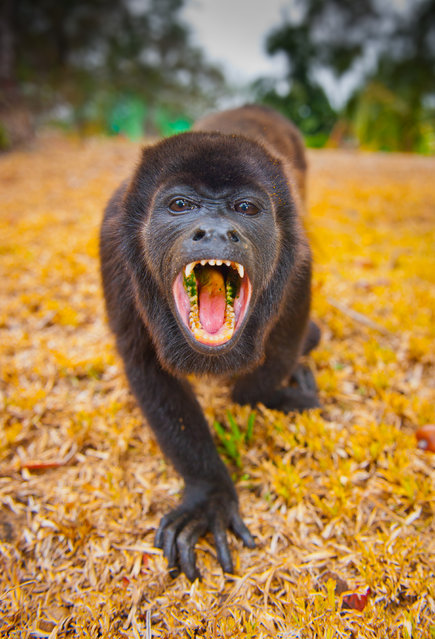
“Attacking Howler Monkey”. Due to a major tropical rainstorm my wife and I were forced to stay overnight in a Howler Monkey Rescue center in Panama. I used the time to explore the area and to take photos of the monkeys. Just after the rain finally stopped, I ran into this monkey that tried to mock attack me. I quickly took a couple of photos before retreating to a (more) safe distance. (Photo and caption by Christian Mueller-Planitz/National Geographic Traveler Photo Contest)

“Attacking Howler Monkey”. Due to a major tropical rainstorm my wife and I were forced to stay overnight in a Howler Monkey Rescue center in Panama. I used the time to explore the area and to take photos of the monkeys. Just after the rain finally stopped, I ran into this monkey that tried to mock attack me. I quickly took a couple of photos before retreating to a (more) safe distance. (Photo and caption by Christian Mueller-Planitz/National Geographic Traveler Photo Contest)

ATTENTION! All pictures are presented in high resolution. To see Hi-Res images – just TWICE click on any picture. In other words, click small picture – opens the BIG picture. Click BIG picture – opens VERY BIG picture.
Details
30 Jun 2013 12:25:00
Japan's computer giant Fujitsu employee displays the world's first personal computer with Intel's RealSense 3D camera “FMV Esprimo” in Tokyo on October 9, 2014. The new desktop PC with 23-inch LCD display can make avatars which mimic the user's look and motion for chatting on the Internet. (Photo by Yoshikazu Tsuno/AFP Photo)

Japan's computer giant Fujitsu employee displays the world's first personal computer with Intel's RealSense 3D camera “FMV Esprimo” in Tokyo on October 9, 2014. The new desktop PC with 23-inch LCD display can make avatars which mimic the user's look and motion for chatting on the Internet. (Photo by Yoshikazu Tsuno/AFP Photo)
Details
11 Oct 2014 13:12:00
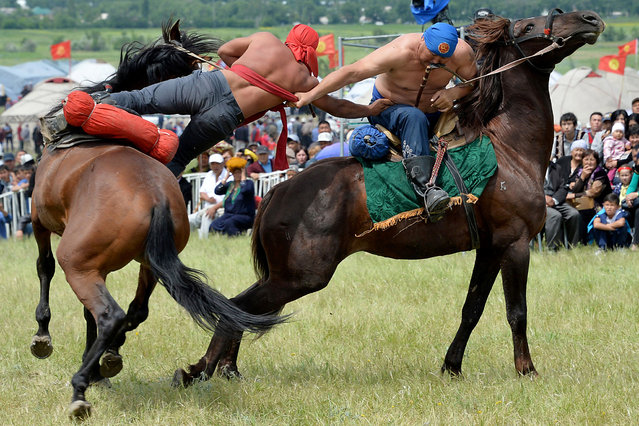
Kyrgyz men on horseback compete during their traditional game of “Oodarysh” during the celebrations of the 90th anniversary formation of the Chui region in the village of Kuntu some 20 kms from Bishkek on May 27, 2016. (Photo by Vyacheslav Oseledko/AFP Photo)

Kyrgyz men on horseback compete during their traditional game of “Oodarysh” during the celebrations of the 90th anniversary formation of the Chui region in the village of Kuntu some 20 kms from Bishkek on May 27, 2016. (Photo by Vyacheslav Oseledko/AFP Photo)
Details
28 May 2016 12:31:00
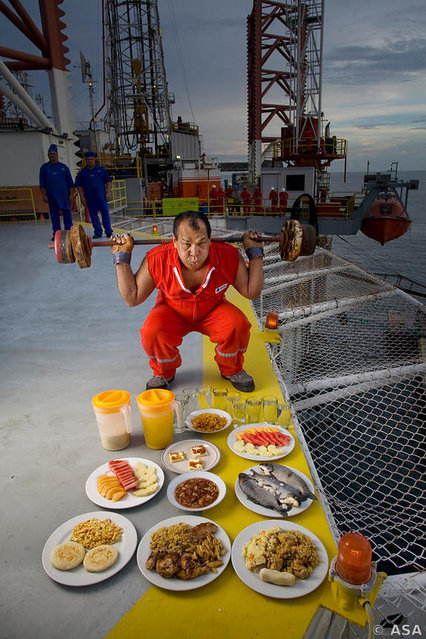
What the World Eats By Peter Menzel And Faith D'Aluisio Part 1

A stunning photographic collection featuring portraits of people from 30 countries and the food they eat in one day. In this fascinating study of people and their diets, 80 profiles are organized by the total number of calories each person puts away in a day. Featuring a Japanese sumo wrestler, a Massai herdswoman, world-renowned Spanish chef Ferran Adria, an American competitive eater, and more, these compulsively readable personal stories also include demographic particulars, including age, activity level, height, and weight. Essays from Harvard primatologist Richard Wrangham, journalist Michael Pollan, and others discuss the implications of our modern diets for our health and for the planet. This compelling blend of photography and investigative reportage expands our understanding of the complex relationships among individuals, culture, and food.
Details
23 Apr 2014 14:34:00
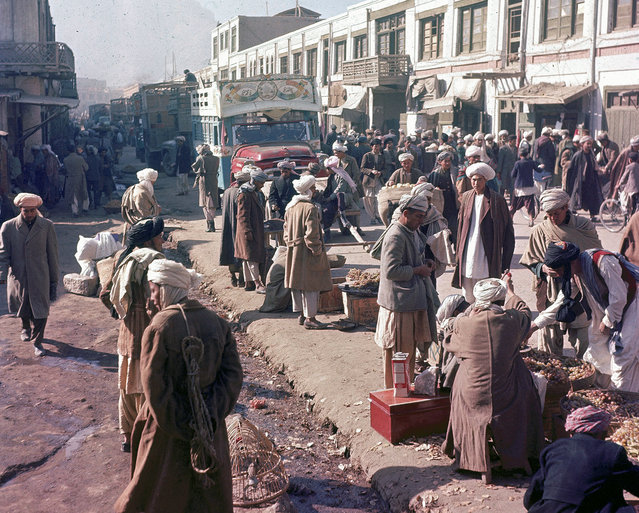
Men stroll past roadside vendors as a painted truck makes its way through the busy street in Kabul, Afghanistan, November, 1961. (Photo by Henry S. Bradsher/AP Photo via The Atlantic)

Men stroll past roadside vendors as a painted truck makes its way through the busy street in Kabul, Afghanistan, November, 1961. (Photo by Henry S. Bradsher/AP Photo via The Atlantic)
Details
03 Jul 2013 11:04:00
Ethnic Miao women in traditional costumes take part in a tug of war as they celebrate the local ethnic Miao's new year at a village in Rongshui Miao Autonomous county, Guangxi Zhuang Autonomous Region, China January 5, 2019. (Photo by Reuters/China Stringer Network)

Ethnic Miao women in traditional costumes take part in a tug of war as they celebrate the local ethnic Miao's new year at a village in Rongshui Miao Autonomous county, Guangxi Zhuang Autonomous Region, China January 5, 2019. (Photo by Reuters/China Stringer Network)
Details
19 Jan 2019 00:01:00
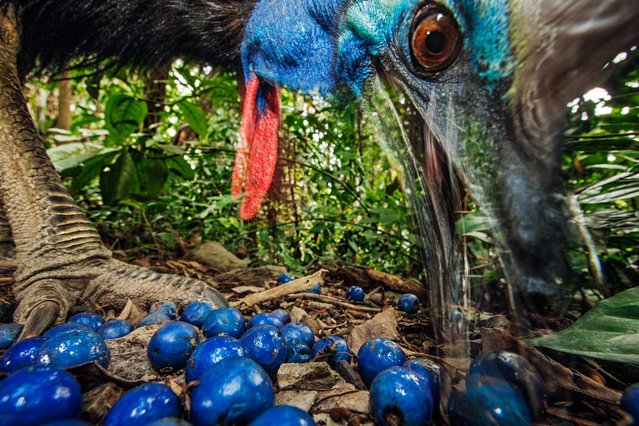
“Cassowaries are large, flightless birds related to emus and (more distantly) to ostriches, rheas, and kiwis”, writes Olivia Judson in the September issue of National Geographic magazine. (Photo by Christian Ziegler/National Geographic)

“Cassowaries are large, flightless birds related to emus and (more distantly) to ostriches, rheas, and kiwis”, writes Olivia Judson in the September issue of National Geographic magazine. How large? People-size: Adult males stand well over five foot five and top 110 pounds. Females are even taller, and can weigh more than 160 pounds. Dangerous when roused, they’re shy and peaceable when left alone. But even birds this big and tough are prey to habitat loss. The dense New Guinea and Australia rain forests where they live have dwindled. Today cassowaries might number 1,500 to 2,000. And because they help shape those same forests – by moving seeds from one place to another – “if they vanish”, Judson writes, “the structure of the forest would gradually change” too. (Photo by Christian Ziegler/National Geographic)
Details
06 Jan 2014 12:21:00