Loading...
Done
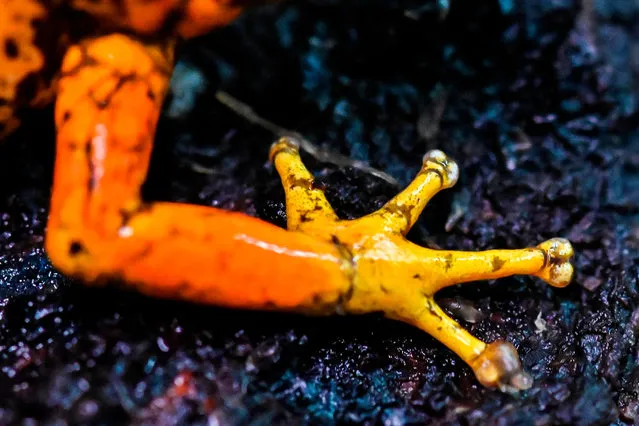
A leg of a “diablito” frog (Oophaga sylvatica) is photographed in a laboratory at a laboratory in the zoo of Cali, Colombia, on July 19, 2019. Colombia is the second country with the largest number of amphibians in the world after Brazil. More than 40% of amphibian species worldwide are in danger of extinction. (Photo by Luis Robayo/AFP Photo)

A leg of a “diablito” frog (Oophaga sylvatica) is photographed in a laboratory at a laboratory in the zoo of Cali, Colombia, on July 19, 2019. Colombia is the second country with the largest number of amphibians in the world after Brazil. More than 40% of amphibian species worldwide are in danger of extinction. (Photo by Luis Robayo/AFP Photo)
Details
28 Nov 2020 00:03:00
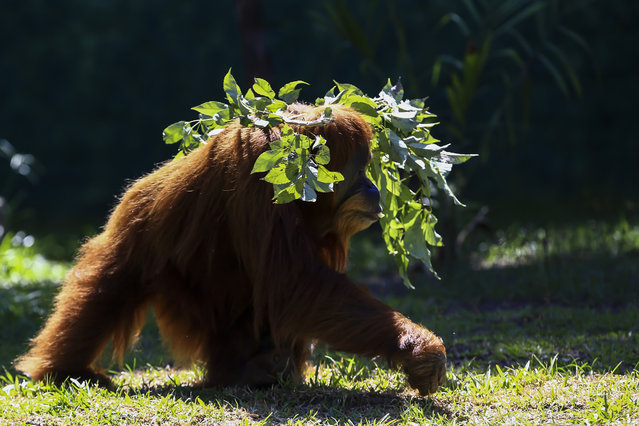
An Orangutan named Elze walks in the Biopark of Rio during a media tour in Rio de Janeiro, Brazil, Thursday, March 18, 2021. The park was closed to the public for renovations to convert the city zoo into a center for biodiversity conservation and will reopen to the general public at the end of March. (Photo by Bruna Prado/AP Photo)

An Orangutan named Elze walks in the Biopark of Rio during a media tour in Rio de Janeiro, Brazil, Thursday, March 18, 2021. The park was closed to the public for renovations to convert the city zoo into a center for biodiversity conservation and will reopen to the general public at the end of March. (Photo by Bruna Prado/AP Photo)
Details
28 Mar 2021 09:55:00
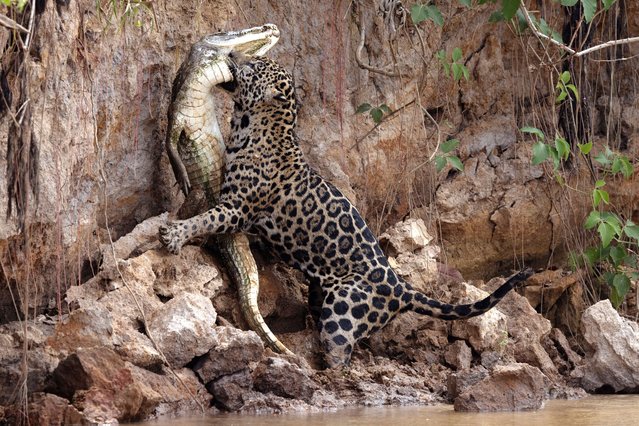
A female jaguar named Ti, by the NGO Jaguar ID, bites an alligator at Encontro das Aguas State Park, in the Pantanal, the largest wetland in the world, in Pocone, Mato Grosso, Brazil, on October 10, 2024. (Photo by Sergio Moraes/Reuters)

A female jaguar named Ti, by the NGO Jaguar ID, bites an alligator at Encontro das Aguas State Park, in the Pantanal, the largest wetland in the world, in Pocone, Mato Grosso, Brazil, on October 10, 2024. (Photo by Sergio Moraes/Reuters)
Details
10 Nov 2024 04:10:00
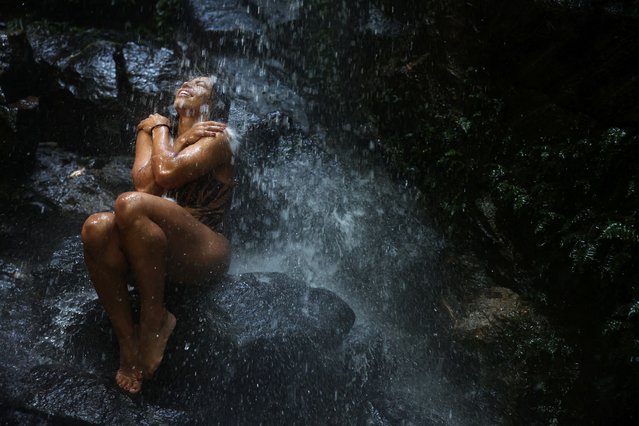
Anda Oliveira, 34, enjoys a waterfall in the Tijuca National Park, one of the world's biggest urban forests, marking the World Water Day in Rio de Janeiro, Brazil on March 15, 2024. (Photo by Pilar Olivares/Reuters)

Anda Oliveira, 34, enjoys a waterfall in the Tijuca National Park, one of the world's biggest urban forests, marking the World Water Day in Rio de Janeiro, Brazil on March 15, 2024. (Photo by Pilar Olivares/Reuters)
Details
01 Jul 2025 02:56:00


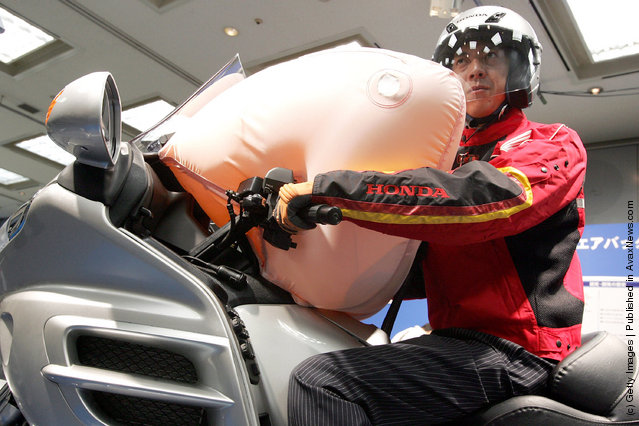
“The technology was designed to address the risk associated with head-on or nearly head-on motorcycle collisions, which account for a large percentage of motorcycle crashes. The airbag was designed to deploy during a severe frontal collision in which a rider could be thrown forward from the motorcycle. Once deployed, the airbag stands upright in front of the rider to help absorb the rider’s kinetic energy prior to leaving the motorcycle”. – Ohio.Honda.com

Photo: Honda Motor Co., Ltd.'s world's first production motorcycle airbag system is introduced at a press conference at Honda's HQ on September 8, 2005 in Tokyo, Japan. The motorcycle airbag system to be installed to lessen the injuries of the rider is comprised of the airbag module that include the airbag and the inflator, crash sensors that monitor acceleration changes and an ECU that performs calculation to determine when a collision is occuring. (Photo by Junko Kimura/Getty Images)
Details
20 Jun 2011 14:29:00
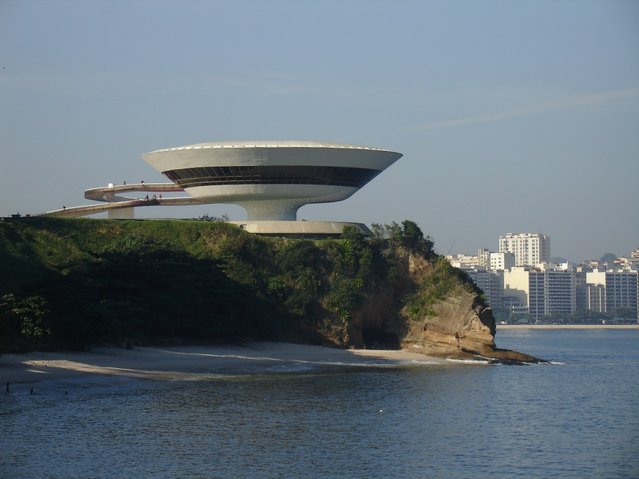
Niterói Contemporary Art Museum

The Niterói Contemporary Art Museum (Museu de Arte Contemporânea de Niterói — MAC) is situated in the city of Niterói, Rio de Janeiro, Brazil, and is one of the city’s main landmarks. It was completed in 1996.
Details
13 Aug 2013 10:18:00
An aerial view shows the Amazon rainforest at the Bom Futuro National Forest near Rio Pardo in Porto Velho, Rondonia State, Brazil, September 3, 2015. The town of Rio Pardo, a settlement of about 4,000 people in the Amazon rainforest, rises where only jungle stood less than a quarter of a century ago. Loggers first cleared the forest followed by ranchers and farmers, then small merchants and prospectors. (Photo by Nacho Doce/Reuters)

An aerial view shows the Amazon rainforest at the Bom Futuro National Forest near Rio Pardo in Porto Velho, Rondonia State, Brazil, September 3, 2015. The town of Rio Pardo, a settlement of about 4,000 people in the Amazon rainforest, rises where only jungle stood less than a quarter of a century ago. Loggers first cleared the forest followed by ranchers and farmers, then small merchants and prospectors. Brazil's government has stated a goal of eliminating illegal deforestation, but enforcing the law in remote corners like Rio Pardo is far from easy. (Photo by Nacho Doce/Reuters)
Details
08 Nov 2015 08:00:00
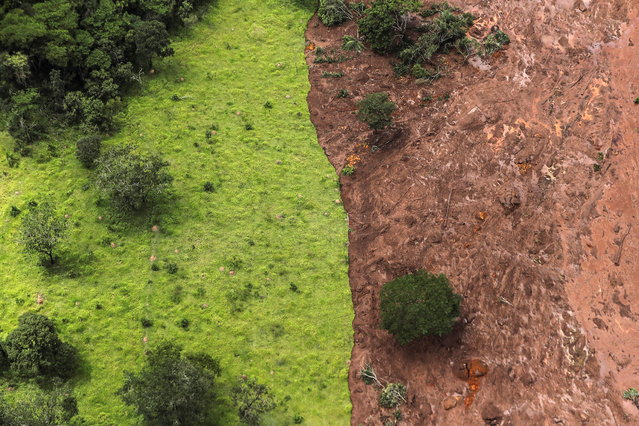
Aerial view over mud and waste from the disaster caused by dam spill in Brumadinho, Minas Gerais, Brazil, 26 January 2019. At least nine people have died and 300 are missing after a tailings dam burst at the Feijao mine in southeastern Brazil owned by Vale, the world's largest iron-ore producer, the Minas Gerais state government said. The dam in Brumadinho near Belo Horizonte broke on 25 January at around mid-day, unleashing a river of sludge that destroyed some nearby houses. (Photo by Antonio Lacerda/EPA/EFE)

Aerial view over mud and waste from the disaster caused by dam spill in Brumadinho, Minas Gerais, Brazil, 26 January 2019. At least nine people have died and 300 are missing after a tailings dam burst at the Feijao mine in southeastern Brazil owned by Vale, the world's largest iron-ore producer, the Minas Gerais state government said. The dam in Brumadinho near Belo Horizonte broke on 25 January at around mid-day, unleashing a river of sludge that destroyed some nearby houses. (Photo by Antonio Lacerda/EPA/EFE)
Details
29 Jan 2019 00:03:00