Loading...
Done
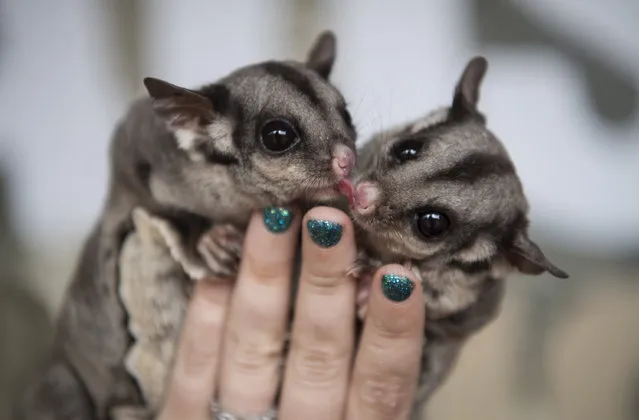
Sugar gliders, Candy and Popcorn, enjoy their favourite food, Nectar, at Wild Life Sydney Zoo on February 14, 2017 in Sydney, Australia. The treat made up of honey, high protein baby cereal and egg yolks is the human equivalent to chocolate to the Sugar Gliders. St. Valentine's Day or the Feast of Saint Valentine began as a celebration of the early Christian Saint Valentinus. From the 18th Century onwards it has steadily transformed into a celebration of romantic love and sentiment in many countries around the world. (Photo by James D. Morgan/Getty Images)

Sugar gliders, Candy and Popcorn, enjoy their favourite food, Nectar, at Wild Life Sydney Zoo on February 14, 2017 in Sydney, Australia. The treat made up of honey, high protein baby cereal and egg yolks is the human equivalent to chocolate to the Sugar Gliders. St. Valentine's Day or the Feast of Saint Valentine began as a celebration of the early Christian Saint Valentinus. From the 18th Century onwards it has steadily transformed into a celebration of romantic love and sentiment in many countries around the world. (Photo by James D. Morgan/Getty Images)
Details
19 Feb 2017 00:00:00
Bangladeshi artists wear floral attire as they join celebrations of the spring festival “Basanta Utsav” at the Faculty of Fine Arts of the University of Dhaka, in Bangladesh, 14 February 2024. The Bashanta Utshab, or Spring Festival, is a local traditional festival which marks the beginning of the Spring Season while young people also celebrate it along with Valentine's Day. (Photo by Monirul Alam/EPA/EFE)

Bangladeshi artists wear floral attire as they join celebrations of the spring festival “Basanta Utsav” at the Faculty of Fine Arts of the University of Dhaka, in Bangladesh, 14 February 2024. The Bashanta Utshab, or Spring Festival, is a local traditional festival which marks the beginning of the Spring Season while young people also celebrate it along with Valentine's Day. (Photo by Monirul Alam/EPA/EFE)
Details
05 Mar 2024 08:10:00
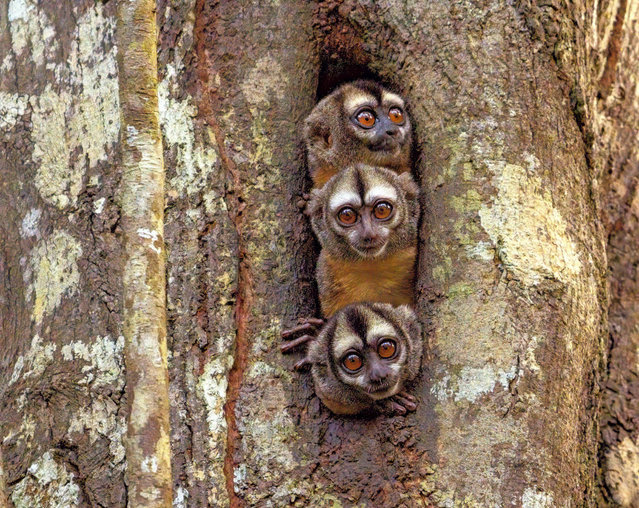
A curious trio of owl monkeys peep out of a tree hollow on the Marañón River near the city of Nauta, Peru in April 2024. (Photo by James Cai/Solent News)

A curious trio of owl monkeys peep out of a tree hollow on the Marañón River near the city of Nauta, Peru in April 2024. (Photo by James Cai/Solent News)
Details
05 May 2024 04:29:00
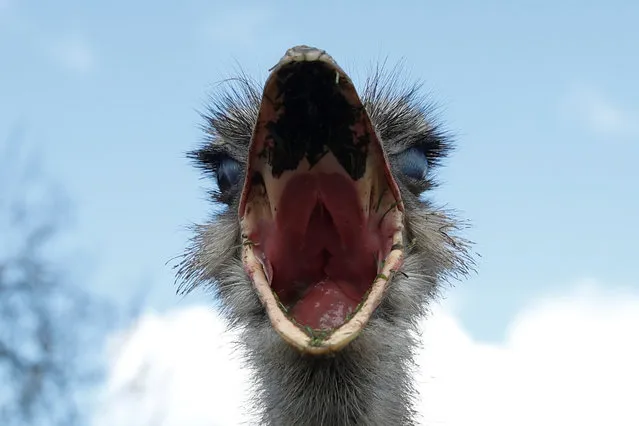
An ostrich is seen at Woburn Safari park before its opening as coronavirus disease (COVID-19) restrictions begin to ease, in Woburn, Britain on April 11, 2021. (Photo by Andrew Boyers/Reuters)

An ostrich is seen at Woburn Safari park before its opening as coronavirus disease (COVID-19) restrictions begin to ease, in Woburn, Britain on April 11, 2021. (Photo by Andrew Boyers/Reuters)
Details
25 Apr 2021 08:10:00
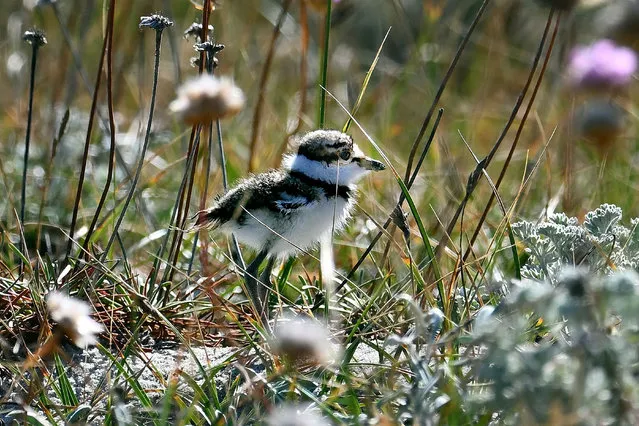
A killdeer (Charadrius vociferus) chick on sand dunes in Pacific Grove, California, US on June 21, 2023. The killdeer gets its name from its shrill, loud call. (Photo by Rory Merry/ZUMA Press Wire/Rex Features/Shutterstock)

A killdeer (Charadrius vociferus) chick on sand dunes in Pacific Grove, California, US on June 21, 2023. The killdeer gets its name from its shrill, loud call. (Photo by Rory Merry/ZUMA Press Wire/Rex Features/Shutterstock)
Details
02 Jul 2023 03:03:00
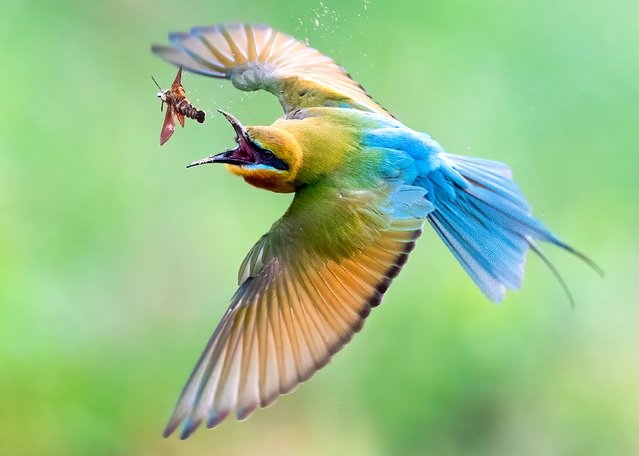
A blue-tailed bee-eater chases down its prey along the banks of the Kaveri River on the outskirts of the city of Mysore, India in the last decade of June 2025. (Photo by Nitin Jain/Solent News)

A blue-tailed bee-eater chases down its prey along the banks of the Kaveri River on the outskirts of the city of Mysore, India in the last decade of June 2025. (Photo by Nitin Jain/Solent News)
Details
13 Jul 2025 00:34:00
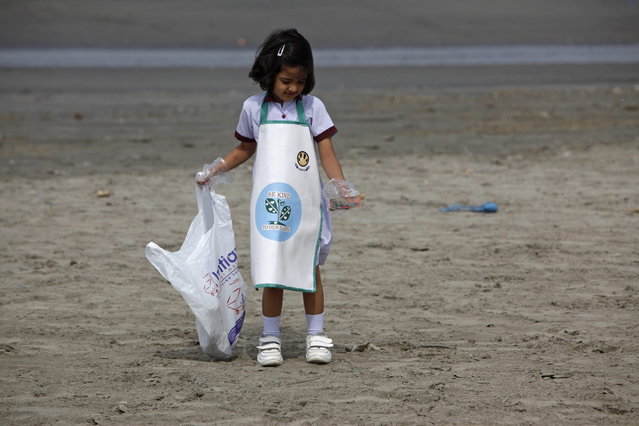
A schoolgirl collects rubbish from Karachi's Clifton beach early morning April 22, 2013, during a cleaning campaign as part of the commemoration of Earth Day. (Photo by Akhtar Soomro/Reuters)

A schoolgirl collects rubbish from Karachi's Clifton beach early morning April 22, 2013, during a cleaning campaign as part of the commemoration of Earth Day. (Photo by Akhtar Soomro/Reuters)
Details
23 Apr 2013 07:24:00
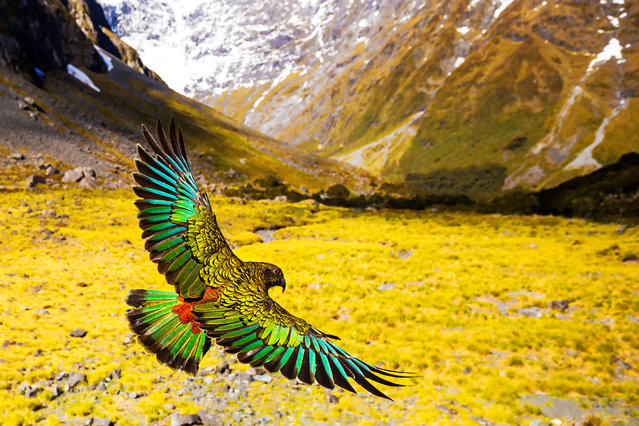
Kea are the only true alpine parrots in the world and thrive as cunning opportunists in the freezing conditions of the Southern Alps. Kea are thought to have developed their wide array of food-finding strategies during the last great ice age, where they learned to adapt using their unusual powers of curiosity. (Photo by Tom Walker/BBC Pictures/The Guardian)

Kea are the only true alpine parrots in the world and thrive as cunning opportunists in the freezing conditions of the Southern Alps. Kea are thought to have developed their wide array of food-finding strategies during the last great ice age, where they learned to adapt using their unusual powers of curiosity. (Photo by Tom Walker/BBC Pictures/The Guardian)
Details
19 Jul 2016 13:03:00