Loading...
Done
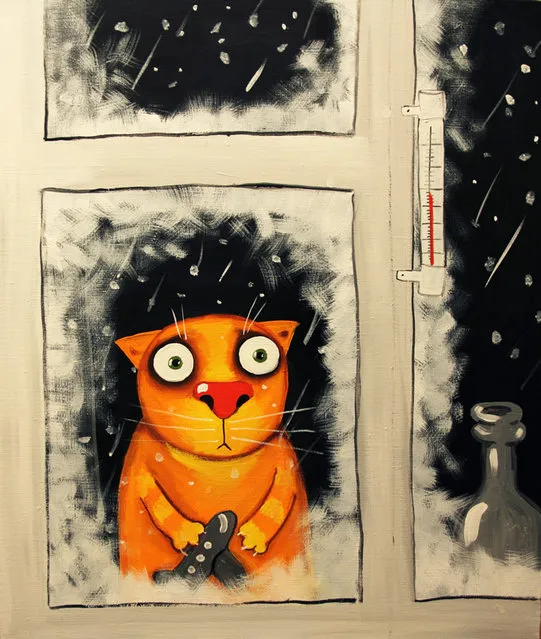
“Grandfather Frost did not come”. (Photo by Vasya Lozhkin)

HAPPY NEW YEAR!
“Grandfather Frost did not come”. (Photo by Alex Kudelin aka Vasya Lozhkin)
“Grandfather Frost is a fictional character who in some Slavic cultures plays a role similar to that of Santa Claus”. – Wikipedia
Details
31 Dec 2014 15:03:00
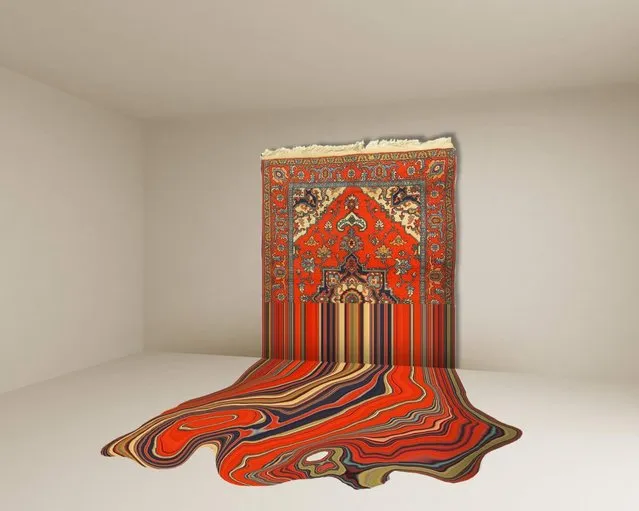
Handmade Carpets By Faig Ahmed

Through handmade craftmanship, multimedia artist Faig Ahmed creatively explores the ornate patterns and traditional designs of Azerbaijan carpets. He draws upon the culture and artistic traditions of the country in order to produce his unique and contemporary sculptures. By directly manipulating the wool, Ahmed transforms iconic carpet designs into modern creations.
Details
17 Apr 2014 13:53:00
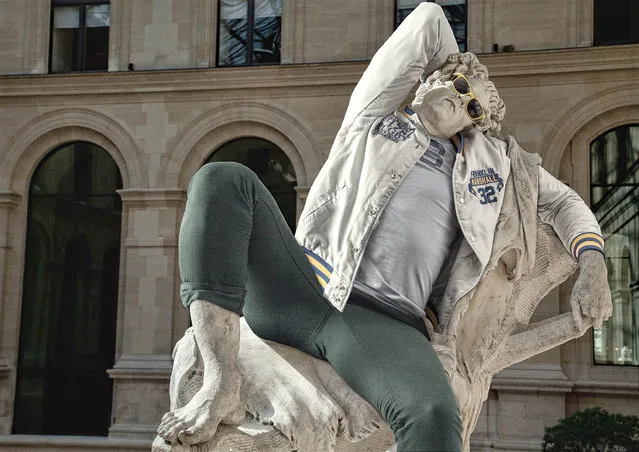
Street Stone By Alexis Persani And Leo Caillard

French art director Alexis Persani has collaborated with french photographer Leo Caillard to create a series of in vogue sculptures, entitled “street stone”. The ensembles are achieved through image manipulation, using photoshop to digitally dress the statues in the latest fashion trends. Persani and Caillard created the project as a humorous take on the contrast between contemporary and classic culture, demonstrating the vast metamorphose society has undergone, and continues to.
Details
12 Oct 2013 10:55:00
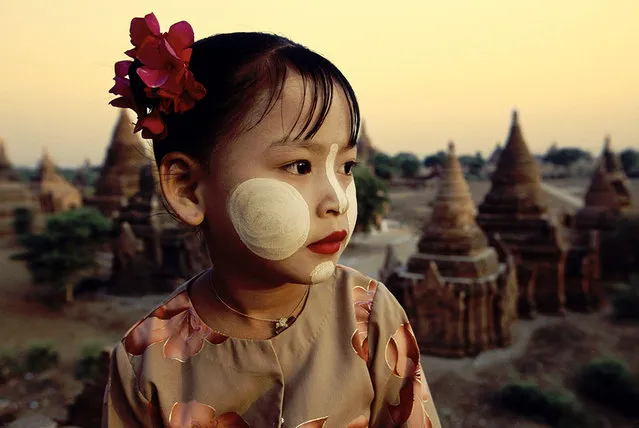
Pagan Kingdom, Myanmar

The Kingdom of Pagan (also commonly known as the Pagan Dynasty and the Pagan Empire) was the first kingdom to unify the regions that would later constitute modern-day Burma (Myanmar). Pagan's 250-year rule over the Irrawaddy valley and its periphery laid the foundation for the ascent of Burmese language and culture, the spread of Burman ethnicity in Upper Burma, and the growth of Theravada Buddhism in Burma and in mainland Southeast Asia.
Details
22 Feb 2014 15:14:00
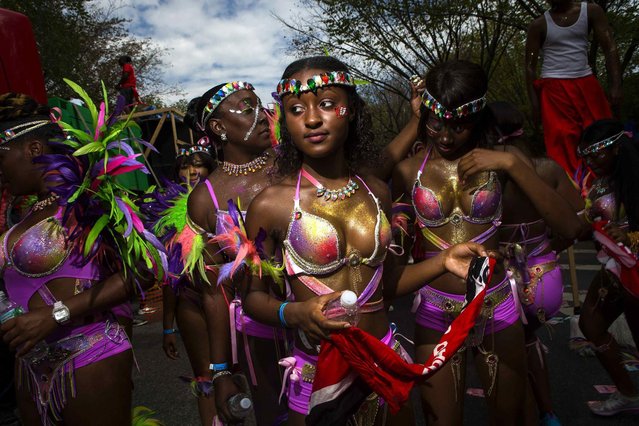
Participants wearing costumes take part in the West Indian Day Parade in the Brooklyn borough of New York September 1, 2014. (Photo by Eric Thayer/Reuters)

Participants wearing costumes take part in the West Indian Day Parade in the Brooklyn borough of New York September 1, 2014. The parade, which draws a crowd of a million plus, celebrates Caribbean culture. (Photo by Eric Thayer/Reuters)
Details
02 Sep 2014 12:43:00
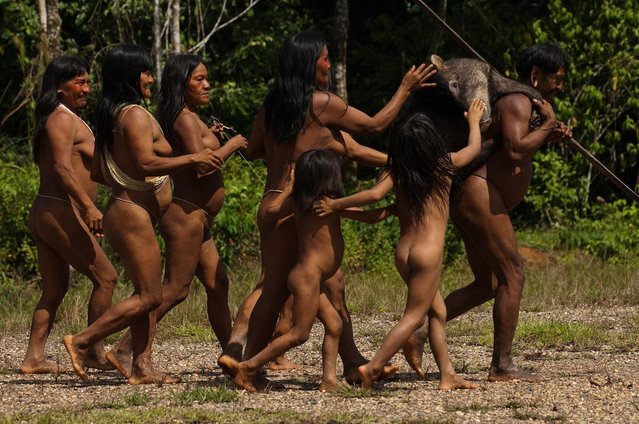
Spectacular images offering insight into the lives of the Huaorani people in the Ecuadorian Amazon have been revealed showing how they use traditional methods to hunt monkeys for food. The stunning pictures were taken by conservation photographer Pete Oxford from Torquay, Devon in the Ecuadorian Amazon. “The Huaorani Indians are a forest people highly in tune with their environment. Many are now totally acculturated since the 1950s by missionaries”, said Pete. “Today they face radical change to their culture to the proximity of oil exploration within their territory and the Yasuni National Park and Biosphere Reserve, they are vastly changed. Some still live very traditionally and for this shoot, through my Huaorani friend, a direct relative of those photographed he wanted to depict them as close to their original culture as possible. They still largely hunt with blow pipes and spears eating a lot of monkeys and peccaries”. The Huaorani are also known as the Waorani, Waodani or the Waos and are native Amerindians. Their lands are located between the Curaray and Napo rivers and speak the Huaorani language. Pete says that during his visit he was welcomed into the group and hopes that ancient cultures can be saved. Here: The tribe were seen celebrating after a hunter returned to camp with a wild pig. (Photo by Pete Oxford/Mediadrumworld.com)

Spectacular images offering insight into the lives of the Huaorani people in the Ecuadorian Amazon have been revealed showing how they use traditional methods to hunt monkeys for food. The stunning pictures were taken by conservation photographer Pete Oxford from Torquay, Devon in the Ecuadorian Amazon. Here: The tribe were seen celebrating after a hunter returned to camp with a wild pig. (Photo by Pete Oxford/Mediadrumworld.com)
Details
20 Jan 2017 07:58:00
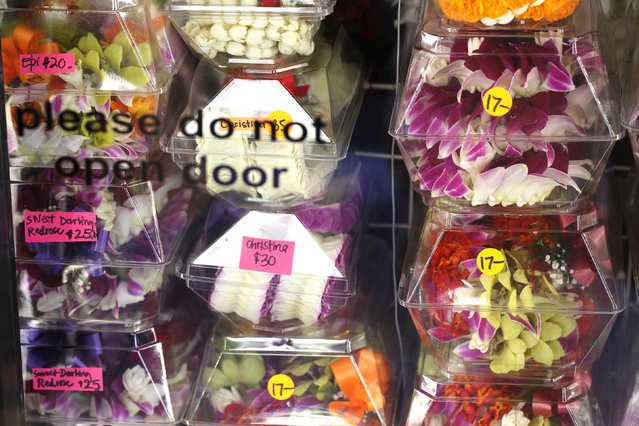
A selection of hand-made leis, traditional Hawaiian necklaces made of flowers and worn mostly on special occasions, fill a cooler at Lin's Lei Shop in the Chinatown district of Honolulu, Hawaii December 22, 2015. Hawaii, whose economy depends heavily on tourism, sees a brief lull in visitors each year in January and February. But in addition to the usual tourist destinations, the state shows a unique overlay of mainland U.S. culture atop tropical beauty year-round. (Photo by Jonathan Ernst/Reuters)

A selection of hand-made leis, traditional Hawaiian necklaces made of flowers and worn mostly on special occasions, fill a cooler at Lin's Lei Shop in the Chinatown district of Honolulu, Hawaii December 22, 2015. Hawaii, whose economy depends heavily on tourism, sees a brief lull in visitors each year in January and February. But in addition to the usual tourist destinations, the state shows a unique overlay of mainland U.S. culture atop tropical beauty year-round. (Photo by Jonathan Ernst/Reuters)
Details
16 Jan 2016 08:00:00
A motorcyclist performs the superman stunt on a highway in Kuala Lumpur, Malaysia, September 14, 2014. Crowds of small motorbikes ridden by racers – or “Mat Rempit”, as they are known in Malaysian slang – face off in impromptu races in the Malaysian capital after dark. The decades-old culture is widely frowned upon by largely conservative Malaysians, who fear its potential to encourage gambling, drug abuse, snatch thefts and sexual promiscuity. (Photo by Olivia Harris/Reuters)

A motorcyclist performs the superman stunt on a highway in Kuala Lumpur, Malaysia, September 14, 2014. Crowds of small motorbikes ridden by racers – or “Mat Rempit”, as they are known in Malaysian slang – face off in impromptu races in the Malaysian capital after dark. The decades-old culture is widely frowned upon by largely conservative Malaysians, who fear its potential to encourage gambling, drug abuse, snatch thefts and sexual promiscuity. (Photo by Olivia Harris/Reuters)
Details
09 Apr 2016 13:39:00