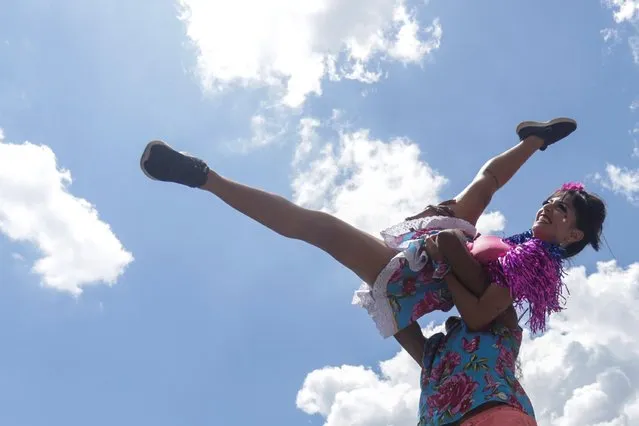
Revellers take part in the annual block party known as “Casa Comigo” (Marry Me), during carnival festivities in Sao Paulo, Brazil on February 15, 2020. (Photo by Rahel Patrasso/Reuters)
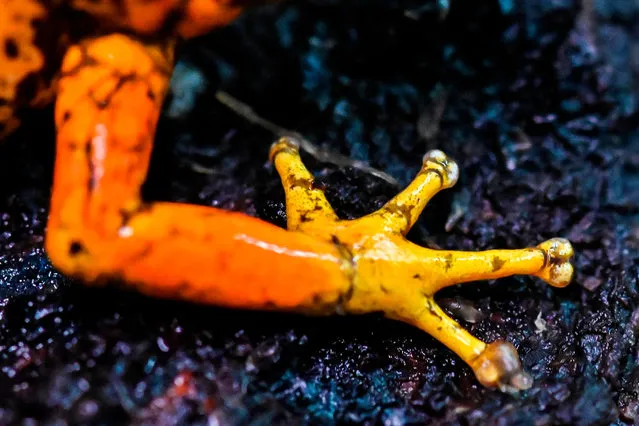
A leg of a “diablito” frog (Oophaga sylvatica) is photographed in a laboratory at a laboratory in the zoo of Cali, Colombia, on July 19, 2019. Colombia is the second country with the largest number of amphibians in the world after Brazil. More than 40% of amphibian species worldwide are in danger of extinction. (Photo by Luis Robayo/AFP Photo)
The 26th annual National Geographic Traveler Photo Contest is now accepting submissions. Official categories include: “Travel Portraits”, “Outdoor Scenes”, “Sense of Place” and “Spontaneous Moments”. The contest is accepting entries until June 30. Photo: “Forest lights”. Aurora Borealis over the forest of the Pyhae Luosto National Park, Finland. (Photo and caption by Nicholas Roemmelt/National Geographic Traveler Photo Contest)
“Artist Paula Swisher has come up with a quirky way of lessening the stress of household bills - by doodling highly intricate birds on each one. Swisher, 37, has drawn hundreds of birds in her lifetime and puts her love of ornithology down to the nature walks she went on as a youngster. Looking for work during the recession, she began sketching birds on the inside of books, seeing the practice as a creative way to mutate the pages into something fresh. But now she's made the transition from books to bills – while admittedly making a playful commentary on the predatory banking businesses”. – Caters News. (Photo by Paula Swisher/Caters News)
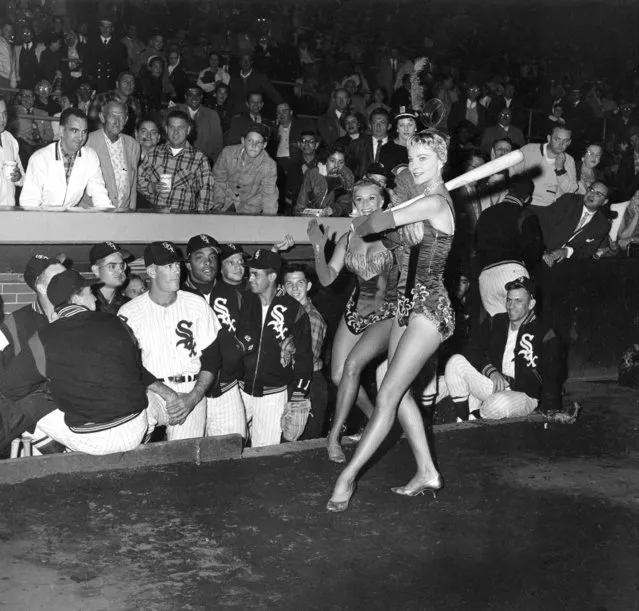
Dancers Marion Krebs and Judy Ness, right, pose as batter and catcher in front of the Chicago White Sox dugout before start of game with Detroit at Comiskey Park, Chicago, Ill., September 18, 1959. White Sox won, 1-0, to move within two games of clinching the American League pennant. (Photo by AP Photo)
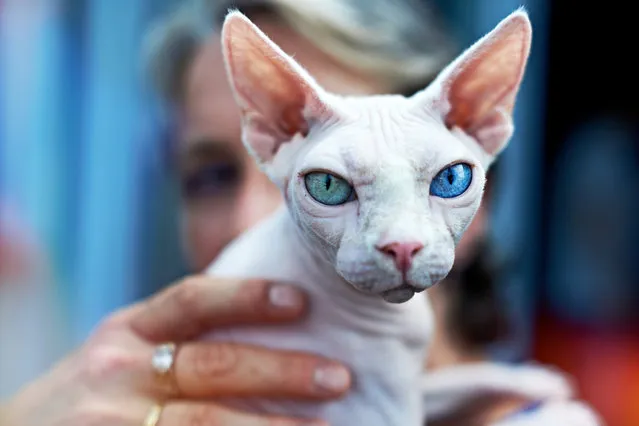
No. 10: Sphynx. A suede-like coat is the sphynx's most unmistakable feature, but he's also curious, smart and a clown who craves applause for his antics. In fact, he loves attention so much that you may want to consider getting him a fellow sphynx playmate. (Photo by Quentin Descotte)
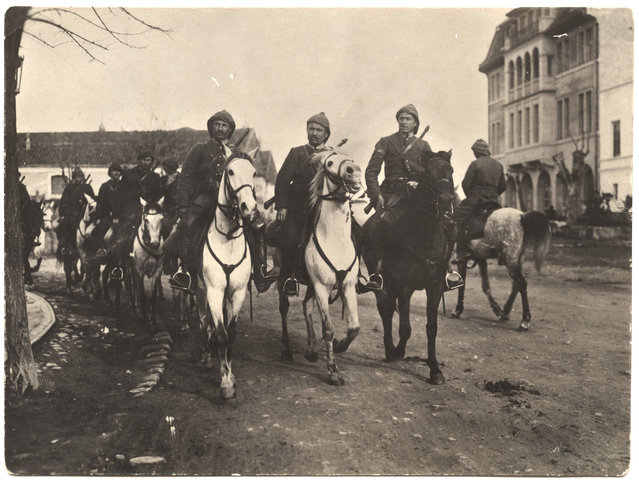
Dr. P.A. Smithe was sent by the American Red Cross as a doctor and surgeon to work at a hospital in Vienna. He sailed to Europe in December 1915 and returned home in August 1916, according to his daughter, who donated his images to the National World War I Museum. Photo: Turkish army, including cavalry, infantry and artillery. (Photo by Dr. P.A. Smithe/National World War I Museum, Kansas City, Mo.)