Loading...
Done
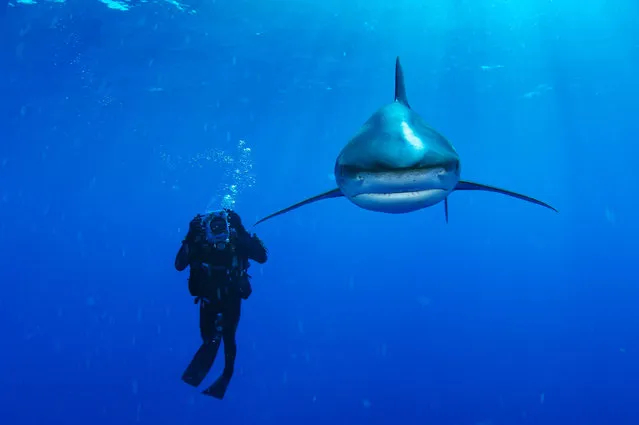
This Bahamian oceanic whitetip shark, known for the distinctive coloring on its white-tipped, rounded extremities, is part of a globally threatened species due to overfishing demands, primarily for its fins. (Photo by Brian Skerry)

Brian Skerry can be called many things – explorer, journalist, conservation advocate – but he is first and foremost a photographer. His journeys to capture amazing underwater photographs have taken him across the world’s oceans. Photo: This Bahamian oceanic whitetip shark, known for the distinctive coloring on its white-tipped, rounded extremities, is part of a globally threatened species due to overfishing demands, primarily for its fins. (Photo by Brian Skerry)
Details
08 Sep 2013 07:26:00
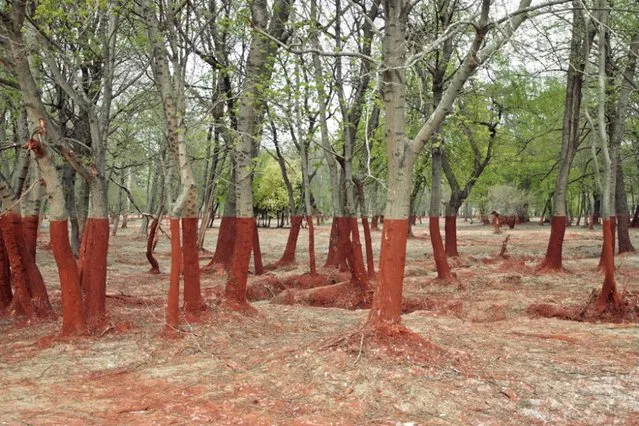
Ajka alumina plant accident

The photograph you see above isn’t the result of Photoshop or infrared photography. Captured by Spanish photographer Palíndromo Mészáros, it shows what the landscape of Ajka, Hungary looked like half a year after the Ajka alumina plant accident — an industrial disaster in which 35 million cubic feet of toxic waste flooded the land to a height of around 6.5 feet. Mészáros lined up the thick red line caused by the sludge with the horizon line to obtain this surreal image.
Details
13 Jul 2012 05:24:00
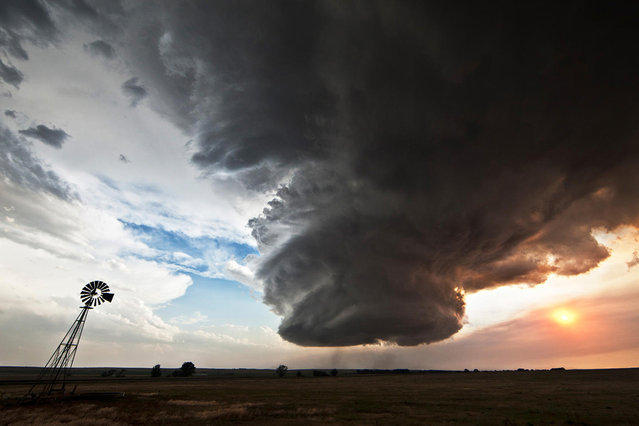
The Big Cloud: The Lovely Monster by Camille Seaman

“Award-winning photographer Camille Seaman, best known for her earlier work depicting massive polar icebergs, recently turned her lens on another incredible natural phenomenon - storm clouds above the American Midwest. She partnered with experienced storm chasers and began to stalk a particular type of storm cloud – the supercell. On June 22, 2012, in western Nebraska, she encountered an enormous supercell and captured its many faces”. (Photo by Camille Seaman via TheAtlantic)
Details
17 Jul 2012 07:26:00
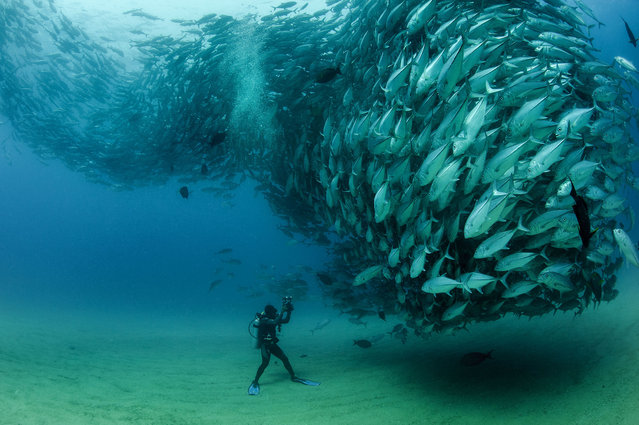
The school of fish gather in front of diver David Castro with his camera

Californian photographer and conservationist Octavio Aburto had spent years photographing the school in Cabo Pulmo National Park, Mexico – and had been trying to capture this exact shot for three years. “Together with my friend David Castro, we were diving with a large group of Bigeye travellies at Cabo Pulmo National Park, Mexico. Thousands of fish forming a ball during the reproduction courtship. In the afternoon, these fish congregate to form a large spawning aggregation around the reefs of the National Park”. (Photo and caption by Octavio Aburto)
Details
10 Feb 2014 08:34:00
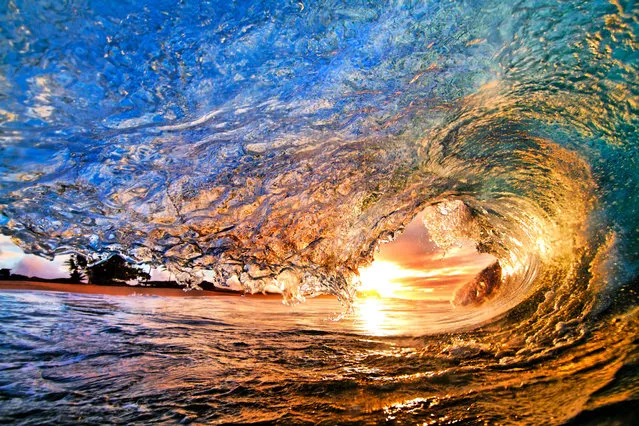
The most beautiful pictures of waves we've ever seen by Nick Selway/CJ Kale

“These incredible pictures capture the stunning moment waves roll on to a tropical beach. Photographers Nick Selway, 28, and pal CJ Kale, 35, position themselves in the magnificent Hawaiian water – and then wait for the waves to crash into their heads. Their only equipment are standard cameras – but a waterproof case means they do not need to sacrifice their cameras for their art”. (Photo by Nick Selway/CJ Kale)
Details
05 Jun 2012 09:31:00
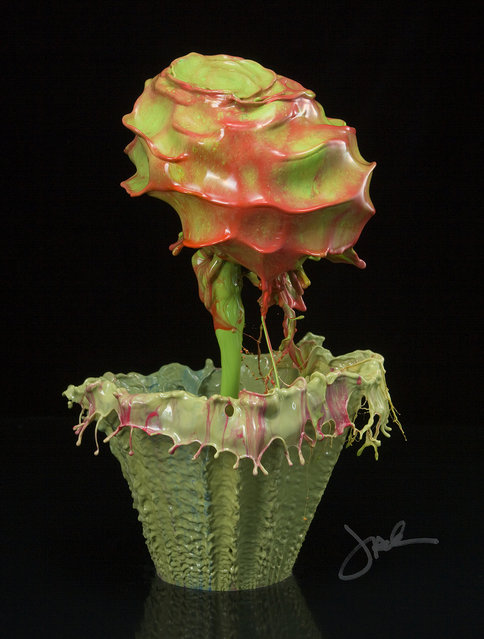
Blooms

At first glance, these incredible images look like still-life portraits of flowers. But far from being drawn in the traditional way, they are created by photographing fast-moving droplets of paint as they fall through the air. Artist Jack Long, 53, spends months painstakingly planning and testing each work before capturing them with a high-speed camera.
Details
13 Jul 2012 11:17:00
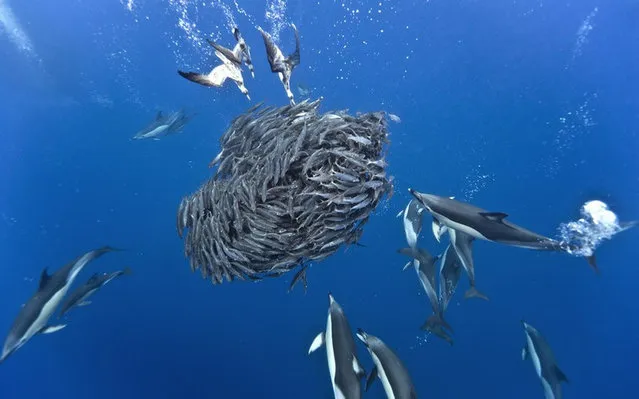
Sharks And Dolphins Preying On Mackerel

British photographer Christopher Swann captures the fascinating underwater action that takes place when sharks and dolphins prey on a school of mackerel. We rarely think about how members of the animal kingdom hunt or defend themselves, but the wildlife photographer gives some perspective on these particular creatures off the coast of Azores.
Details
10 Feb 2013 12:04:00


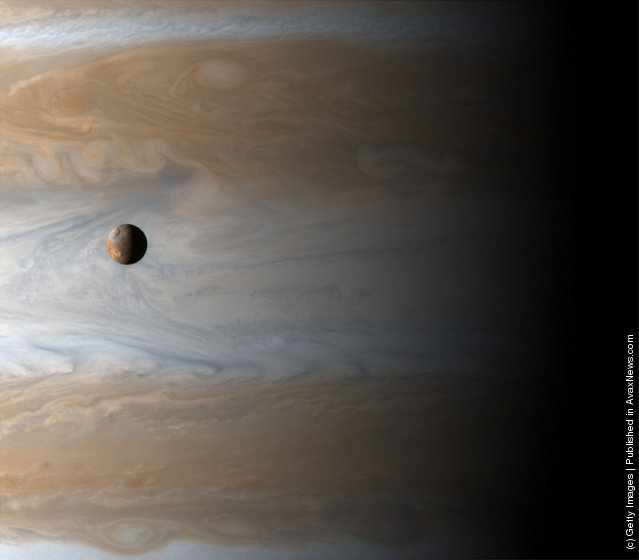
Gliding past the planet Jupiter, the Cassini spacecraft captures this awe inspiring view of active Io, Jupiter's third largest satellite, with the largest gas giant as a backdrop, offering a stunning demonstration of the ruling planet's relative size, April 20, 2001. The Cassini spacecraft itself was about 10 million kilometers from Jupiter when recording the image data. (Photo courtesy of NASA/Newsmakers)
Details
23 Mar 2011 10:32:00