Loading...
Done
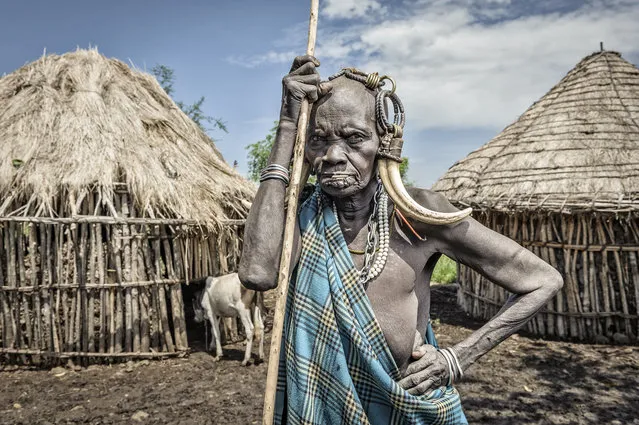
“Old Mursi woman”. Old woman by the huts of her village. Location: Marenke, Omo valley, Ethiopia. (Photo and caption by Jorge Fernandez/National Geographic Traveler Photo Contest)

“Old Mursi woman”. Old woman by the huts of her village. Location: Marenke, Omo valley, Ethiopia. (Photo and caption by Jorge Fernandez/National Geographic Traveler Photo Contest)

ATTENTION! All pictures are presented in high resolution. To see Hi-Res images – just TWICE click on any picture. In other words, click small picture – opens the BIG picture. Click BIG picture – opens VERY BIG picture.
Details
24 Jun 2013 09:55:00
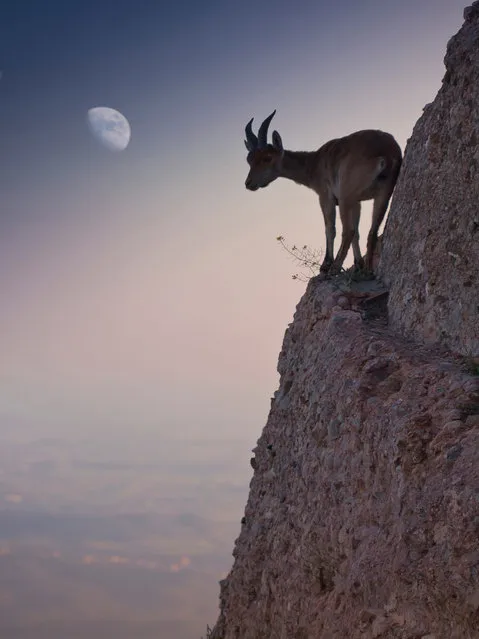
“For a bouquet of flowers”. Photographs made ​​in the last hours of the day. A goat is directed by a dangerous way to eat a small bouquet of flowers. Location: España, Barcelona, Montserrat. (Photo and caption by Renato Lopez Baldo/National Geographic Traveler Photo Contest)

“For a bouquet of flowers”. Photographs made ​​in the last hours of the day. A goat is directed by a dangerous way to eat a small bouquet of flowers. Location: España, Barcelona, Montserrat. (Photo and caption by Renato Lopez Baldo/National Geographic Traveler Photo Contest)

ATTENTION! All pictures are presented in high resolution. To see Hi-Res images – just TWICE click on any picture. In other words, click small picture – opens the BIG picture. Click BIG picture – opens VERY BIG picture.
Details
25 Jun 2013 12:51:00
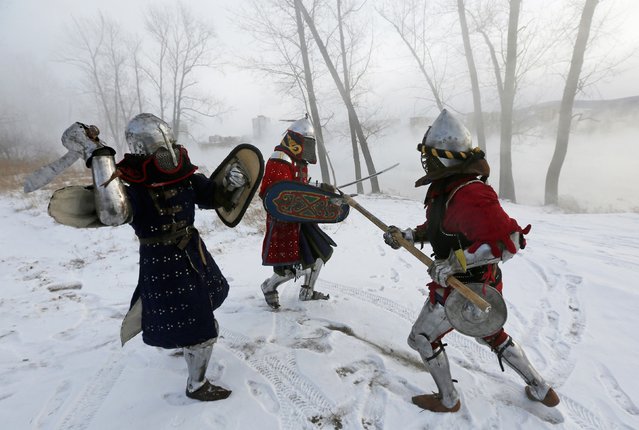
Members of the “Avalon” team wearing 14th century knight costumes fight against each other on the bank of the Yenisei River during the regional amateurs tournament of clubs of historical reconstruction, “The Battle of the Nations 2015. Siberia”, in Krasnoyarsk January 24, 2015. (Photo by Ilya Naymushin/Reuters)

Members of the “Avalon” team wearing 14th century knight costumes fight against each other on the bank of the Yenisei River during the regional amateurs tournament of clubs of historical reconstruction, “The Battle of the Nations 2015. Siberia”, in Krasnoyarsk January 24, 2015. (Photo by Ilya Naymushin/Reuters)
Details
31 Jan 2015 13:09:00
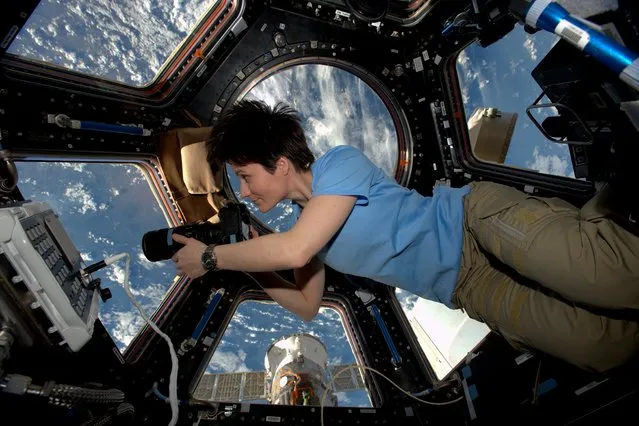
ESA astronaut Samantha Cristoforetti on the International Space Station 3 February 2015 during her Futura mission. Samantha is living and working on the Station as part of the Expedition 42 crew. (Photo by ESA/NASA)

ESA astronaut Samantha Cristoforetti on the International Space Station 3 February 2015 during her Futura mission. Samantha is living and working on the Station as part of the Expedition 42 crew. Picture released on February 10, 2015. (Photo by ESA/NASA)
Details
14 Feb 2015 12:40:00
Japanese college students look at cheerleaders during a job-hunting rally in Tokyo January 29, 2014. According to the rally organizers, about 1,500 students from vocational schools attend the rally to boost their morale ahead of their job hunt. (Photo by Yuya Shino/Reuters)

Japanese college students look at cheerleaders during a job-hunting rally in Tokyo January 29, 2014. According to the rally organizers, about 1,500 students from vocational schools attend the rally to boost their morale ahead of their job hunt. (Photo by Yuya Shino/Reuters)
Details
01 Feb 2014 13:10:00
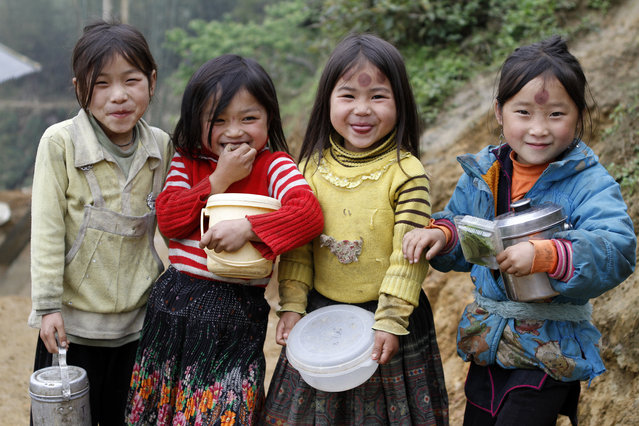
“Kids of Sapa”. Four little beautiful Hmong girls from Lao Chai Village, near Sapa, Vietnam. (Photo and caption by Felipe Hanower/National Geographic Traveler Photo Contest)

“Kids of Sapa”. Four little beautiful Hmong girls from Lao Chai Village, near Sapa, Vietnam. (Photo and caption by Felipe Hanower/National Geographic Traveler Photo Contest)
Details
15 Jul 2013 09:14:00
On August 31, 2012, a long filament of solar material that had been hovering in the sun's atmosphere, the corona, erupted out into space at 4:36 p.m. EDT. The coronal mass ejection, or CME, traveled at over 900 miles per second. The CME did not travel directly toward Earth, but did connect with Earth's magnetic environment, or magnetosphere, causing aurora to appear on the night of Monday, September 3. (Photo by NASA/GSFC/SDO)

On August 31, 2012, a long filament of solar material that had been hovering in the sun's atmosphere, the corona, erupted out into space at 4:36 p.m. EDT. The coronal mass ejection, or CME, traveled at over 900 miles per second. The CME did not travel directly toward Earth, but did connect with Earth's magnetic environment, or magnetosphere, causing aurora to appear on the night of Monday, September 3. (Photo by NASA/GSFC/SDO via The Atlantic)
Details
14 Sep 2012 09:01:00
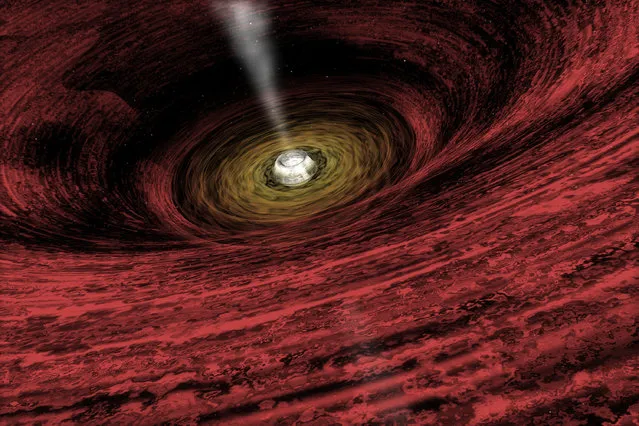
An artist's impression of a growing supermassive black hole located in the early Universe is seen in this NASA handout illustration released on June 15, 2011. Using the deepest X-ray image ever taken, astronomers found the first direct evidence that massive black holes were common in the early universe. This discovery from NASA's Chandra X-Ray Observatory shows that very young black holes grew more aggressively than previously thought, in tandem with the growth of their host galaxies. (Photo by Reuters/NASA/Chandra X-Ray Observatory/A.Hobart)

An artist's impression of a growing supermassive black hole located in the early Universe is seen in this NASA handout illustration released on June 15, 2011. Using the deepest X-ray image ever taken, astronomers found the first direct evidence that massive black holes were common in the early universe. This discovery from NASA's Chandra X-Ray Observatory shows that very young black holes grew more aggressively than previously thought, in tandem with the growth of their host galaxies. (Photo by Reuters/NASA/Chandra X-Ray Observatory/A.Hobart)
Details
11 Feb 2016 12:57:00