Mina Sue Choi (L) from South Korea reacts after winning the Miss Earth 2022 pageant during the coro​nation night in Manila, Philippines, 29 November 2022. (Photo by Francis R. Malasig/EPA/EFE)
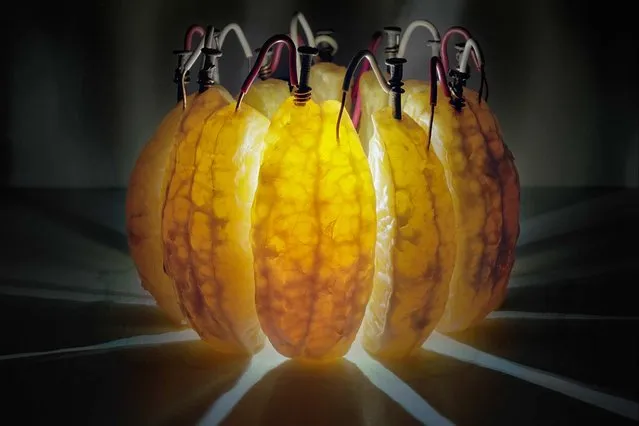
Wedges of an orange generate enough current and electrical juice – 3.5 volts – to power an LED. The fruit’s citric acid helps electrons flow from galvanized nails to copper wire in this 14-hour exposure. This image was published in September’s Visions of Earth, a trio of photos that appear in each issue of National Geographic. (Photo by Caleb Charland/National Geographic)
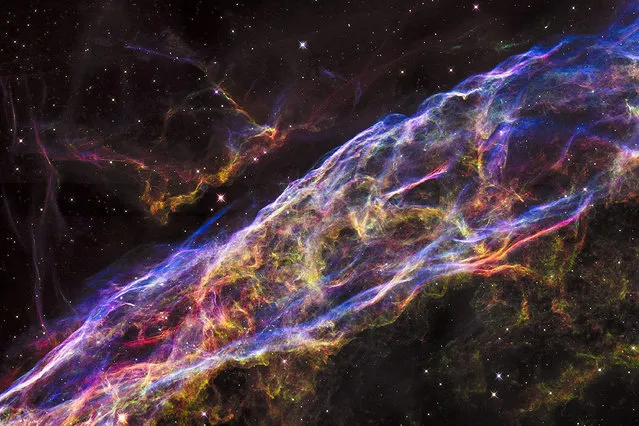
A small section of the expanding remains of the Veil Nebula, a massive star that exploded about 8,000 years ago. The entire nebula is 110 light-years across, covering six full moons on the sky as seen from Earth, and resides about 2,100 light-years away in the constellation Cygnus, the Swan. (Photo by Reuters/NASA/ESA/Hubble)
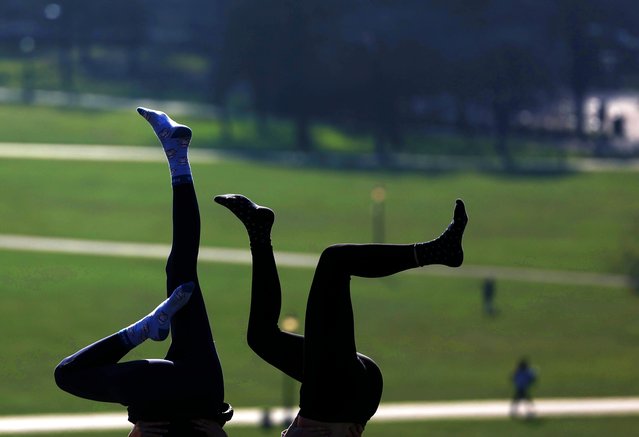
People exercise in Primrose Hill in London, Britain, 20 March 2025. The first day of spring in the UK astronomically occurs on the vernal equinox where earth's axis is not tilted towards or away from the sun, resulting in an equal amount of day and night on all latitudes. (Photo by Neil Hall/EPA/EFE)
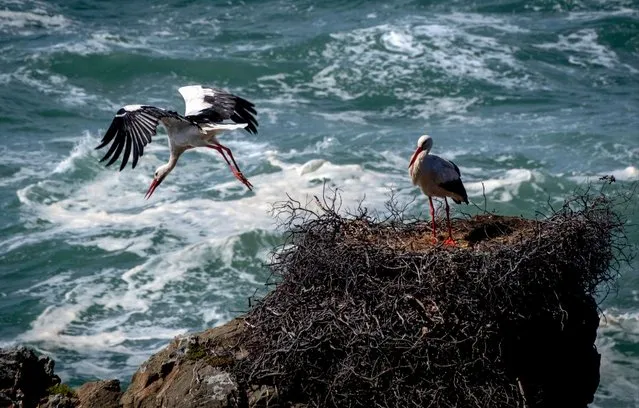
A stork starts from its nest in the cliffs high above the Atlantic Ocean in Cabo Sardao, Portugal, Friday, March 29, 2024. (Photo by Michael Probst/AP Photo)
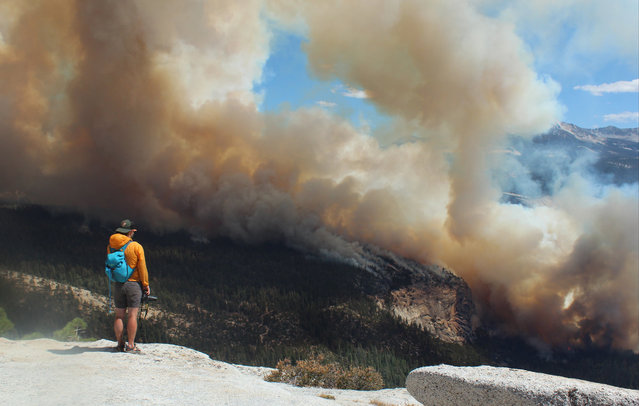
This Sunday, September 7, 2014 photo provided by Rachel Kirk shows smoke from a fire rising above Little Yosemite Valley near Yosemite National Park, Calif. (Photo by Rachel Kirk/AP Photo)
Andrey Karr from Western Riders Slacklines at sunset above big waves in Nazare, Portugal on December 27, 2017. (Photo by Aidan Williams/National Geographic Travel Photographer of the Year Contest)