Loading...
Done
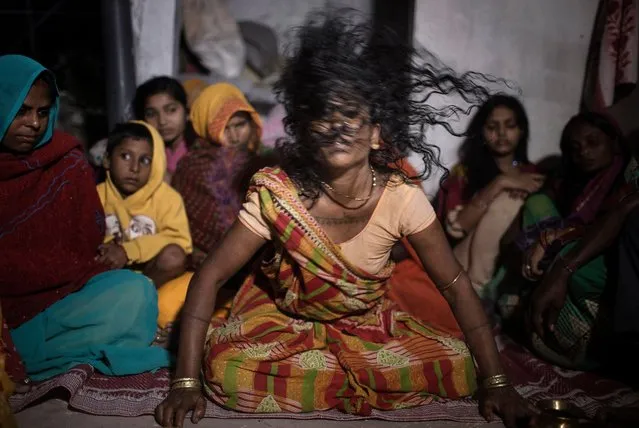
Marani Devi Chaudhary (C), aged 40, performs a ritual in front of shaman Paltan Yadav (unseen) at her home in Rajaur village in Dhanusha district, Nepal, 02 November 2017. The shaman identified Marani Devi to be possessed by their lineage god who was dissatisfied by their worship is thought by the family to have caused them misfortune and is even feared lead to their death. Therefore Marani Devi spent 1,500 USD to perform a healing ritual at the Ghost Festival held at the banks of Kamala River in Dhanusha district two days later. Every family or community has their own sacred god, called 'Kuldevta' in Nepali which means family deity or lineage god. Only family members or people within communities of the same caste can worship to the deity. They have their own rules and regulations of worship which varies from one family and community to another. Being unable to follow the rules and regulations or carry out worship is believed to cause misfortune. (Photo by Narendra Shrestha/EPA/EFE)

Marani Devi Chaudhary (C), aged 40, performs a ritual in front of shaman Paltan Yadav (unseen) at her home in Rajaur village in Dhanusha district, Nepal, 02 November 2017. The shaman identified Marani Devi to be possessed by their lineage god who was dissatisfied by their worship is thought by the family to have caused them misfortune and is even feared lead to their death. (Photo by Narendra Shrestha/EPA/EFE)
Details
17 Nov 2017 06:53:00
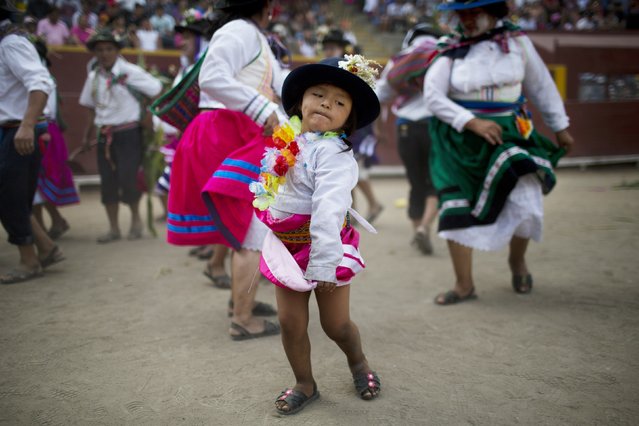
In this Sunday, March 29, 2015 photo, a young performer from the Parinacochas district of Ayacuhco dances in the Vencedores de Ayacucho dance festival, in the Acho bullring in Lima, Peru. The performers sang in the Quechua language, portraying the planting of corn and potatoes. From very young children to elderly people dressed as farmers, tigers, and foxes, as well as members of auto-defense groups, soldiers and police officers, to portray the violence that tore apart their families and communities. (Photo by Rodrigo Abd/AP Photo)

In this Sunday, March 29, 2015 photo, a young performer from the Parinacochas district of Ayacuhco dances in the Vencedores de Ayacucho dance festival, in the Acho bullring in Lima, Peru. The performers sang in the Quechua language, portraying the planting of corn and potatoes. From very young children to elderly people dressed as farmers, tigers, and foxes, as well as members of auto-defense groups, soldiers and police officers, to portray the violence that tore apart their families and communities. (Photo by Rodrigo Abd/AP Photo)
Details
01 Apr 2015 12:07:00
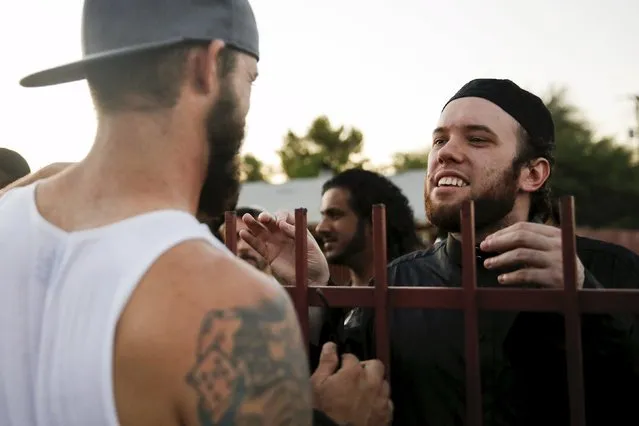
Ilyas Wadood (right) of the Islamic Community Center talks with a demonstrator during the "Freedom of Speech Rally Round II" in Phoenix, Arizona May 29, 2015. More than 200 protesters, some armed, berated Islam and its Prophet Mohammed outside an Arizona mosque on Friday in a provocative protest that was denounced by counterprotesters shouting "Go home, Nazis," weeks after an anti-Muslim event in Texas came under attack by two gunmen. REUTERS/Nancy Wiechec

Ilyas Wadood (right) of the Islamic Community Center talks with a demonstrator during the "Freedom of Speech Rally Round II" in Phoenix, Arizona May 29, 2015. More than 200 protesters, some armed, berated Islam and its Prophet Mohammed outside an Arizona mosque on Friday in a provocative protest that was denounced by counterprotesters shouting "Go home, Nazis," weeks after an anti-Muslim event in Texas came under attack by two gunmen. REUTERS/Nancy Wiechec
Details
04 Jun 2015 10:53:00
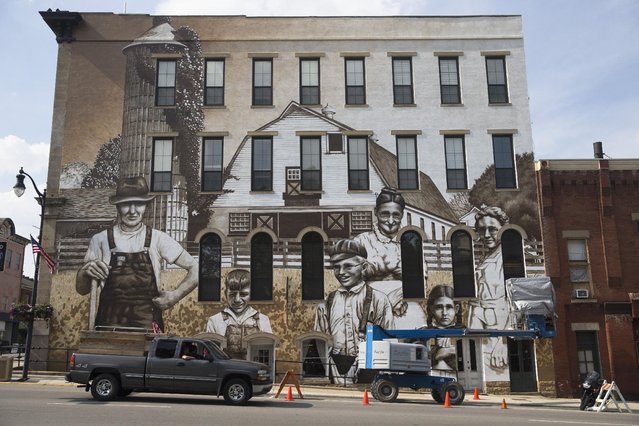
Artist Jason Morgan works on a mural named "Heritage Harvesters" as commissioned by a building owner to depict farmers from the community, Thursday, June 11, 2015, in Wilmington, Ohio. Locals were asked to send photographs of their ancestors who lived in the Wilmington area to adorn the edifice that sits along the town's main drag. (AP Photo/John Minchillo)

Artist Jason Morgan works on a mural named "Heritage Harvesters" as commissioned by a building owner to depict farmers from the community, Thursday, June 11, 2015, in Wilmington, Ohio. Locals were asked to send photographs of their ancestors who lived in the Wilmington area to adorn the edifice that sits along the town's main drag. (AP Photo/John Minchillo)
Details
22 Jun 2015 12:05:00
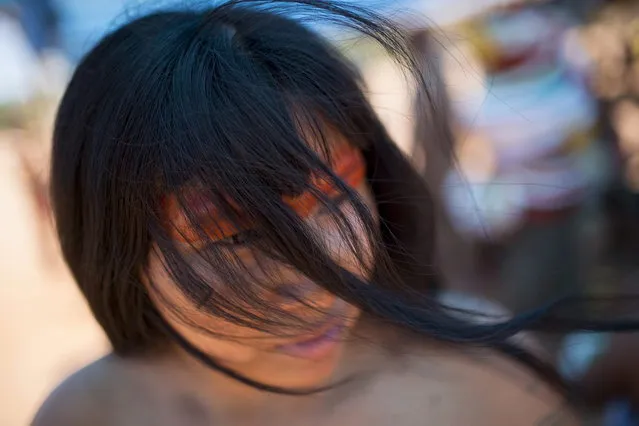
A Waura Indian woman watches the activities of this year's “quarup”, a ritual held over several days to honour in death a person of great importance to them, in Xingu National Park, Mato Grosso State, August 24, 2013. This year the Waura tribe is honouring their late cacique (chief) Atamai, who died in 2012 and helped created the Xingu Park, and his important contribution in facilitating communication between white Brazilians and Indians. (Photo by Ueslei Marcelino/Reuters)

A Waura Indian woman watches the activities of this year's “quarup”, a ritual held over several days to honour in death a person of great importance to them, in Xingu National Park, Mato Grosso State, August 24, 2013. This year the Waura tribe is honouring their late cacique (chief) Atamai, who died in 2012 and helped created the Xingu Park, and his important contribution in facilitating communication between white Brazilians and Indians. (Photo by Ueslei Marcelino/Reuters)
Details
04 Sep 2013 08:48:00
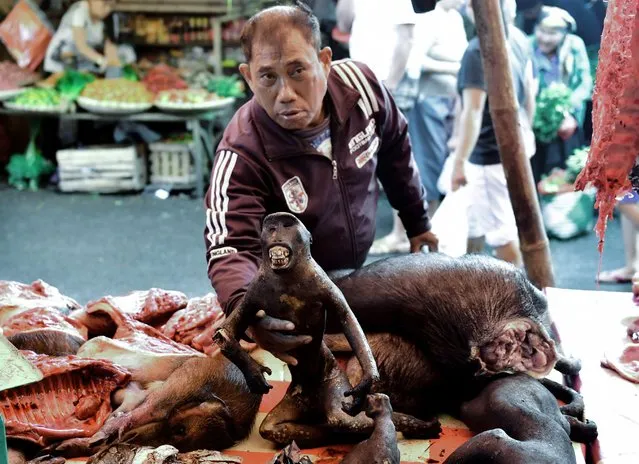
This picture taken on February 18, 2017 shows a customer holding a crested black macaque in Tomohon market in northern Sulawesi, Indonesia. (Photo by Bay Ismoyo/AFP Photo)

This picture taken on February 18, 2017 shows a customer holding a crested black macaque in Tomohon market in northern Sulawesi, Indonesia. Authorities and activists are stepping up efforts to persuade villagers on Sulawesi island to stop consuming the critically endangered crested black macaques, one of many exotic creatures that form part of the local indigenous community' s diet. The macaque' s meat is prized by the ethnic Minahasan people, a largely Christian group in the world' s most populous Muslim- majority country, who have no reservation about eating exotic animals, unlike Indonesia' s Islamic communities. (Photo by Bay Ismoyo/AFP Photo)
Details
04 Apr 2017 10:01:00
Nationalist youths throw bottles at police officers after the annual Orange march on July 12, 2016 in Belfast, Northern Ireland. The controversial Ardoyne interface is a flash point between the Catholic and Protestant communities with trouble flaring in the area frequently during the so called marching season. (Photo by Charles McQuillan/Getty Images)

Nationalist youths throw bottles at police officers after the annual Orange march on July 12, 2016 in Belfast, Northern Ireland. The controversial Ardoyne interface is a flash point between the Catholic and Protestant communities with trouble flaring in the area frequently during the so called marching season. The Protestant Orange bands from the nearby area have been stopped from parading past the Catholic Ardoyne for the past three years. (Photo by Charles McQuillan/Getty Images)
Details
14 Jul 2016 09:47:00
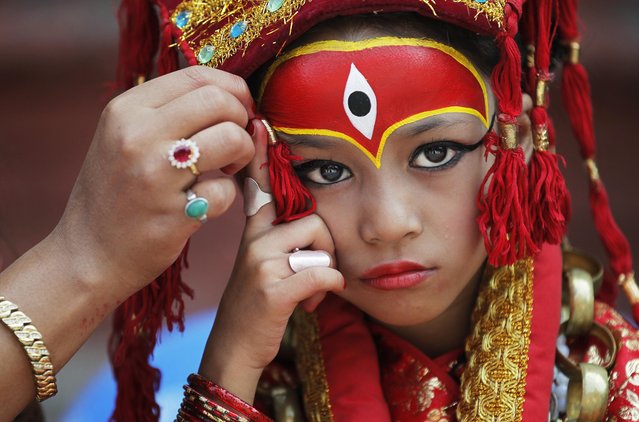
A Nepalese mother applies make up to her daughter dressed as the living goddess Kumari as they wait for Kumari puja to start at Hanuman Dhoka temple, in Kathmandu, Nepal, Wednesday, September 14, 2016. Girls under the age of nine gathered for the Kumari puja, a tradition of worshiping young prepubescent girls as manifestations of the divine female energy. The ritual holds a strong religious significance in the Newar community that seeks divine blessings to save small girls from diseases and bad luck in the years to come. (Photo by Niranjan Shrestha/AP Photo)

A Nepalese mother applies make up to her daughter dressed as the living goddess Kumari as they wait for Kumari puja to start at Hanuman Dhoka temple, in Kathmandu, Nepal, Wednesday, September 14, 2016. Girls under the age of nine gathered for the Kumari puja, a tradition of worshiping young prepubescent girls as manifestations of the divine female energy. The ritual holds a strong religious significance in the Newar community that seeks divine blessings to save small girls from diseases and bad luck in the years to come. (Photo by Niranjan Shrestha/AP Photo)
Details
15 Sep 2016 09:58:00