Loading...
Done
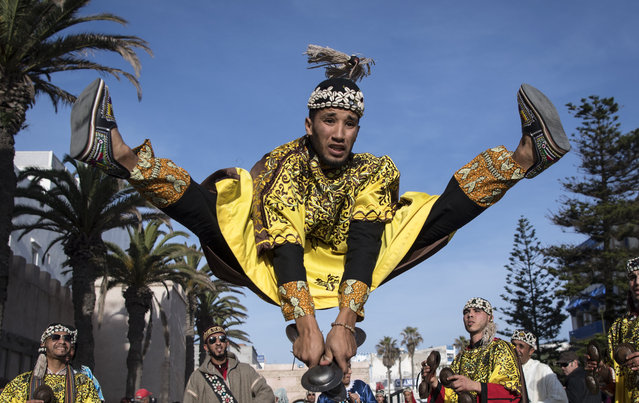
A Gnawa traditional group performs in the city of Essaouira on December 14, 2019, to celebrate the decision of adding the Gnawa culture to UNESCO's list of Intangible Cultural Heritage of Humanity. Gnawa culture, a centuries-old Moroccan practice rooted in music, African rituals and Sufi traditions, was added to UNESCO's list of Intangible Cultural Heritage of Humanity earlier in the week. Gnawa refers to a “set of musical productions, fraternal practices and therapeutic rituals where the secular mixes with the sacred”, according to the nomination submitted by Morocco. Often dressed in colourful outfits, Gnawa musicians play the guenbri, a type of lute with three strings, accompanied by steel castanets called krakebs. (Photo by Fadel Senna/AFP Photo)

A Gnawa traditional group performs in the city of Essaouira on December 14, 2019, to celebrate the decision of adding the Gnawa culture to UNESCO's list of Intangible Cultural Heritage of Humanity. Gnawa culture, a centuries-old Moroccan practice rooted in music, African rituals and Sufi traditions, was added to UNESCO's list of Intangible Cultural Heritage of Humanity earlier in the week. Gnawa refers to a “set of musical productions, fraternal practices and therapeutic rituals where the secular mixes with the sacred”, according to the nomination submitted by Morocco. Often dressed in colourful outfits, Gnawa musicians play the guenbri, a type of lute with three strings, accompanied by steel castanets called krakebs. (Photo by Fadel Senna/AFP Photo)
Details
18 Dec 2019 00:05:00


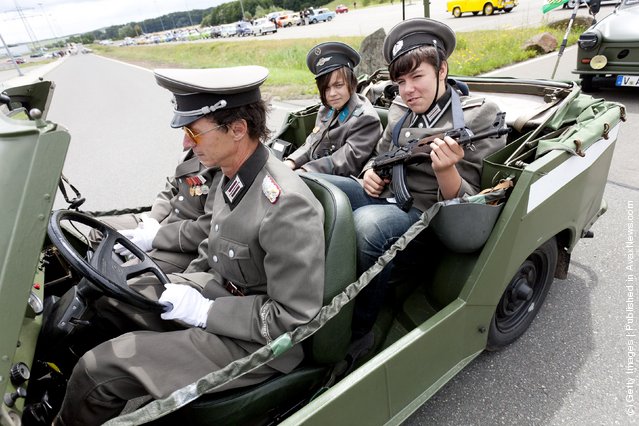
“The Trabant is a car that was produced by former East German auto maker VEB Sachsenring Automobilwerke Zwickau in Zwickau, Sachsen. It was the most common vehicle in East Germany, and was also exported to countries both inside and outside the communist bloc. The main selling points was that it had room for four adults and luggage in a compact, light and durable shell and that it was fast (when introduced) and durable. With its mediocre performance, smoky two-stroke engine, and production shortages, the Trabant is often cited as an example of the disadvantages of centralized planning; on the other hand, it is regarded with derisive affection as a symbol of the failed former East Germany and of the fall of communism (in former West Germany, as many East Germans streamed into West Berlin and West Germany in their Trabants after the opening of the Berlin Wall in 1989). It was in production without any significant changes for nearly 30 years with 3,096,099 Trabants produced in total”. – Wikipedia

Photo: Enthusiasts weared in uniforms of the former eastern german army trive in a military Trabant car as fans and owners of East German-era Trabant cars gather at the 2011 International Trabantfahrer Treffen (International Trabant Drivers Meeting) on June 26, 2011 in Zwickau, Germany. The Trabant, also known as the Trabi, was among the main cars produced in communist East Germany and built by VEB Sachsenring Automobilwerke in Zwickau for 30 years until 1989. Today the car has cult status for many followers and one company, IndiKar, is even seeking to revive the brand in a modern, electric version. (Photo by Carsten Koall/Getty Images)

Details
27 Jun 2011 12:21:00
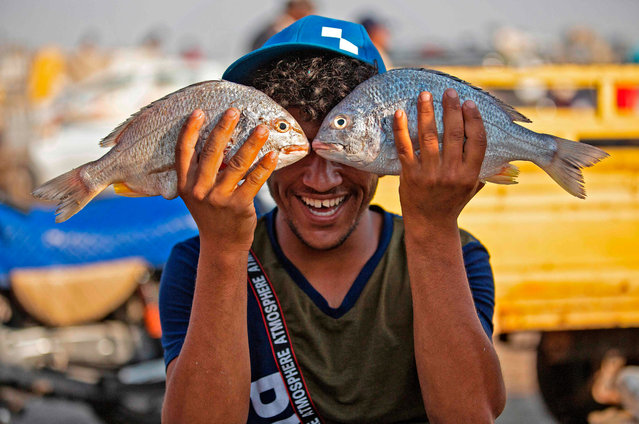
A youth poses while holding two fishes before his face in Iraq's southern port city of al-Faw, 90 kilometres south of Basra near the Shatt al-Arab and the Gulf, on May 18, 2020. In Iraq, a national lockdown to halt the COVID-19 coronavirus pandemic has found some unexpected fans: local businesses who no longer have to compete with Turkish, Iranian or Chinese imports. Those countries, as well as Saudi Arabia, Jordan and Kuwait, typically flood Iraqi markets with inexpensive products at prices local producers can't compete with. (Photo by Hussein Faleh/AFP Photo)

A youth poses while holding two fishes before his face in Iraq's southern port city of al-Faw, 90 kilometres south of Basra near the Shatt al-Arab and the Gulf, on May 18, 2020. In Iraq, a national lockdown to halt the COVID-19 coronavirus pandemic has found some unexpected fans: local businesses who no longer have to compete with Turkish, Iranian or Chinese imports. Those countries, as well as Saudi Arabia, Jordan and Kuwait, typically flood Iraqi markets with inexpensive products at prices local producers can't compete with. (Photo by Hussein Faleh/AFP Photo)
Details
02 Jul 2020 00:01:00
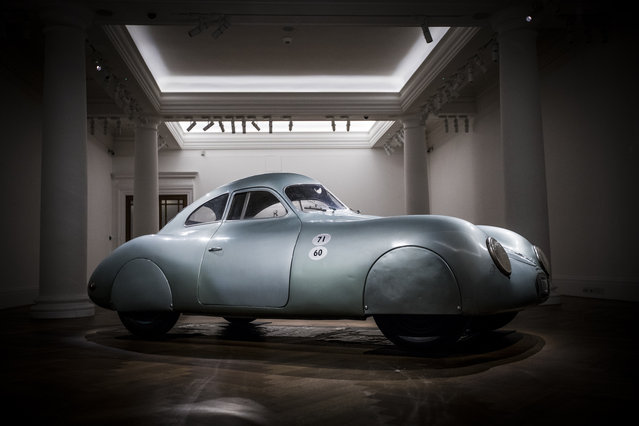
The oldest car to wear the Porsche badge goes on view at Sotheby's on May 21, 2019 in London, England. The only surviving 1939 Porsche Type 64 Berlin-Rome, No. 3, this rare piece of motoring history was the personal car of Ferdinand and Ferry Porsche, predating the first production Porsche, the 356. The car is on view at Sotheby's in London from 21st -24th May prior to being offered for sale by RM Sotheby's in Monterey, California, 15-17th August 2019, with an estimate in excess of $20 million. (Photo by Tristan Fewings/Getty Images for Sotheby's)

The oldest car to wear the Porsche badge goes on view at Sotheby's on May 21, 2019 in London, England. The only surviving 1939 Porsche Type 64 Berlin-Rome, No. 3, this rare piece of motoring history was the personal car of Ferdinand and Ferry Porsche, predating the first production Porsche, the 356. The car is on view at Sotheby's in London from 21st -24th May prior to being offered for sale by RM Sotheby's in Monterey, California, 15-17th August 2019, with an estimate in excess of $20 million. (Photo by Tristan Fewings/Getty Images for Sotheby's)
Details
23 May 2019 00:07:00
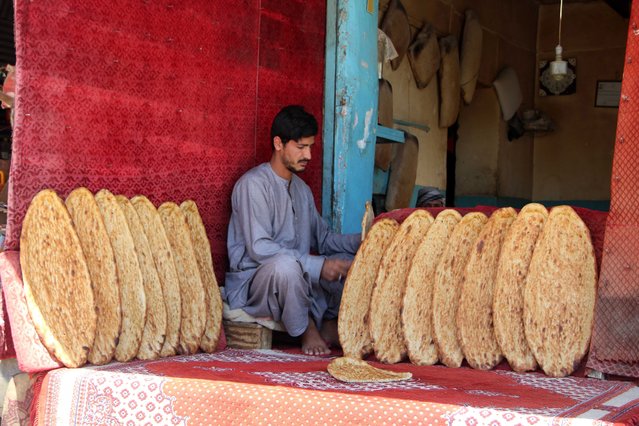
An Afghani man sells bread on a roadside in Kandahar, Afghanistan, 23 April 2024.  A recent World Bank report reveals a 26% decrease in Afghanistan's gross output over the past year, primarily attributed to a 1.3 billion USD income reduction for farmers due to the ban on drug cultivation. Although tax revenue saw a modest increase of 13% in 2023, exports experienced a 15% decline specifically to Pakistan. Afghan officials highlighted efforts to spur domestic production, improve trade, stabilize the national currency, and initiate key economic projects. (Photo by Qudratullah Razwan/EPA/EFE)

An Afghani man sells bread on a roadside in Kandahar, Afghanistan, 23 April 2024. A recent World Bank report reveals a 26% decrease in Afghanistan's gross output over the past year, primarily attributed to a 1.3 billion USD income reduction for farmers due to the ban on drug cultivation. Although tax revenue saw a modest increase of 13% in 2023, exports experienced a 15% decline specifically to Pakistan. Afghan officials highlighted efforts to spur domestic production, improve trade, stabilize the national currency, and initiate key economic projects. (Photo by Qudratullah Razwan/EPA/EFE)
Details
22 May 2024 03:16:00
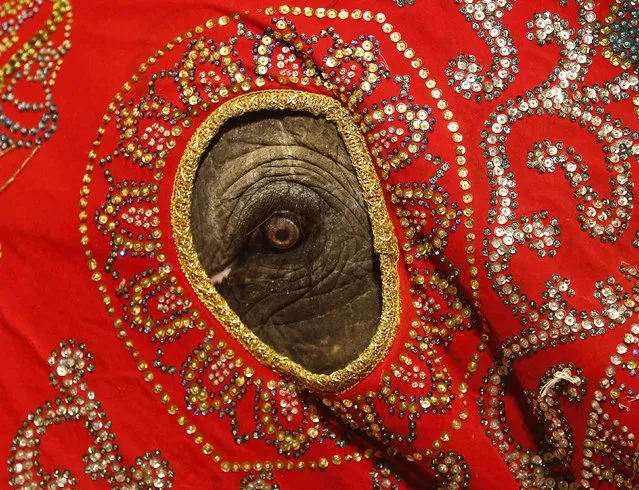
A decorated elephant march at the Navam Perahera, a Buddhist pageant of elephants, dancers and drummers, in Colombo February 3, 2015. (Photo by Dinuka Liyanawatte/Reuters)

A decorated elephant march at the Navam Perahera, a Buddhist pageant of elephants, dancers and drummers, in Colombo February 3, 2015. Over 50 elephants participated in the street parade for Gangaramaya temple's annual Perahera festival, along with a nightly procession of traditional dancers, fire twirlers and traditional musicians. (Photo by Dinuka Liyanawatte/Reuters)
Details
05 Feb 2015 12:49:00
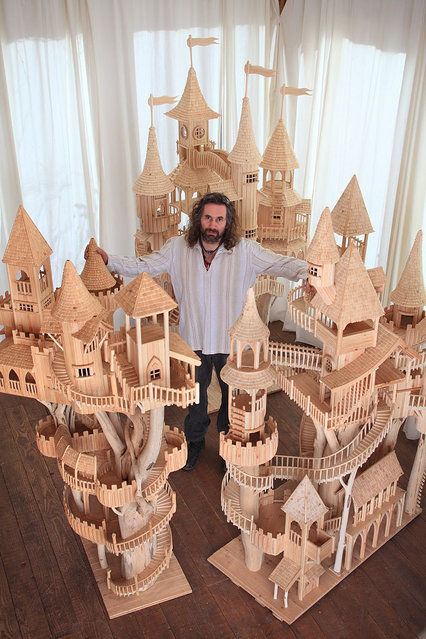
Rob Heard's Wooden Bough House

Living on the edge of Exmoor, Rob takes his inspiration from the rolling countryside surrounding his home, where each Bough House sculpture takes several months to construct. The designs do not follow an explicit plan or process, each piece is unique. They evolve and flow freely, as part of a creative journey which has no natural limit, whilst also revealing great logic and engineering integrity. Every aerial walkway or staircase leads to a room - there are no dead-ends and every turret and tower can be reached.
Details
29 May 2013 10:31:00
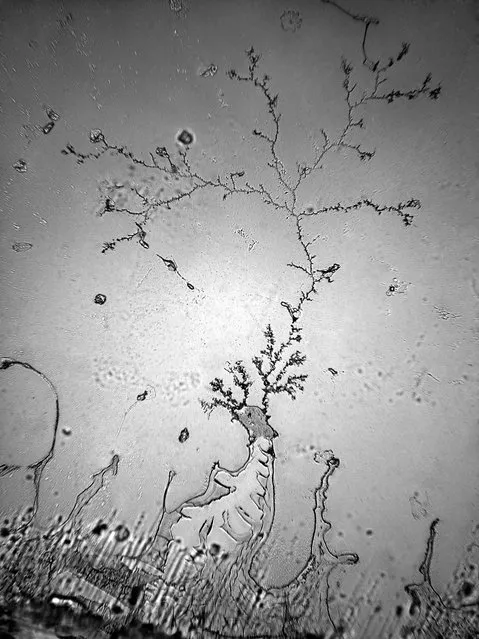
The Topography Of Tears By Rose-Lynn Fisher

Do tears of joy look the same as ones of woe—or ones from chopping onions? In “The Topography of Tears,” the Los Angeles-based photographer Rose-Lynn Fisher explores the physical terrain of one hundred tears emitted during a range of emotional states and physical reactions. Using a Zeiss microscope with an attached digital camera, she captures the composition of tears enclosed in glass slides, magnified between 10x and 40x. “There are many factors that determine the look of each tear image, including the viscosity of the tear, the chemistry of the weeper, the settings of the microscope, and the way I process the images afterwards,” she says.
Details
21 May 2014 17:46:00