Loading...
Done
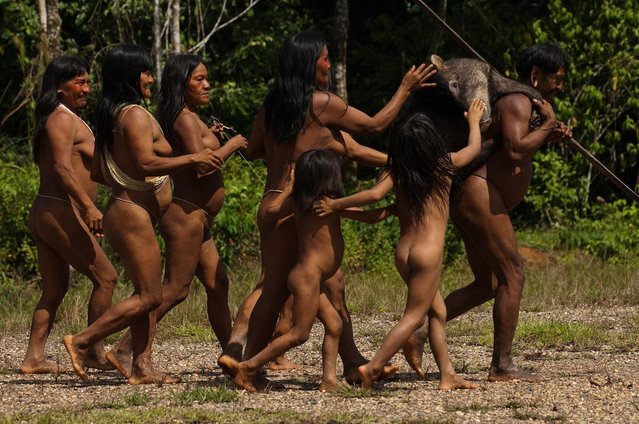
Spectacular images offering insight into the lives of the Huaorani people in the Ecuadorian Amazon have been revealed showing how they use traditional methods to hunt monkeys for food. The stunning pictures were taken by conservation photographer Pete Oxford from Torquay, Devon in the Ecuadorian Amazon. “The Huaorani Indians are a forest people highly in tune with their environment. Many are now totally acculturated since the 1950s by missionaries”, said Pete. “Today they face radical change to their culture to the proximity of oil exploration within their territory and the Yasuni National Park and Biosphere Reserve, they are vastly changed. Some still live very traditionally and for this shoot, through my Huaorani friend, a direct relative of those photographed he wanted to depict them as close to their original culture as possible. They still largely hunt with blow pipes and spears eating a lot of monkeys and peccaries”. The Huaorani are also known as the Waorani, Waodani or the Waos and are native Amerindians. Their lands are located between the Curaray and Napo rivers and speak the Huaorani language. Pete says that during his visit he was welcomed into the group and hopes that ancient cultures can be saved. Here: The tribe were seen celebrating after a hunter returned to camp with a wild pig. (Photo by Pete Oxford/Mediadrumworld.com)

Spectacular images offering insight into the lives of the Huaorani people in the Ecuadorian Amazon have been revealed showing how they use traditional methods to hunt monkeys for food. The stunning pictures were taken by conservation photographer Pete Oxford from Torquay, Devon in the Ecuadorian Amazon. Here: The tribe were seen celebrating after a hunter returned to camp with a wild pig. (Photo by Pete Oxford/Mediadrumworld.com)
Details
20 Jan 2017 07:58:00
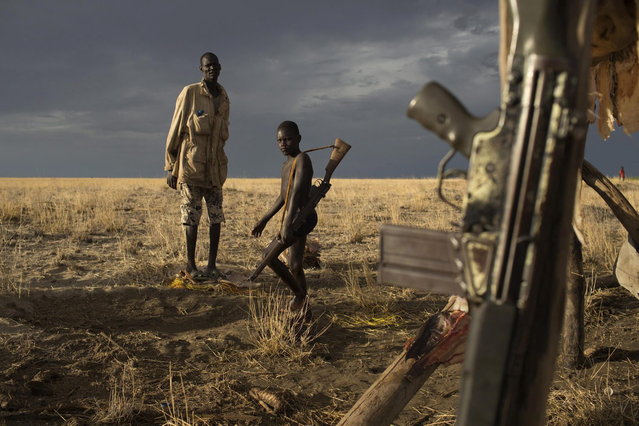
A Turkana man and a boy carrying a gun look on as a G3 battle rifle hangs from a structure used to dry fish at a fishing camp on the shores of Lake Turkana, some kilometres from Todonyang near the Kenya-Ethiopia border in northwestern Kenya October 12, 2013. (Photo by Siegfried Modola/Reuters)

A Turkana man and a boy carrying a gun look on as a G3 battle rifle hangs from a structure used to dry fish at a fishing camp on the shores of Lake Turkana, some kilometres from Todonyang near the Kenya-Ethiopia border in northwestern Kenya October 12, 2013The Turkana are traditionally nomadic pastoralists, but they have seen the pasture that they need to feed their herds suffer from recurring droughts and many have turned to fishing. However, Lake Turkana is overfished, and scarcity of food and pastureland is fuelling long-standing conflict with Ethiopian indigenous Dhaasanac, who have seen grazing grounds squeezed by large-scale government agricultural schemes in southern Ethiopia. The Dhaasanac now venture ever deeper into Kenyan territory in search of fish and grass, clashing with neighbours. Fighting between the communities has a long history, but the conflict has become ever more fatal as automatic weapons from other regional conflicts seep into the area. While the Turkana region is short of basics like grass and ground-water, it contains other resources including oil reserves and massive, newly discovered underground aquifers. (Photo by Siegfried Modola/Reuters)

Details
05 Dec 2013 12:08:00
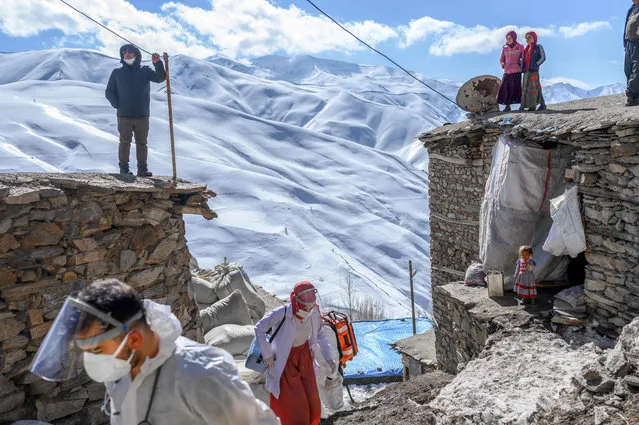
In this photograph taken on February 15, 2021, doctor Sergen Saracoglu (L) and nurse Yilzdiz Ayten (C) from the Bahcesaray public hospital vaccination team, arrive at the village of Guneyyamac in eastern Turkey, as part of an expedition to vaccinate residents of 65 years old or above with Sinovac's CoronaVac Covid-19 vaccine. Turkey's population of more than 83 million is spread out across Europe and Asia and covers some seemingly impregnable terrain. The vaccination effort with China's CoronaVac jab kicked off with a bang in mid-January when Turkey inoculated more than half a million people in the first few days. But it slowed down considerably when doctors left the big cities and tried to reach remote places such as Imamli and Ozbeyli – two ethnically Kurdish hamlets of a few hundred herders and farmers each. (Photo by Bulent Kilic/AFP Photo)

In this photograph taken on February 15, 2021, doctor Sergen Saracoglu (L) and nurse Yilzdiz Ayten (C) from the Bahcesaray public hospital vaccination team, arrive at the village of Guneyyamac in eastern Turkey, as part of an expedition to vaccinate residents of 65 years old or above with Sinovac's CoronaVac Covid-19 vaccine. (Photo by Bulent Kilic/AFP Photo)
Details
18 Mar 2021 09:32:00
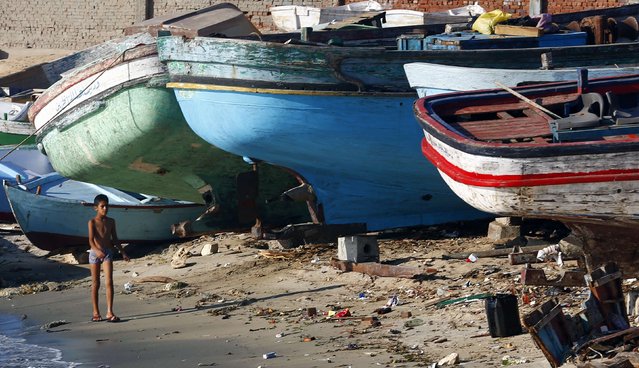
A boy walks past boats docked at the entrance gate of the fishermen's village in the El Max area of the Mediterranean city of Alexandria September 12, 2014.  El Max, where hundreds of boats dart through the canals, has been called the “Venice of Egypt” for its waterways and relaxed atmosphere. Its fishermen, however, worry about how they will make ends meet on meagre earnings they  say are being reduced further by polluted waters that are making fishing more difficult. (Photo by Amr Abdallah Dalsh/Reuters)

A boy walks past boats docked at the entrance gate of the fishermen's village in the El Max area of the Mediterranean city of Alexandria September 12, 2014. El Max, where hundreds of boats dart through the canals, has been called the “Venice of Egypt” for its waterways and relaxed atmosphere. Its fishermen, however, worry about how they will make ends meet on meagre earnings they say are being reduced further by polluted waters that are making fishing more difficult. While the government has tried to fix the state's bloated finances by cutting subsidies and reining in spending, some argue the reforms hurt Egypt's most vulnerable who have long relied on a generous system of fuel and food subsidies to supplement low incomes. (Photo by Amr Abdallah Dalsh/Reuters)
Details
12 Dec 2014 12:42:00
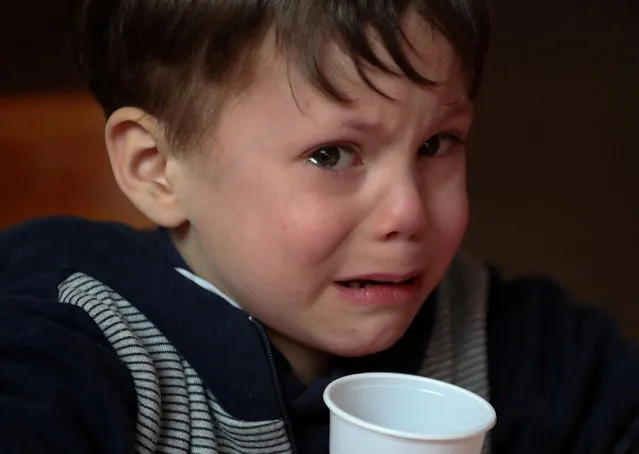
A boy, who came with the humanitarian transport of children from Ukrainian public orphanages following the Russian invasion of Ukraine, reacts as he has breakfast at the Hotel Ossa near Rawa Mazowiecka, Poland on March 5, 2022. (Photo by Kacper Pempel/Reuters)

A boy, who came with the humanitarian transport of children from Ukrainian public orphanages following the Russian invasion of Ukraine, reacts as he has breakfast at the Hotel Ossa near Rawa Mazowiecka, Poland on March 5, 2022. (Photo by Kacper Pempel/Reuters)
Details
26 Mar 2022 05:12:00
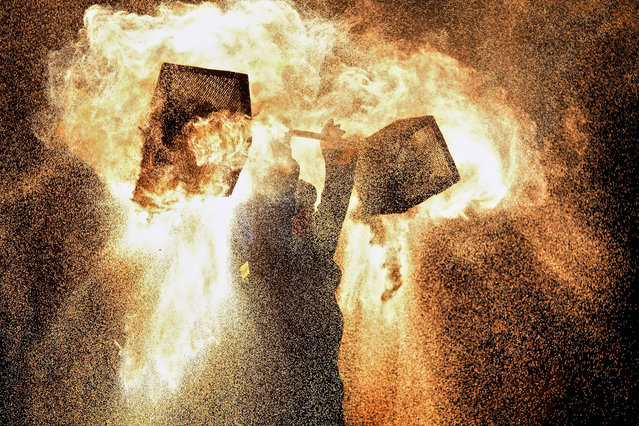
An artist performs a fire kettle show during the Mid-Autumn Festival at a night market in Beijing, Tuesday, September 17, 2024. (Photo by Andy Wong/AP Photo)

An artist performs a fire kettle show during the Mid-Autumn Festival at a night market in Beijing, Tuesday, September 17, 2024. (Photo by Andy Wong/AP Photo)
Details
12 Nov 2024 03:55:00
Brtukan. “Being a girl of colour in a society where the majority of the people are white, I have had to get used to all the different ways people approach me. From being asked what kind of rap music you listen to and how you wash your hair, to getting told, “you don’t sound black”, “you’re pretty for a black girl” or “you’re not that black so it’s OK”, as if being black is such a bad thing”. (Photo by Lisa Minogue/The Guardian)

As part of FLAIR Melbourne – a Flinders Lane art festival – Melbourne’s Lisa Minogue presents stylised photographic portraits of Australian women of colour, their faces painted vibrantly to accentuate their individuality and encourage the viewer to study each face more closely. Minogue asked each woman the same question: “What do the words “coloured girl” mean to you?”. (Photo by Lisa Minogue/The Guardian)
Details
17 Aug 2016 11:16:00
Miss Fantasy performs on the stage of The Nest club during the Vogue Nights Jozi Ball, an event dedicated to the gender-fluid culture in Marshalltown, Johannesburg on September 24, 2022. (Photo by Luca Sola/AFP Photo)

Miss Fantasy performs on the stage of The Nest club during the Vogue Nights Jozi Ball, an event dedicated to the gender-fluid culture in Marshalltown, Johannesburg on September 24, 2022. (Photo by Luca Sola/AFP Photo)
Details
01 Oct 2022 04:29:00