Loading...
Done
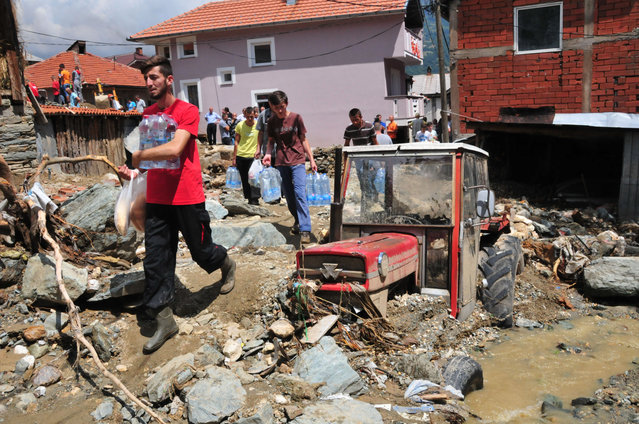
People, carry food and water, past a tractor stuck in  mud, stones and debris that were piled in a flood in the mountain village of Sipkovica, just above the town of Tetovo, in northwestern Macedonia, on Tuesday, August 4, 2015. (Photo by Zoran Andonov/AP Photo)

People, carry food and water, past a tractor stuck in mud, stones and debris that were piled in a flood in the mountain village of Sipkovica, just above the town of Tetovo, in northwestern Macedonia, on Tuesday, August 4, 2015. A small number of people including children have died in floods that erupted after an hour of heavy torrential rains and strong winds that hit Tetovo and northwestern region of Macedonia late on Monday. (Photo by Zoran Andonov/AP Photo)
Details
05 Aug 2015 12:50:00
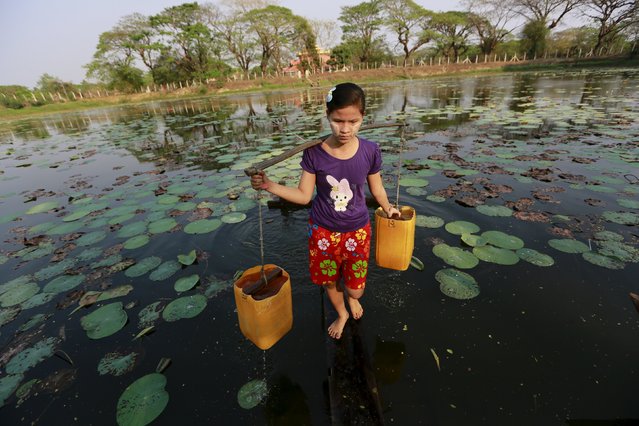
A girl collects drinking water at Dala river outside Yangon, Myanmar March 3, 2016. (Photo by Soe Zeya Tun/Reuters)

A girl collects drinking water at Dala river outside Yangon, Myanmar March 3, 2016. Some 650 million people, or one in 10 of the world's population, have no access to safe water, putting them at risk of infectious diseases and premature death. Dirty water and poor sanitation can cause severe diarrhoeal diseases in children, killing 900 under-five a day across the world, according to United Nations estimates. (Photo by Soe Zeya Tun/Reuters)
Details
18 Mar 2016 12:27:00


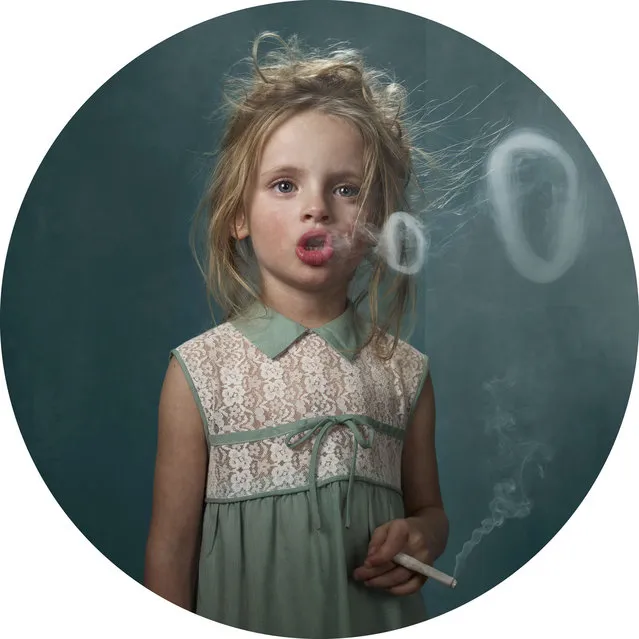
A YouTube video of a chainsmoking Indonesian toddler inspired me to create this series, "Smoking Kids". The video highlighted the cultural differences between the east and west, and questioned notions of smoking being a mainly adult activity. Adult smokers are the societal norm, so I wanted to isolate the viewer's focus upon the issue of smoking itself. I felt that children smoking would have a surreal impact upon the viewer and compel them to truly see the acts of smoking rather than making assumptions about the person doing the act. ... ~Frieke Janssen
Details
07 Aug 2012 01:56:00


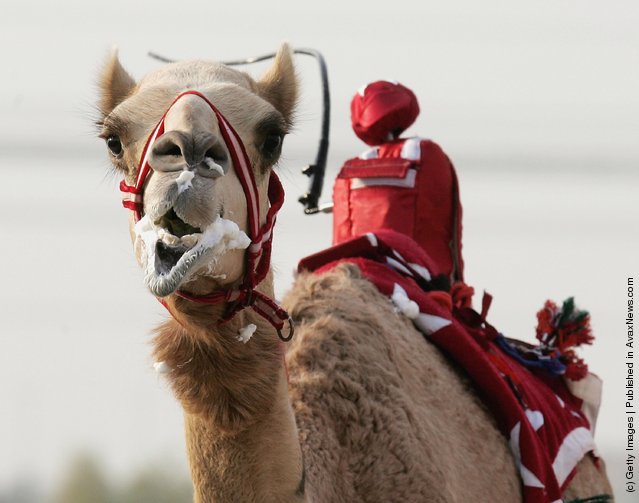
A camel foams at the mouth as he is whipped by a robot jockey during a race at Nad al-Sheba on December 6, 2006 in Dubai, United Arab Emirates. This is the first season that robotic jockeys have been used to race camels in Dubai. Controversially children from India were used to ride the camels in past seasons. These robot jockeys costing 15000GBP and up, were designed in Geneva and include shock absorbers and GPS tracking systems. The camel's owners control them from their speeding four wheel drives at the side of the track. (Photo by Chris Jackson/Getty Images)
Details
01 May 2011 09:01:00
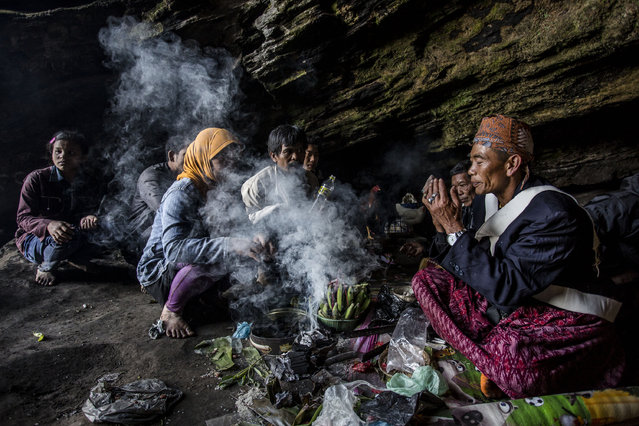
A Tenggerese shaman praying for worshippers at Widodaren cave during the Tenggerese Hindu Yadnya Kasada festival on July 31, 2015 in Probolinggo, East Java, Indonesia. The festival is the main festival of the Tenggerese people and lasts about a month. On the fourteenth day, the Tenggerese make the journey to Mount Bromo to make offerings of rice, fruits, vegetables, flowers and livestock to the mountain gods by throwing them into the volcano's caldera. (Photo by Ulet Ifansasti/Getty Images)

A Tenggerese shaman praying for worshippers at Widodaren cave during the Tenggerese Hindu Yadnya Kasada festival on July 31, 2015 in Probolinggo, East Java, Indonesia. The festival is the main festival of the Tenggerese people and lasts about a month. On the fourteenth day, the Tenggerese make the journey to Mount Bromo to make offerings of rice, fruits, vegetables, flowers and livestock to the mountain gods by throwing them into the volcano's caldera. The origin of the festival lies in the 15th century when a princess named Roro Anteng started the principality of Tengger with her husband Joko Seger, and the childless couple asked the mountain Gods for help in bearing children. The legend says the Gods granted them 24 children but on the provision that the 25th must be tossed into the volcano in sacrifice. The 25th child, Kesuma, was finally sacrificed in this way after initial refusal, and the tradition of throwing sacrifices into the caldera to appease the mountain Gods continues today. (Photo by Ulet Ifansasti/Getty Images)

Details
01 Aug 2015 12:07:00
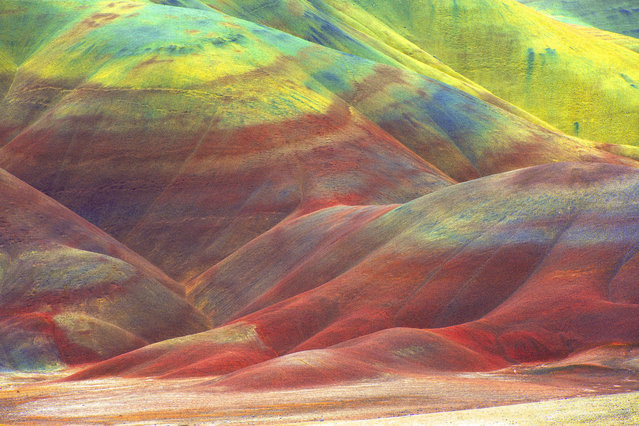
Layers of breathtaking colour streak the rolling hills of this vast desert, making the landscape appear as though it has been tie-dyed. The natural phenomenon, nicknamed the “Painted Desert”, was formed when the area was once a river floodplain. (Photo by Mark Brodkin/Solent News/SIPA Press)

Layers of breathtaking colour streak the rolling hills of this vast desert, making the landscape appear as though it has been tie-dyed. The natural phenomenon, nicknamed the “Painted Desert”, was formed when the area was once a river floodplain. Each colour corresponds to a different underground geological feature – rocks which have seemingly dyed the layers of earth above. Formed from volcanic activity, the hills at the John Day Fossil Beds National Monument in East Central Oregon, USA, are almost bursting with colour. Pictured: The colourful hills at the John Day Fossil Beds National Monument in East Central Oregon, USA. (Photo by Mark Brodkin/Solent News/SIPA Press)
Details
30 Jul 2014 11:00:00
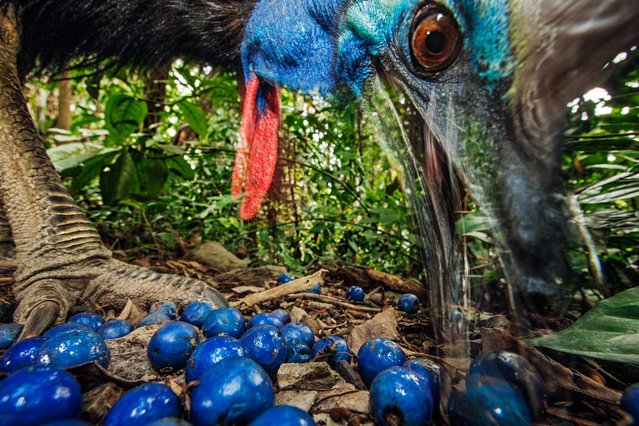
“Cassowaries are large, flightless birds related to emus and (more distantly) to ostriches, rheas, and kiwis”, writes Olivia Judson in the September issue of National Geographic magazine. (Photo by Christian Ziegler/National Geographic)

“Cassowaries are large, flightless birds related to emus and (more distantly) to ostriches, rheas, and kiwis”, writes Olivia Judson in the September issue of National Geographic magazine. How large? People-size: Adult males stand well over five foot five and top 110 pounds. Females are even taller, and can weigh more than 160 pounds. Dangerous when roused, they’re shy and peaceable when left alone. But even birds this big and tough are prey to habitat loss. The dense New Guinea and Australia rain forests where they live have dwindled. Today cassowaries might number 1,500 to 2,000. And because they help shape those same forests – by moving seeds from one place to another – “if they vanish”, Judson writes, “the structure of the forest would gradually change” too. (Photo by Christian Ziegler/National Geographic)
Details
06 Jan 2014 12:21:00
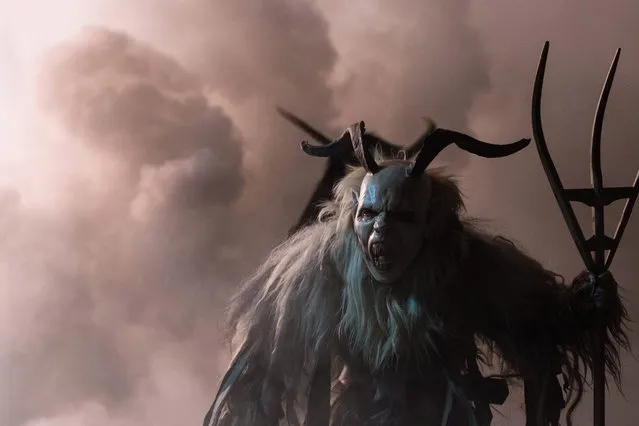
A person dressed as the Krampus performs during the 9th Krampus meeting show in Serfaus, Tyrol, Austria, 12 November 2016. (Photo by Christian Bruna/EPA)

A person dressed as the Krampus performs during the 9th Krampus meeting show in Serfaus, Tyrol, Austria, 12 November 2016. Several thousand people watched the parade of about 27 artists groups from Austria and South Tyrol, Italy. The Krampus is a folklorical figure who, during the Christmas season, punishes children who have misbehaved. (Photo by Christian Bruna/EPA)
Details
14 Nov 2016 10:02:00