A girl receives Covid-19 vaccine as Nepal Government begins vaccinating children aged 5-12 at a school in Kathmandu on June 23, 2022. (Photo by Aryan Dhimal/ZUMA Press Wire/Rex Features/Shutterstock)
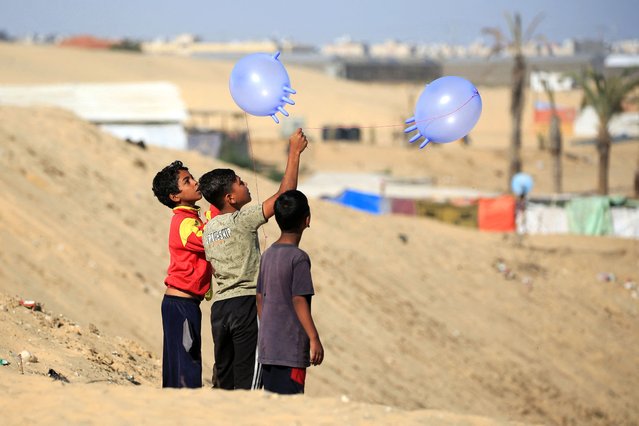
Displaced Palestinian children play with surgical rubber gloves in Rafah in the southern Gaza Strip, on May 31, 2024, amid the ongoing conflict between Israel and the Palestinian Hamas group. (Photo by Eyad Baba/AFP Photo)
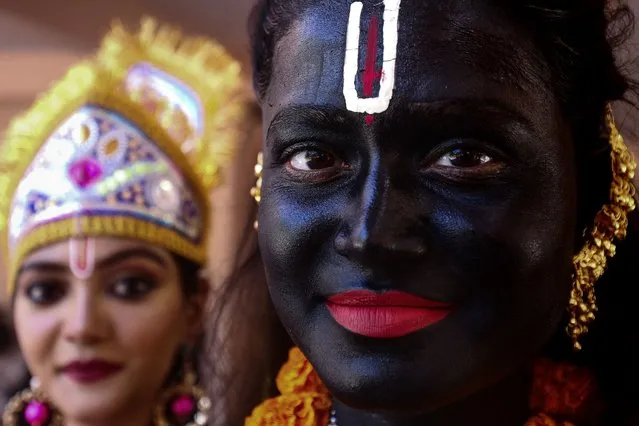
Children dressed as Hindu deities take part in an event to mark the consecration of Ayodhya Ram temple, in Bhopal on January 22, 2024. (Photo by Gagan Nayar/AFP Photo)
Traditional “Tantawawas” bread shaped like children sit on a grave as a Day of the Dead offering at the Villa Ingenio cemetery in El Alto, Bolivia, Monday, November 2, 2020. (Photo by Juan Karita/AP Photo)
Children carry firewood on their heads and walk homewards on the outskirts of Rae Bareli, India, Thursday, December 17, 2020. (Photo by Rajesh Kumar Singh/AP Photo)
Yawalapiti children play during the preparations for the celebration of “quarup”, a ritual held to honor in death a person of great importance to them, in the Xingu National Park, Mato Grosso State, May 7, 2012. (Photo by Ueslei Marcelino/Reuters)
Erik Ravelo goes straight for the jugular in his series, Los Intocables (The Untouchables). Depicting children in one the most vulnerable poses of all time, Ravelo attempts to speak for those who cannot properly articulate their pain. The sick, twisted games that adults play can come at a cost to future generations and Ravelo’s series gives a voice to those children who get caught in the crossfire.
Australian artist Polixeni Papapetrou trends the line between fantasy/theatre, mythology/reality, archetype/play, male/female, child/adult and animal/human. As with all her work the series The Dreamkeepers tells a story that includes her autobiographical relationship with her children, but it also says a lot more about the condition of childhood - its place in our culture and how we react to images of children in photography.