Loading...
Done


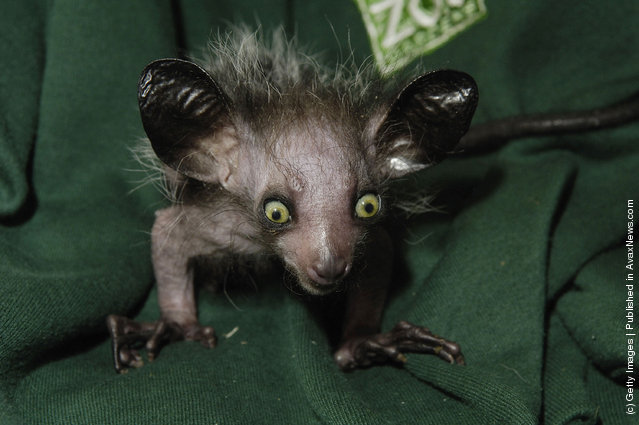
“The aye-aye (Daubentonia madagascariensis) is a lemur, a strepsirrhine primate native to Madagascar that combines rodent-like teeth and a special thin middle finger to fill the same ecological niche as a woodpecker. It is the world's largest nocturnal primate, and is characterized by its unusual method of finding food; it taps on trees to find grubs, then gnaws holes in the wood and inserts its narrow middle finger to pull the grubs out. The only other animal species known to find food in this way is the striped possum. From an ecological point of view the aye-aye fills the niche of a woodpecker as it is capable of penetrating wood to extract the invertebrates within”. – Wikipedia

Photo: In this handout image from Bristol Zoo is seen the first captive bred aye-aye in the UK named “Kintana” (meaning star in Malagasy) April 15, 2005 at Bristol Zoo Gardens, England. The zoo announced today only the second baby aye-aye to be hand-reared in the world (the first was in Jersey Zoo) and has now made his first public appearance since his birth on 11 February 2005. (Photo by Rob Cousins/Bristol Zoo via Getty Images)
Details
13 Apr 2011 13:33:00


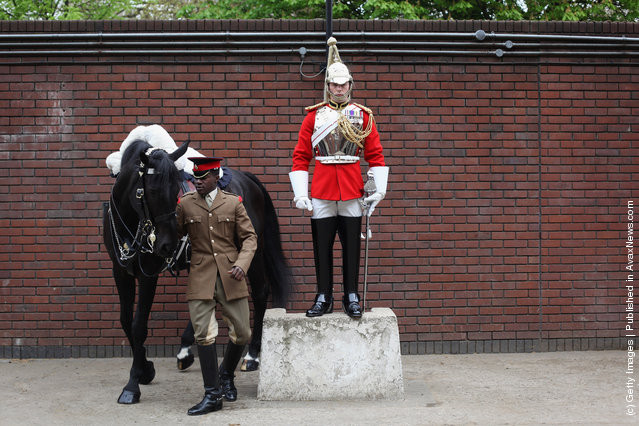
Corporal of Horse Andy Radford prepares to mount his horse in the parade square at Hyde Park Barracks on April 15, 2011 in London, England. Members of the Household Cavalry gave a behind the scenes tour of many of the duties performed as part of their daily routine, including special preparation ahead of the forthcoming Royal Wedding. The Household Cavalry will perform several ceremonial duties during the summer, including the Royal Wedding on April 29, and the Queen's Birthday Parade (Trooping the Colour) in June. (Photo by Dan Kitwood/Getty Images)
Details
16 Apr 2011 08:09:00
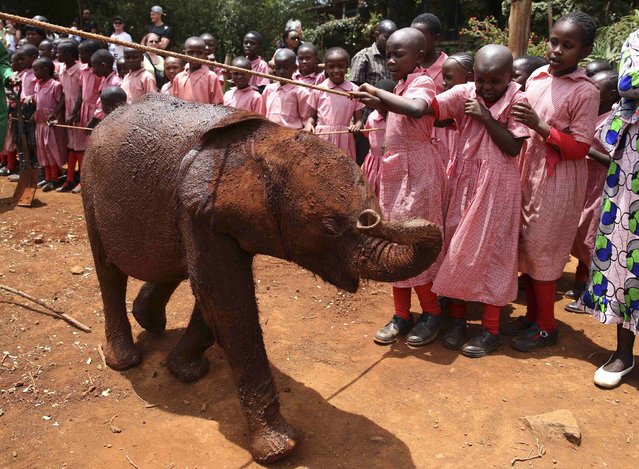
Pupils look at an orphaned baby elephant at the David Sheldrick Elephant Orphanage within the Nairobi National Park, near Kenya's capital Nairobi October 15, 2014. (Photo by Goran Tomasevic/Reuters)

Pupils look at an orphaned baby elephant at the David Sheldrick Elephant Orphanage within the Nairobi National Park, near Kenya's capital Nairobi October 15, 2014. The orphanage under the David Sheldrick Wildlife Trust is operated by Daphne Sheldrick, wife of late famous naturalist David William Sheldrick. The orphaned elephants raised by the trust will be returned to join the undomesticated elephant population in Tsavo National Park, where David was the founder warden from 1948 to 1976, when they mature, usually between eight to 10 years old. (Photo by Goran Tomasevic/Reuters)
Details
19 Oct 2014 12:47:00
The Dark Knight By Rob Bliss

The Dark Knight (2008) was a visual feast firmly grounded in reality. But what if it had been a little more "freaktastic?" Professional concept artist Rob Bliss, who also worked on Lara Croft: Tomb Raider (2001), Watchmen (2005) and Jack the Giant Killer (2009-10) created some truly bizarre visuals for the film. Some are available in his portfolio including The Joker (Heath Ledger), the Joker's clown masked men in the bank heist and horrific images of Harvey "Two-Face" Dent (Aaron Eckhart).
Details
08 Dec 2013 11:34:00
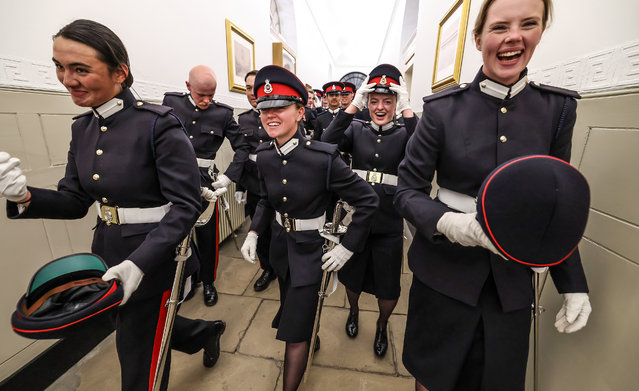
Officer cadets at Sandhurst military academy celebrate completing the Sovereign's Parade which see's them become commissioned officers in the army on April 11, 2025. The parade marks the completion of 44 weeks of intensive training for the Officer Cadets of Commissioning Course 242, all of whom will officially hold HM the King's Commission as of the stroke of midnight on the day of the parade. In addition, there are 26 international cadets from 18 countries. (Photo by Times photographer Richard Pohle)

Officer cadets at Sandhurst military academy celebrate completing the Sovereign's Parade which see's them become commissioned officers in the army on April 11, 2025. The parade marks the completion of 44 weeks of intensive training for the Officer Cadets of Commissioning Course 242, all of whom will officially hold HM the King's Commission as of the stroke of midnight on the day of the parade. In addition, there are 26 international cadets from 18 countries. (Photo by Times photographer Richard Pohle)
Details
20 Apr 2025 03:07:00
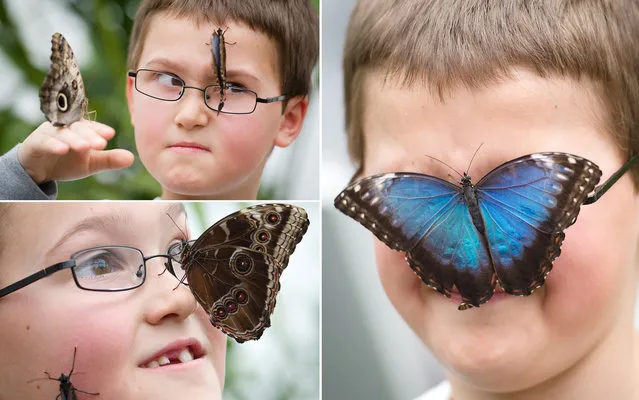
A boy poses with a butterfly on his face during a photocall to promote the "Sensational Butterflies" exhibition at the Natural History Museum in central London, on March 25, 2013.  With around 400 live tropical butterflies and moths living in the temporary facility, visitors will get the chance to see them flying freely as well as looking for emerging butterflies at the hatchery window. Running from March 29 to September 15, 2013, the exhibition is housed in a structure in the museum grounds. (Photo by Leon Neal/AFP Photo)

A boy poses with a butterfly on his face during a photocall to promote the “Sensational Butterflies” exhibition at the Natural History Museum in central London, on March 25, 2013. With around 400 live tropical butterflies and moths living in the temporary facility, visitors will get the chance to see them flying freely as well as looking for emerging butterflies at the hatchery window. Running from March 29 to September 15, 2013, the exhibition is housed in a structure in the museum grounds. (Photo by Leon Neal/AFP Photo)
Details
26 Mar 2013 13:37:00
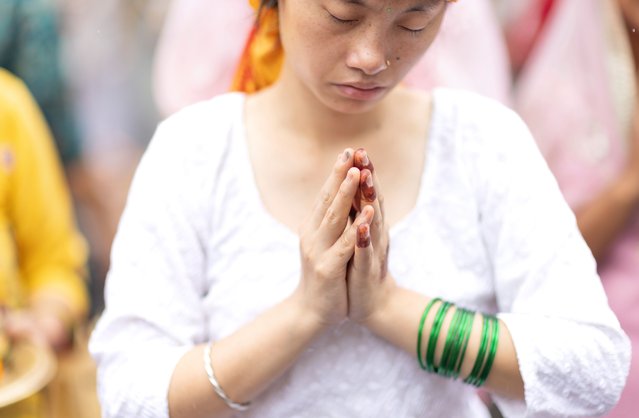
A woman prays during a Sarwan Brata (fast) offering to Lord Shiva, the Hindu god of creation and destruction, at the Pashupatinath Temple in Kathmandu, Nepal, 21 July 2025. Nepalese Hindu women wearing red, yellow and green attire, flock to temples during Sarwan month to pray for a long and prosperous life for their husbands, or to find a good husband. (Photo by Narendra Shrestha/EPA)

A woman prays during a Sarwan Brata (fast) offering to Lord Shiva, the Hindu god of creation and destruction, at the Pashupatinath Temple in Kathmandu, Nepal, 21 July 2025. Nepalese Hindu women wearing red, yellow and green attire, flock to temples during Sarwan month to pray for a long and prosperous life for their husbands, or to find a good husband. (Photo by Narendra Shrestha/EPA)
Details
01 Aug 2025 03:53:00
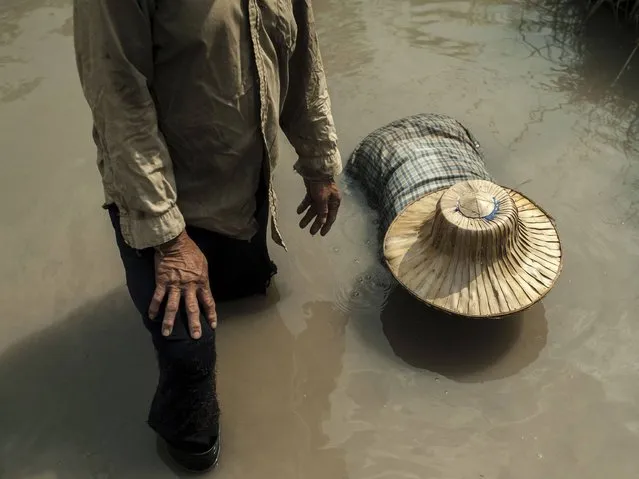
The workers begin to search for gold at 10 am and work until sunset, often working second jobs in the day in order to survive. (Photo by Borja Sanchez-Trillo/Getty Images)

Two workers shovel mud from the river as they look for gold on March 25, 2014 in Lampang, Thailand. Thai villagers from Wang Nuea, North of Thailand, look for gold in the river every year during the drought season. They are able to make an average around USD 15 per day, however two years ago they reached USD 200 in one day due to the river level dropping so much. The workers begin to search for gold at 10 AM and work until sunset, often working second jobs in the day in order to survive. (Photo by Borja Sanchez-Trillo/Getty Images)
Details
27 Mar 2014 06:09:00