Loading...
Done
A woman with a snake on her body, taken in Rio de Janeiro, Brazil, April 2017. A holistic therapist uses snakes to massage her clients – claiming it cures depression and even helps victims of abuse. Instead of traditional massaging techniques, Sarah Zaad uses up to six pythons and boa constrictors on brave customers who want to relax or be treated for mental disorders. The flamboyant therapist from Rio de Janeiro, Brazil believes her snakes have a magic touch, which can benefit people by massaging their bodies. (Photo by Kadeh Ferreira/Barcroft Images)

A woman with a snake on her body, taken in Rio de Janeiro, Brazil, April 2017. A holistic therapist uses snakes to massage her clients – claiming it cures depression and even helps victims of abuse. Instead of traditional massaging techniques, Sarah Zaad uses up to six pythons and boa constrictors on brave customers who want to relax or be treated for mental disorders. The flamboyant therapist from Rio de Janeiro, Brazil believes her snakes have a magic touch, which can benefit people by massaging their bodies. (Photo by Kadeh Ferreira/Barcroft Images)
Details
15 Apr 2017 09:14:00
A mudlark uses a torch to look for items on the bank of the River Thames in London, Britain June 06, 2016. Mudlarking is believed to trace its origins to the 18th and 19th century, when scavengers searched the Thames' shores for items to sell. These days, history and archaeology fans are the ones hoping to find old relics such as coins, ceramics, artifacts or everyday items from across centuries. They wait for the low tide and then scour specific areas of exposed shores. "If you're in a field you could be out all day long, with the river you're restricted to about two or three hours," mudlark Nick Stevens said. While many just use the naked eye for their searches, others rely on metal detectors for which a permit from the Port of London Authority is needed. Digging also requires consent. (Photo by Neil Hall/Reuters)

A mudlark uses a torch to look for items on the bank of the River Thames in London, Britain June 06, 2016. Mudlarking is believed to trace its origins to the 18th and 19th century, when scavengers searched the Thames' shores for items to sell. These days, history and archaeology fans are the ones hoping to find old relics such as coins, ceramics, artifacts or everyday items from across centuries. their finds with the Portable Antiquities Scheme. Any item over 300 years old must be recorded. (Photo by Neil Hall/Reuters)
Details
27 Aug 2016 10:43:00
Undated image released Monday February 17, 2020, by Irish Coast Guard showing the abandoned cargo ship MV Alta, that has washed up on the coast of County Cork, near Ballycotton, southern Ireland. The MV Alta is believed to have had 10 crew members aboard who were rescued by the US Coast Guard. Since September 2018, the ship has been drifting with no crew aboard, and it was last seen off the coast of West Africa before being washed up in southern Ireland during Storm Dennis. (Photo by Irish Coast Guard via AP Photo)

Undated image released Monday February 17, 2020, by Irish Coast Guard showing the abandoned cargo ship MV Alta, that has washed up on the coast of County Cork, near Ballycotton, southern Ireland. The MV Alta is believed to have had 10 crew members aboard who were rescued by the US Coast Guard. Since September 2018, the ship has been drifting with no crew aboard, and it was last seen off the coast of West Africa before being washed up in southern Ireland during Storm Dennis. (Photo by Irish Coast Guard via AP Photo)
Details
05 Aug 2020 00:05:00
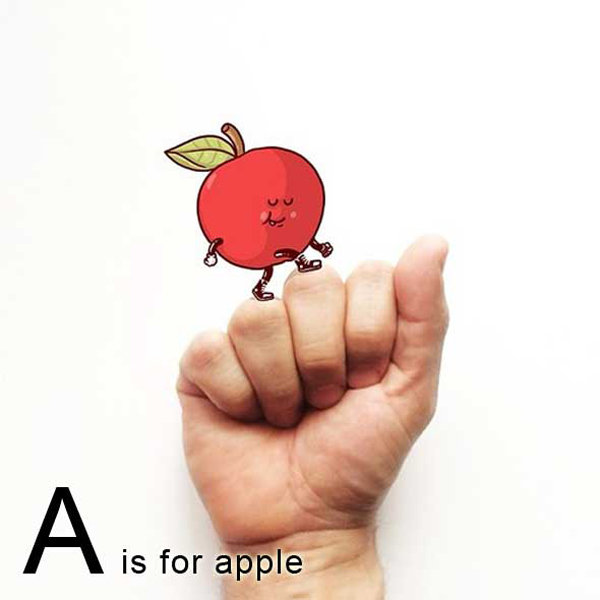
Sign Language Alphabet Doodles By Alex Solis

Have you ever been interested in the sign language? Surely you’ve always wanted to learn the art of sending a message using just your hands. To help people achieve this goal, Alex Solis has taken a photo of a hand showing each letter of the alphabet. However, this has been done many times before, which is why Alex decided to make each of the photos more interesting by placing little drawn animals and creatures onto each photo. Thanks to these cute little drawings the pictures become very endearing and memorable. All the little creatures blend in seamlessly into the pictures thanks to their well-chosen poses. This project, created by Alex Solis, is very unique and useful, allowing anyone to quickly remember all the listed hand gestures. (Photo by Alex Solis)
Details
08 Jan 2015 14:28:00
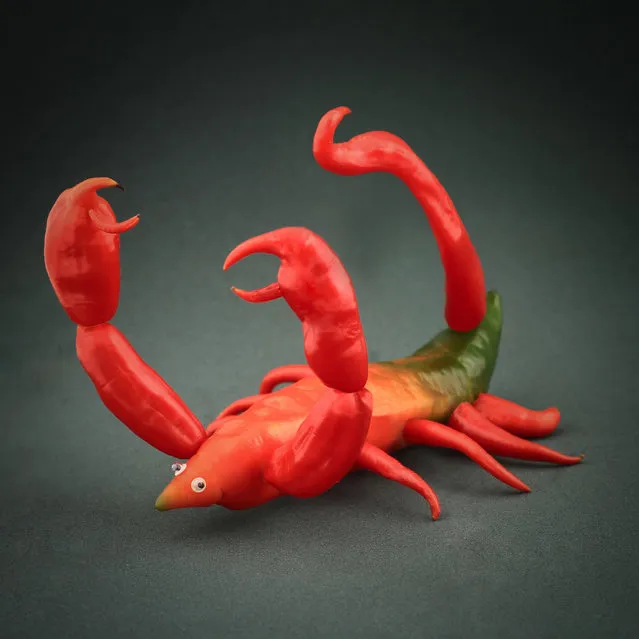
“Red Pepperpion. (Photo by Vanessa Dualib)

“Red Pepperpion. Red Pepperpions are secretive, nocturnal arachilli which can be spotted in kitchens of arid climates all around the world.

Red Pepperpions are equipped with a delicious (and depending on the quantity...deadly!) stinger at the end of its tail. If you happen to get bitten (or if you bite him!) it will produce a burning sensation on your taste nerves.

However, there is no need to worry, since the fact is that his potent stinger is usually only used when hunting or whenever the Pepperpion feels like he might become part of someones meal...

At daylight or when encountering a larger foe, such as a Saucier Chef, they retreat into burrows inside the fridge or hide beneath the oven”. (Photo and comment by Vanessa Dualib)


Details
08 Feb 2013 09:24:00
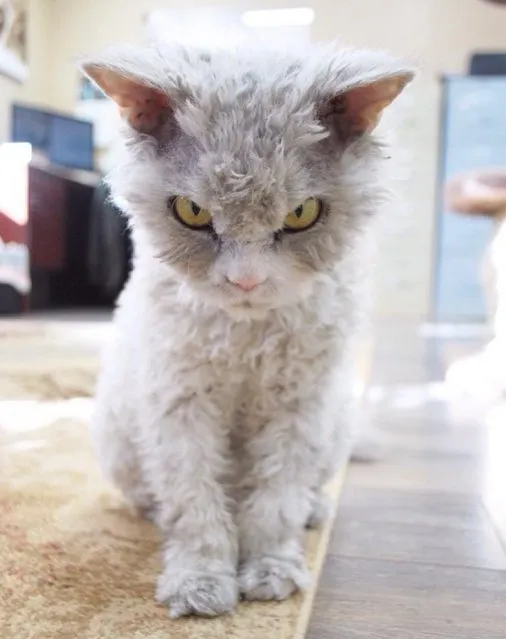
A Beautiful Scowling Curly-Haired Cat

Albert is not the happiest looking kitty in the world. Even Tard the Grumpy Cat looks more cheerful. Well… maybe not cheerful. But at least Tard doesn’t have a look of menace and a desire to kill in his eyes. What could have caused a kitty to wear such a stern look all the time? It might be the fact that he’s all curly. Almost no one likes to stand out too much, and maybe Albert is no exception. Despite his menacing appearance, Albert’s owner claims that he’s a very polite cat and plays nicely with children. Though it is hard to believe at first glance, we shouldn’t judge a book by its cover, even when we’re looking at a cat.


Details
24 Mar 2015 10:02:00
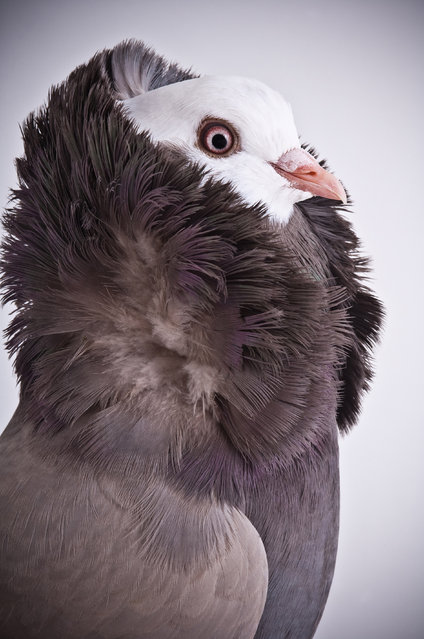
Old Dutch Capucine. Darwin’s Pigeons series. (Photo by Photo by Richard Bailey/Caters News)

“These dolly birds are showing off the latest haute COO-ture in a stunning set of images that portray everyday pigeons as fashion models. The series, titled “Darwin’s Pigeons”, was snapped by British photographer Richard Bailey, who was looking to capture the birds’ photogenic side as a tribute to the Father of Evolution himself, who it is believed was fascinated by the birds”. – Caters News. Photo: Old Dutch Capucine. Darwin’s Pigeons series. (Photo by Photo by Richard Bailey/Caters News)
Details
01 Apr 2014 12:14:00
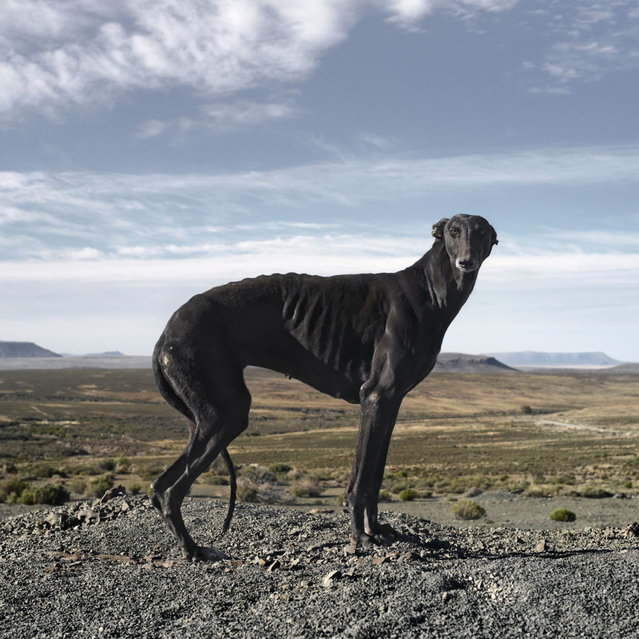
Africanis 18. Murraysburg, Western Cape, May 10, 2010. (Photo by Daniel Naudé)

“The Africanis is a landrace of South African dogs. It is believed to be of ancient origin, directly descended from hounds and pariah dogs of ancient Africa, introduced into the Nile Valley from the Levant. The Swahili name for the breed is umbwa wa ki-shenzi meaning common or mongrel or “traditional dog”. Africanis is also an umbrella name for all the aboriginal dogs in southern Africa”. – Wikipedia. Photo: Africanis 18. Murraysburg, Western Cape, May 10, 2010. (Photo by Daniel Naudé)
Details
19 May 2013 11:51:00