Loading...
Done


Sushi chef Mitsuru Tamura uses a radiation detector on seafood before it is prepared in Manhattan's Sushi Yasuda restaurant April 8, 2011 in New York City. The restaurant has begun using the detector as a precautionary measure due to consumer concerns over possible radiation contamination in seafood from the nuclear emergency in Japan. Health officials believe contamination is unlikely to threaten the food supply chain and none has been found in this restaurant. (Photo by Mario Tama/Getty Images)
Details
09 Apr 2011 08:52:00


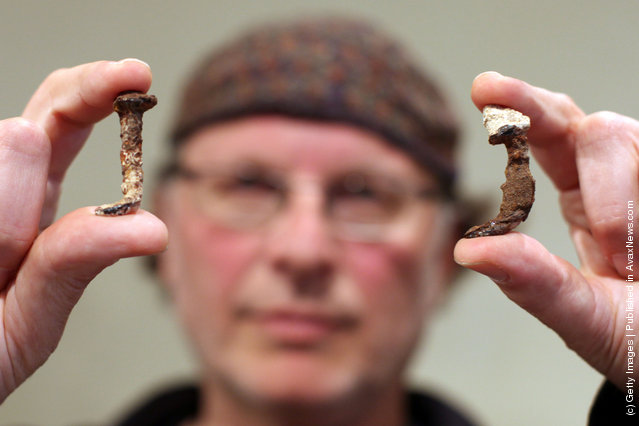
Canadian-Israeli film director Simcha Jacobovici holds two nails during a press conference on April 12, 2011. Jacobovici believes that the two nails discovered in a Jerusalem cave were used in the crucifixion of Jesus Christ. Jacobovici claims that the nails were tracked to an archeology laboratory in Tel Aviv, and though cannot be 100 per cent certain that they are the nails used in the crucifixion of Jesus, he claims if “you put two and two together and they seem to imply that these are the nails”. Experts at the Israel Antiquities Authority though cast doubt on Jacobovici's claims, and suggest that nails are commonly found in such locations. (Photo by Lior Mizrahi/Getty Images)
Details
13 Apr 2011 06:48:00
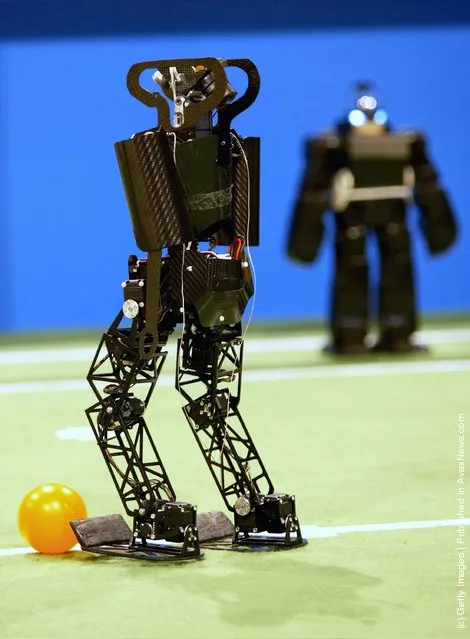
Humanoid robots of the children size league compete during the RoboCup 2006 football world championships

“RoboCup is an international robotics competition founded in 1997. The aim is to develop autonomous soccer robots with the intention of promoting research and education in the field of artificial intelligence. The name RoboCup is a contraction of the competition's full name, «Robot Soccer World Cup», but there are many other stages of the competition such as «Search and Rescue» and «Robot Dancing»”. – Wikipedia

Photo: Humanoid robots of the children size league compete during the RoboCup 2006 football world championships final at the Congress Centre on June 18, 2006 in Bremen, Germany. (Photo by Malte Christians/Bongarts/Getty Images)
Details
25 Oct 2011 13:22:00
“Two Brothers”. We found about 20 lions eating a buffalo. When the male leaved the group we anticipated him to take photos. It is 8AM, light is perfect and the position too. The lion stops and looks down from the hill, another lion is coming up, it stiffens, I think that will be a fight, i'm tense, the camera is OK, the shots previously made perfect. Photo location: Masai Mara, Kenya. (Photo and caption by Massimo Mei/National Geographic Photo Contest)

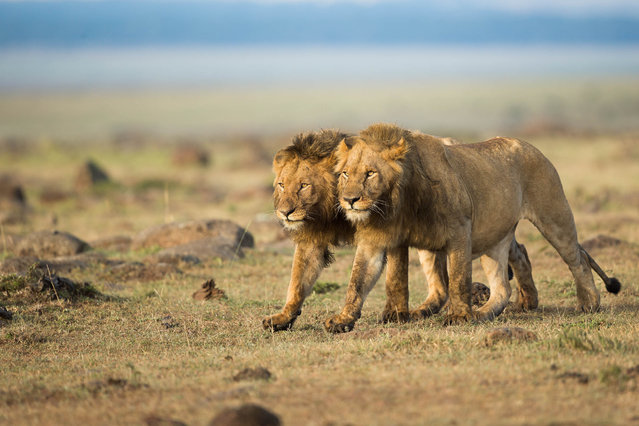
“Two Brothers”. We found about 20 lions eating a buffalo. When the male leaved the group we anticipated him to take photos. It is 8AM, light is perfect and the position too. The lion stops and looks down from the hill, another lion is coming up, it stiffens, I think that will be a fight, i'm tense, the camera is OK, the shots previously made perfect. The two meet, looking directly into their eyes, they sniff, rub against their heads, the tension drops, they start walking with the same step as when they were puppies, they are two brothers. Photo location: Masai Mara, Kenya. (Photo and caption by Massimo Mei/National Geographic Photo Contest)
Details
02 Jul 2014 09:45:00
New Zealand photographer Niki Boon captured her children, who are growing up with limited electronics, in the photo series “Childhood in the Raw Photos”. Niki Boon began taking photos as a hobby while she was working as a physiotherapist in Scotland. However, the New Zealand native found her interest in the art waning while she travelled, and it wasn’t until she had returned home and started raising a family that her passion was rekindled. “Childhood in the Raw”, an ongoing photo series of her four children’s technology-free life on her 10-acre property in New Zealand, is the perennial fruit of this passion. (Photo by Niki Boon)

New Zealand photographer Niki Boon captured her children, who are growing up with limited electronics, in the photo series “Childhood in the Raw Photos”. Niki Boon began taking photos as a hobby while she was working as a physiotherapist in Scotland. However, the New Zealand native found her interest in the art waning while she travelled, and it wasn’t until she had returned home and started raising a family that her passion was rekindled. “Childhood in the Raw”, an ongoing photo series of her four children’s technology-free life on her 10-acre property in New Zealand, is the perennial fruit of this passion. (Photo by Niki Boon)
Details
20 Apr 2016 12:01:00
The Wildscreen festival is the world’s biggest celebration of screen-based natural history storytelling which takes place every two years in Bristol. Here: “Walrus in Midnight Sun”. Walrus feed mostly on bivalves in productive, shallow and often sandy habitats in the Arctic. This individual, though, arrived on a beach outside Tromsø, northern Norway, and found comfort on a stranded dead sperm whale. After two weeks he approached Audun, and only half a metre away he stretched his tusk forward and touched his hand gently. “This was one of the most memorable moments of my life”, Rikardsen says. He named the 500kg male Buddy. After two months, the dead whale was decomposed and Buddy suddenly disappeared. (Photo by Audun Rikardsen/Wildscreen 2016)

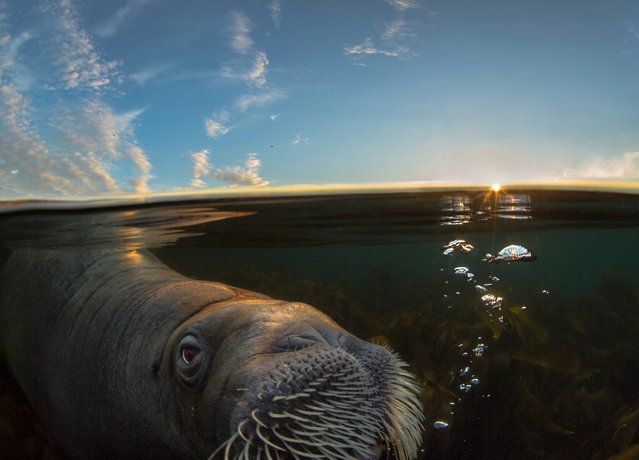
The Wildscreen festival is the world’s biggest celebration of screen-based natural history storytelling which takes place every two years in Bristol. Here: “Walrus in Midnight Sun”. Walrus feed mostly on bivalves in productive, shallow and often sandy habitats in the Arctic. This individual, though, arrived on a beach outside Tromsø, northern Norway, and found comfort on a stranded dead sperm whale. After two weeks he approached Audun, and only half a metre away he stretched his tusk forward and touched his hand gently. “This was one of the most memorable moments of my life”, Rikardsen says. He named the 500kg male Buddy. After two months, the dead whale was decomposed and Buddy suddenly disappeared. (Photo by Audun Rikardsen/Wildscreen 2016)
Details
07 Oct 2016 10:02:00
In this August 24, 2018 photo, Changlair Aristide pauses for a portrait, wearing his protective clothing, including an old U.N. peacekeeper's jacket he found in the trash, before scavenging the Truitier landfill in the Cite Soleil slum of Port-au-Prince, Haiti. Before 2004, Aristide recalled having enough money to splurge on shoes, T-shirts and pants, but this year he could not buy his kids anything new for the school year. “Life is like that, up and down”, Aristide said. “They'll go to school anyway, even if I have to sell my pig. I love them”. (Photo by Dieu Nalio Chery/AP Photo)

In this August 24, 2018 photo, Changlair Aristide pauses for a portrait, wearing his protective clothing, including an old U.N. peacekeeper's jacket he found in the trash, before scavenging the Truitier landfill in the Cite Soleil slum of Port-au-Prince, Haiti. Before 2004, Aristide recalled having enough money to splurge on shoes, T-shirts and pants, but this year he could not buy his kids anything new for the school year. “Life is like that, up and down”, Aristide said. “They'll go to school anyway, even if I have to sell my pig. I love them”. (Photo by Dieu Nalio Chery/AP Photo)
Details
03 Oct 2018 00:03:00
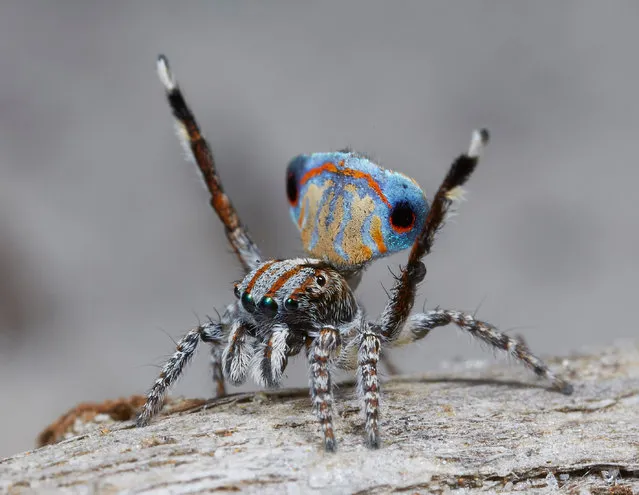
Several new species of peacock spider – just a few millimetres long and featuring extraordinary colours – have been discovered in Western Australia and South Australia. Jürgen Otto, a biologist from Sydney, has been researching the arachnids since 2005, and has gained a significant following online with his footage. He believes there are now 48 confirmed species of peacock spider within the Maratus genus, found across Australia but particularly in Western Australia – and many more awaiting confirmation. Here: Maratus Tasmanicus, one of seven new species of peacock spiders studied by the Sydney biologist Jürgen Otto. (Photo by Jürgen Otto)

Several new species of peacock spider – just a few millimetres long and featuring extraordinary colours – have been discovered in Western Australia and South Australia. Jürgen Otto, a biologist from Sydney, has been researching the arachnids since 2005, and has gained a significant following online with his footage. He believes there are now 48 confirmed species of peacock spider within the Maratus genus, found across Australia but particularly in Western Australia – and many more awaiting confirmation. Here: Maratus Tasmanicus, one of seven new species of peacock spiders studied by the Sydney biologist Jürgen Otto. (Photo by Jürgen Otto)
Details
30 May 2016 08:40:00