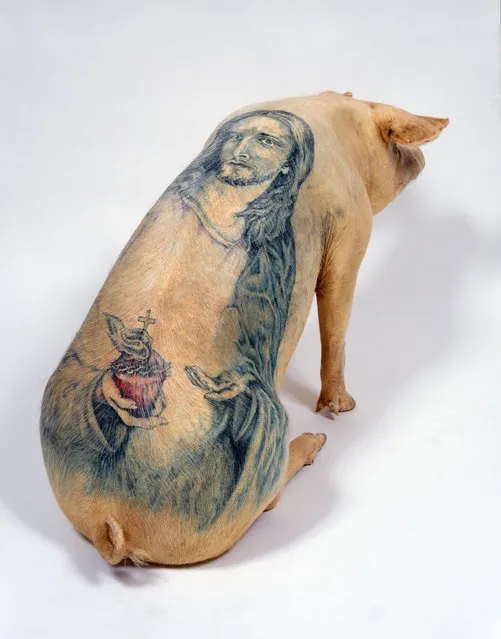
Wim Delvoye is a notorious tattoo artist, who became famous when he started tattooing live pigs. He first began in 1997 and after animal rights activists found out about what he was doing, he had to move to China to continue his business. There is nothing special about the tattoos that Wim Delvoye creates, they look mediocre at best, and the only reason why he’s famous is his acts of animal cruelty. Nevertheless, Wim states that the pigs feel just fine and are well fed and taken care off. Full anesthesia is used to ensure that the pig doesn’t feel pain during the course of the whole procedure. During this time three tattoo artists work on the tattoo simultaneously to complete it as quickly as possible. Skins of those pigs are then sold for as much as £50k a piece.
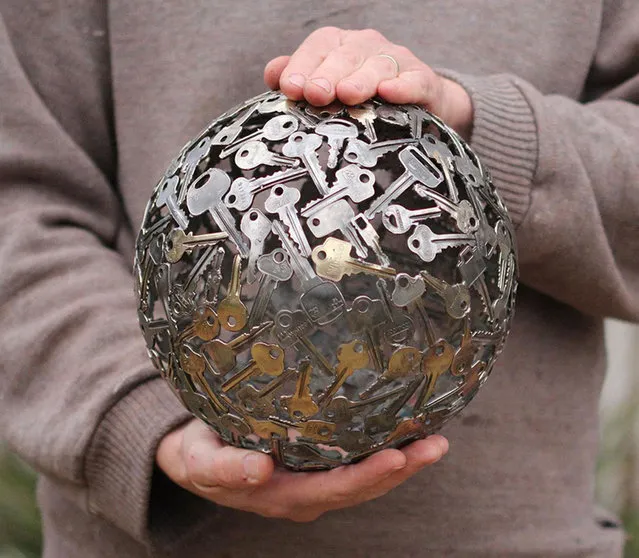
Australian craftsman Moerkey, also known as Michael Moerkerk, recycles discarded keys and transforms them into unique works of art. It all started when he was supposed to be cleaning out his shed and he came across some old copper pipe. He then cut it into rings and began honing a technique that lead to the creation of decorative spheres, bowls, figures, and more.
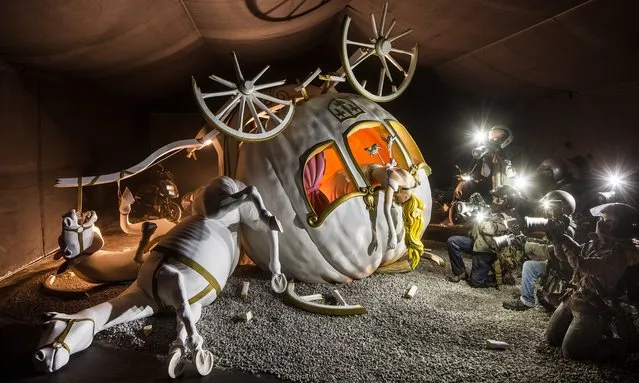
Dismaland is a temporary art project organized by street artist Banksy, constructed in the seaside resort town of Weston-super-Mare in Somerset, England.The secretive pop-up exhibition at the Tropicana, a disused lido, is "a sinister twist on Disneyland" that opened during the weekend of 21 August 2015. Banksy has described it as a "family theme park unsuitable for children".
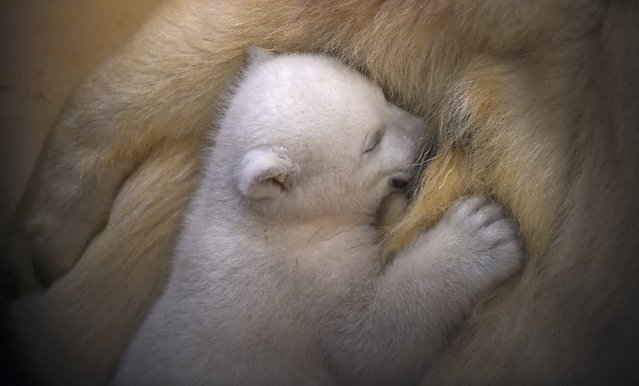
A polar bear cub snuggles up against her mother Valeska, in their enclosure at Bremerhaven's (Bremen's) Zoo by the Sea, Germany March 9, 2016. The female cub, who is yet to ne named, was born on December 11 last year. (Photo by Carmen Jaspersen/Reuters)
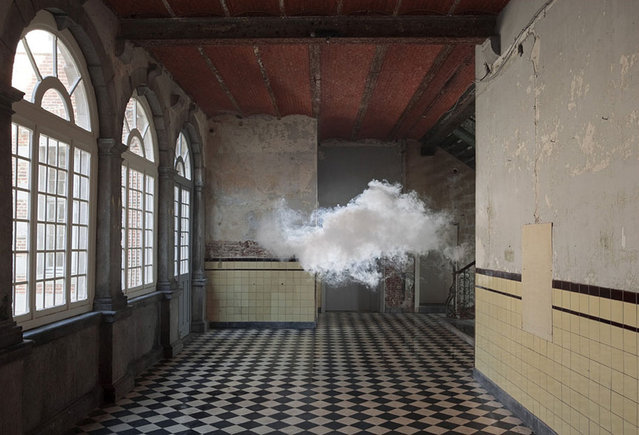
Dutch artist Berndnaut Smilde is interested in the ephemeral -- impermanent states of being which he documents through photographs. For Nimbus II, he used a smoke machine, combined with moisture and dramatic lighting to create a hovering indoor cloud in the empty setting of a sixteenth-century chapel in Hoorn, a small town in Holland. “I imagined walking into a museum hall with just empty walls. The place even looked deserted. On the one hand I wanted to create an ominous situation. You could see the cloud as a sign of misfortune. You could also read it as an element out of the Dutch landscape paintings in a physical form in a classical museum hall.”