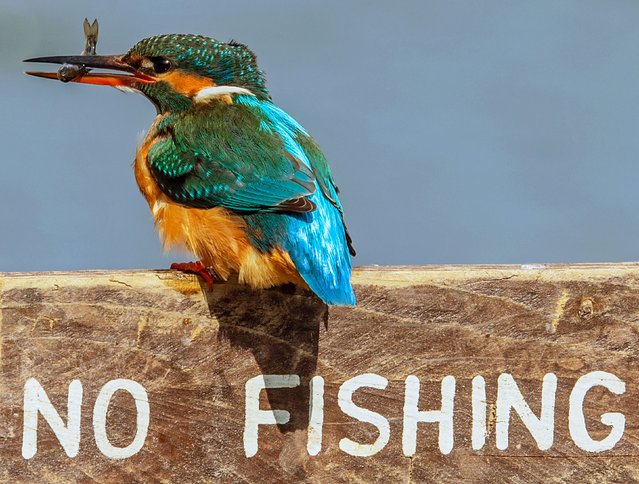
A kingfisher ignores the “no fishing” sign after catching food at Teddesley Park in Staffordshire, England, on Saturday, April 5, 2025. (Photo by Stuart Brock/Anadolu/Getty Images)
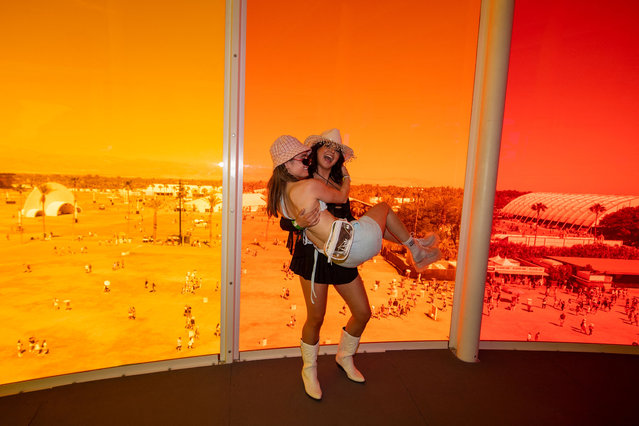
Festival-goers take photo inside of Spectra, a seven-story spiral walkway up to a viewing deck, at the Coachella Valley Music and Arts Festival in Indio, California, on April 17, 2022. (Photo by Valerie Macon/AFP Photo)
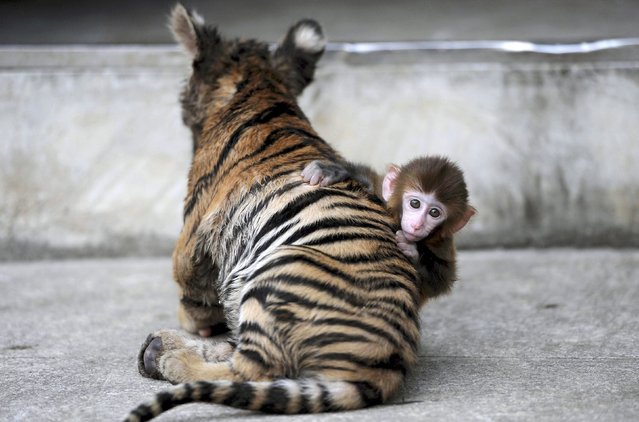
A baby rhesus macaque (Macaca mulatta) looks up as it plays with a tiger cub at a zoo in Hefei, Anhui province, August 2, 2012. (Photo by Jianan Yu/Reuters)
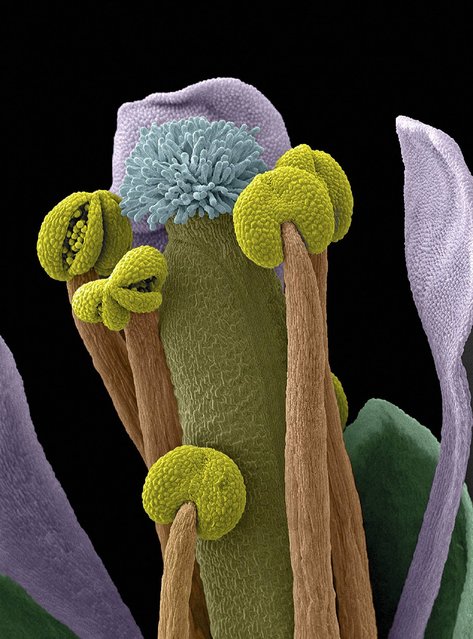
Beautiful, strange and occasionally alarming pictures from the shortlist for this year’s Wellcome image awards – which celebrate the very best in science photography and imaging – from an x-ray of a bat to a micrograph of a kidney stone. The exhibition opens on 12 March at three science centres and the Museum of Science and Industry in Manchester. Photo: Scanning electron micrograph (SEM) of an Arabidopsis thaliana flower, also commonly known as thale cress. Some of the anthers are open, revealing pollen grains ready for dispersal. Arabidopsis was the first plant to have its entire genome sequenced and is widely used as a model organism in molecular and plant biology. Horizontal width of image is 1200 microns. Magnification 100x. (Photo by Stefan Eberhard/Wellcome Images)
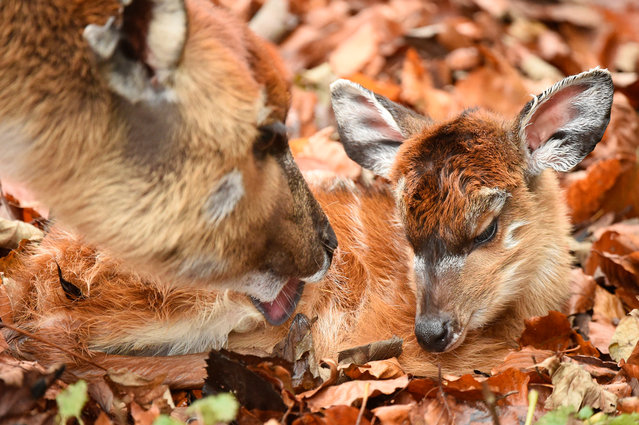
A newly born Sitatunga calf seen at ZSL Whipsnade Zoo on November 24, 2016 in Whipsnade, England. The swamp-dwelling species, also known as a marshbuck, is Africa's only true amphibious antelope. It was snuggled up in the leaves and almost perfectly camouflaged as it mother tended it. (Photo by Tony Margiocchi/Barcroft Images)
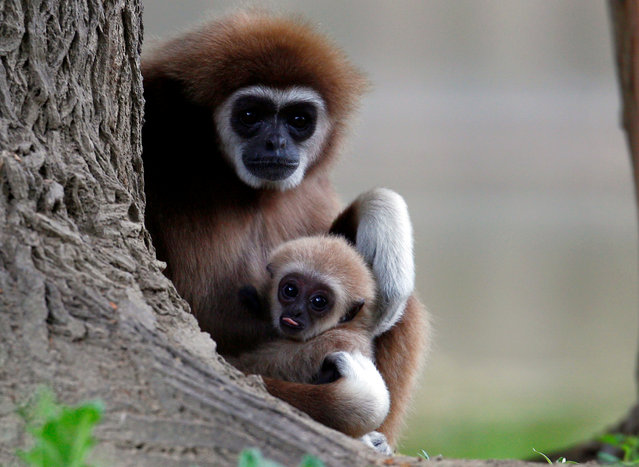
A first white-handed gibbon infant born at the Skopje Zoo is seen with his mother in Skopje, North Macedonia on May 9, 2019. (Photo by Ognen Teofilovski/Reuters)
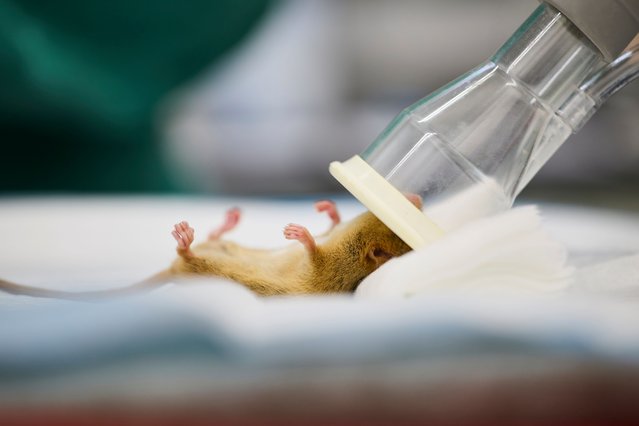
This hazel dormouse is being given a once-over by a disease risk team at ZSL London Zoo, UK in May 2025, as part of reintroduction programme. (Photo by David Levene/The Guardian)