Loading...
Done
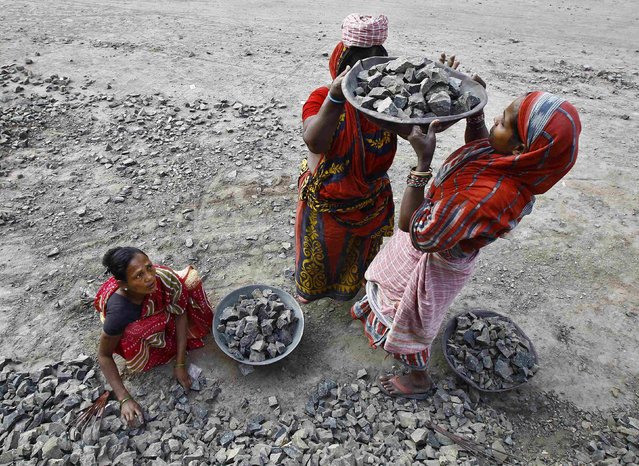
Women labourers work at the construction site of a road in Kolkata January 8, 2015. Across towns and cities in India, it is not uncommon to see women cleaning building sites, carrying bricks and or shoveling gravel - helping construct the infrastructure necessary for the country's economic and social development. (Photo by Rupak De Chowdhuri/Reuters)

Women labourers work at the construction site of a road in Kolkata January 8, 2015. Across towns and cities in India, it is not uncommon to see women cleaning building sites, carrying bricks and or shoveling gravel – helping construct the infrastructure necessary for the country's economic and social development. They help build roads, railway tracks, airports, and offices. They lay pipes for clean water supplies, cables for telecommunications, and dig the drains for sewage systems. But although women make up at least 20 percent of India's 40 million construction workers, they are less recognized than male workers with lower pay and often prone to safety hazards and sexual harassment. They are often unaware of their rights or scared to complain, say activists now trying to campaign for better treatment of women in the construction industry. (Photo by Rupak De Chowdhuri/Reuters)
Details
15 Jan 2015 13:47:00
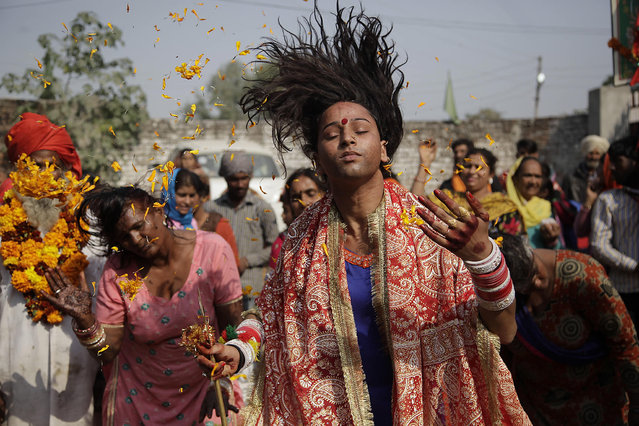
Devotees whirl their head as a ritualistic performance during the annual Jhiri Fair at Kanachack village, outskirts of Jammu, India, Monday, November14, 2016. According to the villagers,  the fair is held in memory of Baba Jitu, an honest farmer who killed himself since he was not prepared to submit to the unjust demands of a landlord who wanted him to part with his crop. (Photo by Channi Anand/AP Photo)

Devotees whirl their head as a ritualistic performance during the annual Jhiri Fair at Kanachack village, outskirts of Jammu, India, Monday, November14, 2016. According to the villagers, the fair is held in memory of Baba Jitu, an honest farmer who killed himself since he was not prepared to submit to the unjust demands of a landlord who wanted him to part with his crop. (Photo by Channi Anand/AP Photo)
Details
17 Nov 2016 11:19:00
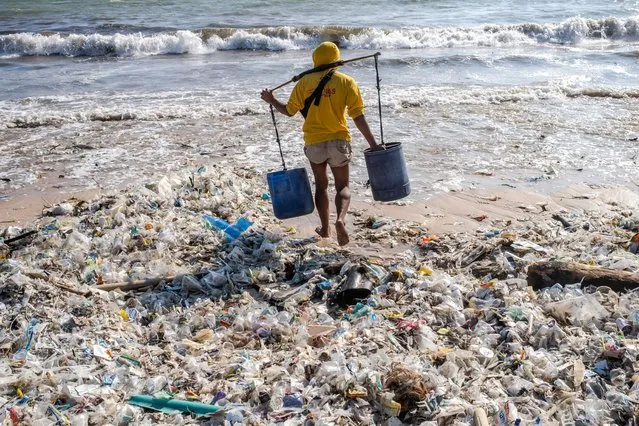
A man carrying buckets walks along a beach littered with piles of debris and plastic waste at the Kedonganan beach in Bali, Indonesia, 19 March 2024. Most of the trash ends up in the sea every rainy season due to the island's lack of a centralized waste management system. (Photo by Made Nagi/EPA/EFE)

A man carrying buckets walks along a beach littered with piles of debris and plastic waste at the Kedonganan beach in Bali, Indonesia, 19 March 2024. Most of the trash ends up in the sea every rainy season due to the island's lack of a centralized waste management system. (Photo by Made Nagi/EPA/EFE)
Details
04 Apr 2024 00:34:00
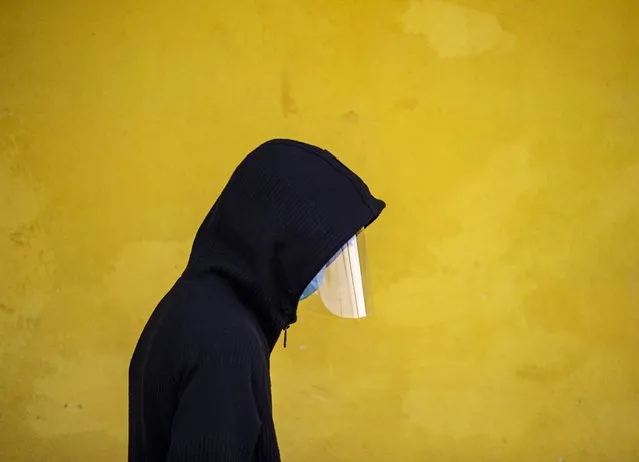
A Student of Yuba Pratibha School, wearing a face shield and masks at school during a coronavirus pandemic in Kathmandu, Nepal, 26 November 2020. The head Teacher of Yuba Pratibha School, Yanga Raj Dahal, started to conduct classes for students, who can’t afford and attend online classes, with strict sanitary regime, providing also free face masks and shields for students. However majority of schools have been conducting online classes in Nepal from 19 March 2020 as part of precautionary measures against the spread of the coronavirus Covid-19. (Photo by Narendra Shrestha/EPA/EFE)

A Student of Yuba Pratibha School, wearing a face shield and masks at school during a coronavirus pandemic in Kathmandu, Nepal, 26 November 2020. The head Teacher of Yuba Pratibha School, Yanga Raj Dahal, started to conduct classes for students, who can’t afford and attend online classes, with strict sanitary regime, providing also free face masks and shields for students. However majority of schools have been conducting online classes in Nepal from 19 March 2020 as part of precautionary measures against the spread of the coronavirus Covid-19. (Photo by Narendra Shrestha/EPA/EFE)
Details
03 Dec 2020 00:05:00
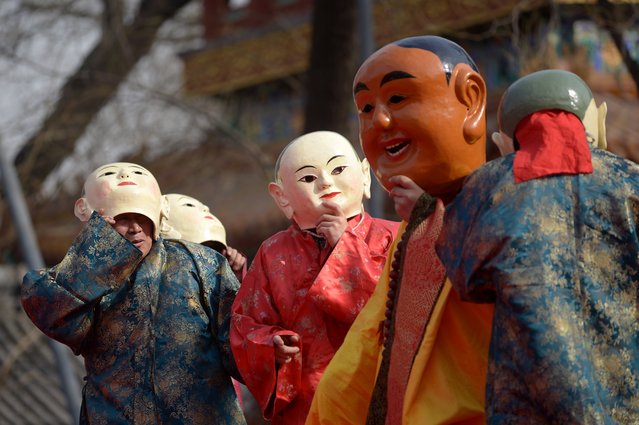
Tibetan monks dressed as demons attend the Beating Ghost festival at the Yonghe Temple, also known as the Lama Temple, in Beijing on March 19, 2015. The Beating Ghost festival, or Da Gui festival in Chinese, is an important ritual of Tibetan Buddhism and is believed to expel evil spirits and shake off troubles. (Photo by Wang Zhao/AFP Photo)

Tibetan monks dressed as demons attend the Beating Ghost festival at the Yonghe Temple, also known as the Lama Temple, in Beijing on March 19, 2015. The Beating Ghost festival, or Da Gui festival in Chinese, is an important ritual of Tibetan Buddhism and is believed to expel evil spirits and shake off troubles. (Photo by Wang Zhao/AFP Photo)
Details
22 Mar 2015 11:45:00
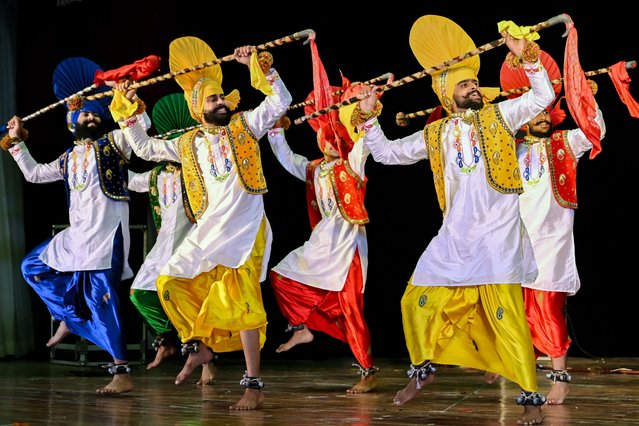
Students perform during a “Bhangra” folk dance competition at a university in Amritsar on October 29, 2024. (Photo by Narinder Nanu/AFP Photo)

Students perform during a “Bhangra” folk dance competition at a university in Amritsar on October 29, 2024. (Photo by Narinder Nanu/AFP Photo)
Details
19 Nov 2024 03:39:00
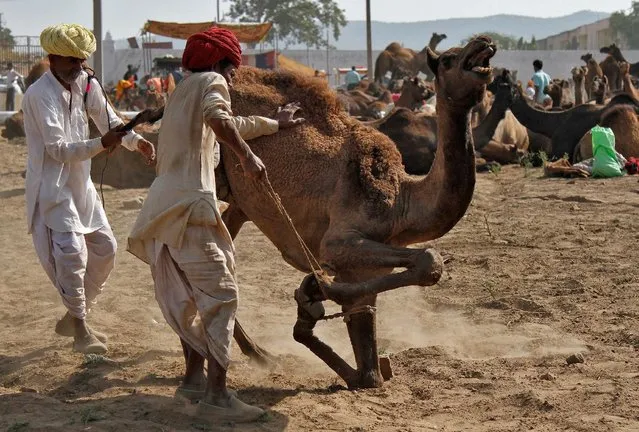
Traders try to control a camel at Pushkar Fair where animals, mainly camels, are brought to be sold and traded in the desert Indian state of Rajasthan November 6, 2016. (Photo by Himanshu Sharma/Reuters)

Traders try to control a camel at Pushkar Fair where animals, mainly camels, are brought to be sold and traded in the desert Indian state of Rajasthan November 6, 2016. (Photo by Himanshu Sharma/Reuters)
Details
07 Nov 2016 12:04:00
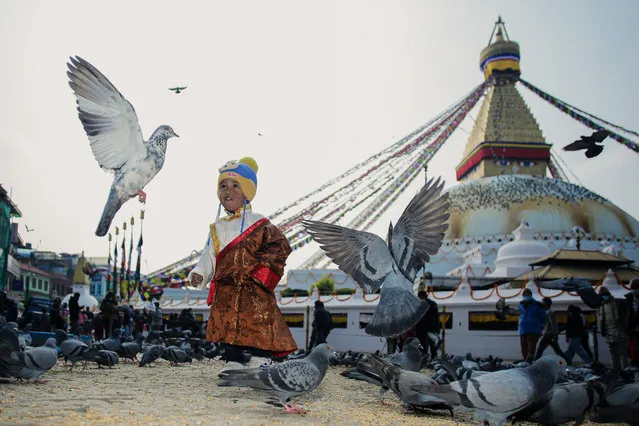
A young boy dressed in traditional Tamang dress plays with pigeons as Sonam Lhosar (the new year festival) is observed in Kathmandu, Nepal on February 2, 2022. (Photo by Amit Machamasi/ZUMA Press Wire/Rex Features/Shutterstock)

A young boy dressed in traditional Tamang dress plays with pigeons as Sonam Lhosar (the new year festival) is observed in Kathmandu, Nepal on February 2, 2022. (Photo by Amit Machamasi/ZUMA Press Wire/Rex Features/Shutterstock)
Details
07 Mar 2022 05:36:00