Loading...
Done
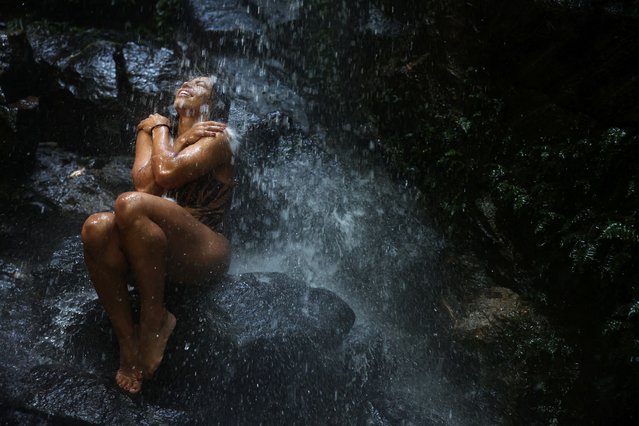
Anda Oliveira, 34, enjoys a waterfall in the Tijuca National Park, one of the world's biggest urban forests, marking the World Water Day in Rio de Janeiro, Brazil on March 15, 2024. (Photo by Pilar Olivares/Reuters)

Anda Oliveira, 34, enjoys a waterfall in the Tijuca National Park, one of the world's biggest urban forests, marking the World Water Day in Rio de Janeiro, Brazil on March 15, 2024. (Photo by Pilar Olivares/Reuters)
Details
01 Jul 2025 02:56:00
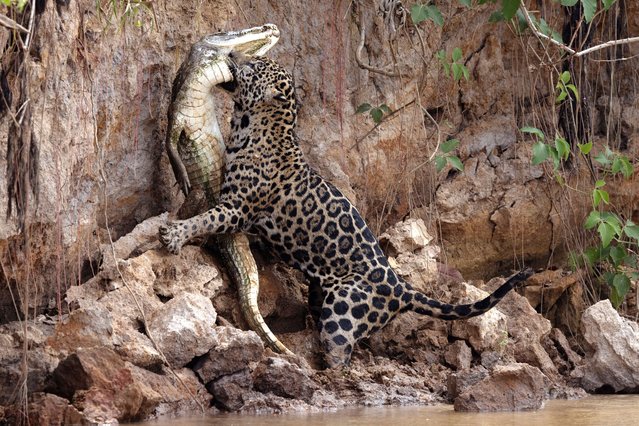
A female jaguar named Ti, by the NGO Jaguar ID, bites an alligator at Encontro das Aguas State Park, in the Pantanal, the largest wetland in the world, in Pocone, Mato Grosso, Brazil, on October 10, 2024. (Photo by Sergio Moraes/Reuters)

A female jaguar named Ti, by the NGO Jaguar ID, bites an alligator at Encontro das Aguas State Park, in the Pantanal, the largest wetland in the world, in Pocone, Mato Grosso, Brazil, on October 10, 2024. (Photo by Sergio Moraes/Reuters)
Details
10 Nov 2024 04:10:00
A picture made available on 13 May 2016 shows A Tiwa girl performing her traditional dance as they celebrated the Wanchuwa festival in Karbi Anglong District of Assam state, India, 11 May 2016. Wanchuwa is one of the most important festivals of the Tiwa tribal community living in the hills as it is related with agriculture which is the mainstay of their economy. Tiwas pray for a bountiful harvest during this festival and to protect their crops from pest and other natural calamities. (Photo by EPA/Stringer)

A picture made available on 13 May 2016 shows A Tiwa girl performing her traditional dance as they celebrated the Wanchuwa festival in Karbi Anglong District of Assam state, India, 11 May 2016. Wanchuwa is one of the most important festivals of the Tiwa tribal community living in the hills as it is related with agriculture which is the mainstay of their economy. Tiwas pray for a bountiful harvest during this festival and to protect their crops from pest and other natural calamities. Tiwa is a major tribe of Assam state who practice Jhum or shifting cultivation for their living in the hills. (Photo by EPA/Stringer)
Details
14 May 2016 11:45:00
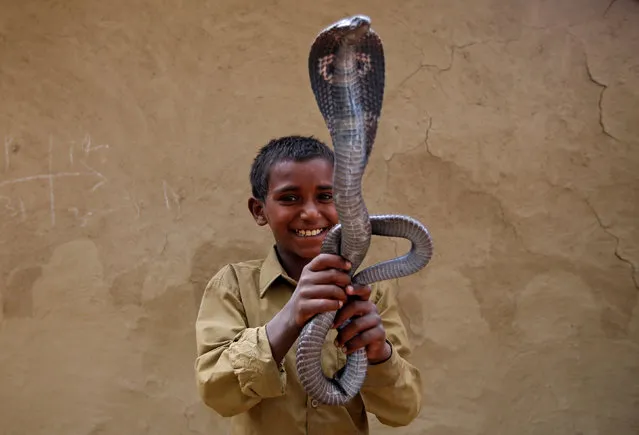
Ravi Nath poses for a photograph with a cobra snake in Jogi Dera (Snake charmers settlement), in the village of Baghpur, in the central state of Uttar Pradesh, India November 10, 2016. (Photo by Adnan Abidi/Reuters)

Ravi Nath poses for a photograph with a cobra snake in Jogi Dera (Snake charmers settlement), in the village of Baghpur, in the central state of Uttar Pradesh, India November 10, 2016. An ancient tribe of snake charmers, known as Saperas, have thrived over the generations by catching venomous snakes and making them dance to their music. Snakes are revered by Hindus in India and snake charmers are considered the followers of Lord Shiva, the blue-skinned Hindu god who is usually portrayed wearing a king cobra around his neck. (Photo by Adnan Abidi/Reuters)
Details
26 Jan 2017 13:06:00
Niterói Contemporary Art Museum

The Niterói Contemporary Art Museum (Museu de Arte Contemporânea de Niterói — MAC) is situated in the city of Niterói, Rio de Janeiro, Brazil, and is one of the city’s main landmarks. It was completed in 1996.
Details
13 Aug 2013 10:18:00
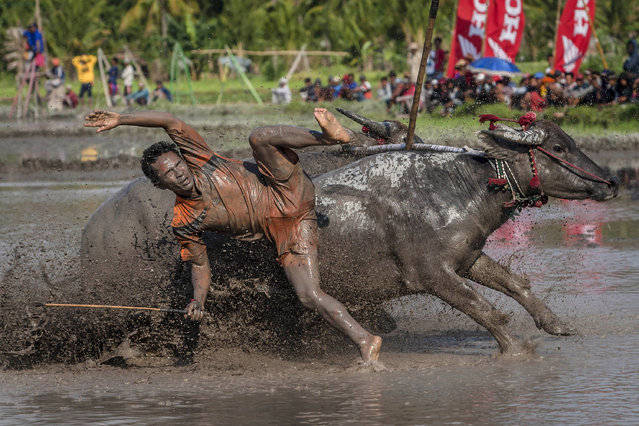
A jockey falls from his buffalos during Barapan Kebo or buffalo races as part of the Moyo festival on September 30, 2014 in Sumbawa Island, West Nusa Tenggara, Indonesia. (Photo by Ulet Ifansasti/Getty Images)

A jockey falls from his buffalos during Barapan Kebo or buffalo races as part of the Moyo festival on September 30, 2014 in Sumbawa Island, West Nusa Tenggara, Indonesia. The traditional Buffalo races, known as Barapan Kebo, are held by Samawa tribes in muddy rice fields to celebrate and provide entertainment ahead of the annual planting season. Jockeys secure themselves on a wooden structure attached to the buffalo, and maneuver across the mud in a race to the finish line. The jockeys weild long sticks, in a similar style to jousting, and direct them towards targets called “Saka”. (Photo by Ulet Ifansasti/Getty Images)
Details
04 Oct 2014 11:58:00
Rougine, a 19-year-old female Arab fighter among the Syrian Democratic Forces, made up of US-backed Kurdish and Arab fighters, stands in fatigues embracing another colleague near the village of al-Torshan, 20 km on the outskirts of Raqa on February 6, 2017. Unlike Syria's Kurds, who have emphasised gender equality in both their militias and nascent autonomous governing institutions in north and northeast Syria, the Arab tribes in the same region are among the more conservative segments of the country's population, and most Arab families find the concept of female fighters “hard to accept”. (Photo by Delil Souleiman/AFP Photo)

Rougine, a 19-year-old female Arab fighter among the Syrian Democratic Forces, made up of US-backed Kurdish and Arab fighters, stands in fatigues embracing another colleague near the village of al-Torshan, 20 km on the outskirts of Raqa on February 6, 2017. (Photo by Delil Souleiman/AFP Photo)
Details
13 Feb 2017 00:05:00
An aerial view shows the Amazon rainforest at the Bom Futuro National Forest near Rio Pardo in Porto Velho, Rondonia State, Brazil, September 3, 2015. The town of Rio Pardo, a settlement of about 4,000 people in the Amazon rainforest, rises where only jungle stood less than a quarter of a century ago. Loggers first cleared the forest followed by ranchers and farmers, then small merchants and prospectors. (Photo by Nacho Doce/Reuters)

An aerial view shows the Amazon rainforest at the Bom Futuro National Forest near Rio Pardo in Porto Velho, Rondonia State, Brazil, September 3, 2015. The town of Rio Pardo, a settlement of about 4,000 people in the Amazon rainforest, rises where only jungle stood less than a quarter of a century ago. Loggers first cleared the forest followed by ranchers and farmers, then small merchants and prospectors. Brazil's government has stated a goal of eliminating illegal deforestation, but enforcing the law in remote corners like Rio Pardo is far from easy. (Photo by Nacho Doce/Reuters)

Details
08 Nov 2015 08:00:00