Loading...
Done
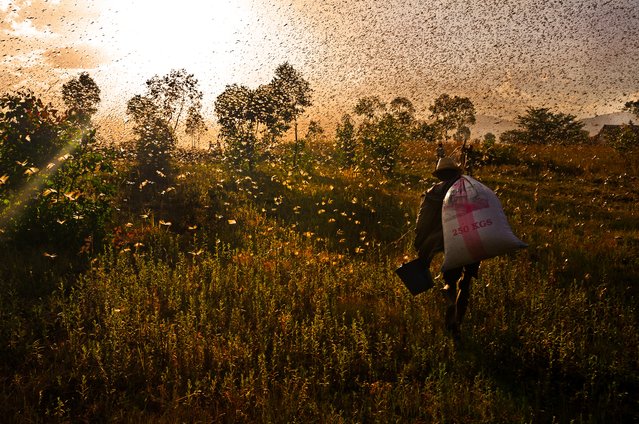
“Locusts & Men”. Oppression, interaction, collaboration. In the life cycle of nature nothing is lost, but the coexistence of different species is sometimes difficult. In Madagascar periodically returns the archaic antagonism between man and the migratory locust, in a circle of life where the two species are looking for space and food for their survival. Photo location: Madagascar, 2013. (Photo and caption by Michele Martinelli/National Geographic Photo Contest)

“Locusts & Men”. Oppression, interaction, collaboration. In the life cycle of nature nothing is lost, but the coexistence of different species is sometimes difficult. In Madagascar periodically returns the archaic antagonism between man and the migratory locust, in a circle of life where the two species are looking for space and food for their survival. At the end of the day a man walks home carrying on his shoulders the heavy bag which contains the locusts captured during the day. The insects provide nutritious meals for the man and his family. Photo location: Madagascar, 2013. (Photo and caption by Michele Martinelli/National Geographic Photo Contest)

ATTENTION! All pictures are presented in high resolution. To see Hi-Res images – just TWICE click on any picture. In other words, click small picture – opens the BIG picture. Click BIG picture – opens VERY BIG picture.
Details
03 Dec 2013 10:59:00
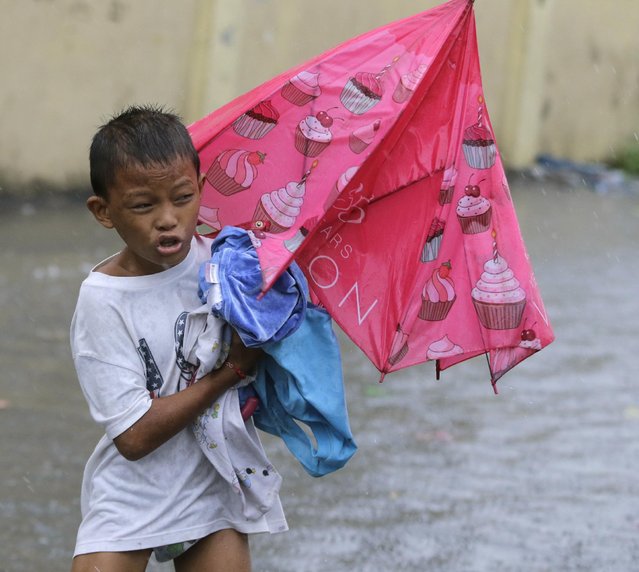
A boy evacuates to safer grounds at the onslaught of Typhoon Rammasun (locally known as Glenda) which battered the city Wednesday, July 16, 2014, in Manila, Philippines. (Photo by Bullit Marquez/AP Photo)

A boy evacuates to safer grounds at the onslaught of Typhoon Rammasun (locally known as Glenda) which battered the city Wednesday, July 16, 2014, in Manila, Philippines. (Photo by Bullit Marquez/AP Photo)
Details
17 Jul 2014 12:05:00
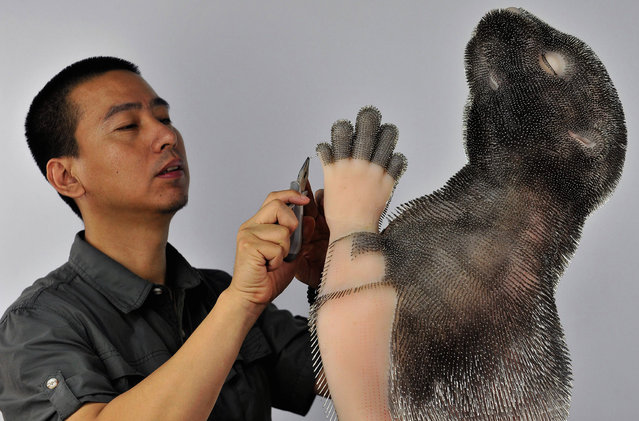
Professor Xie Yong works on an art installation of a beaver, which is made out of plastic and around 300,000 needles, in Shenyang, Liaoning province, July 23, 2013. The needles, according to Xie, represent the pain felt by animals when their fur is taken off to produce clothing. (Photo by Reuters/Stringer)

Professor Xie Yong works on an art installation of a beaver, which is made out of plastic and around 300,000 needles, in Shenyang, Liaoning province, July 23, 2013. The needles, according to Xie, represent the pain felt by animals when their fur is taken off to produce clothing. (Photo by Reuters/Stringer)
Details
27 Jul 2013 09:15:00
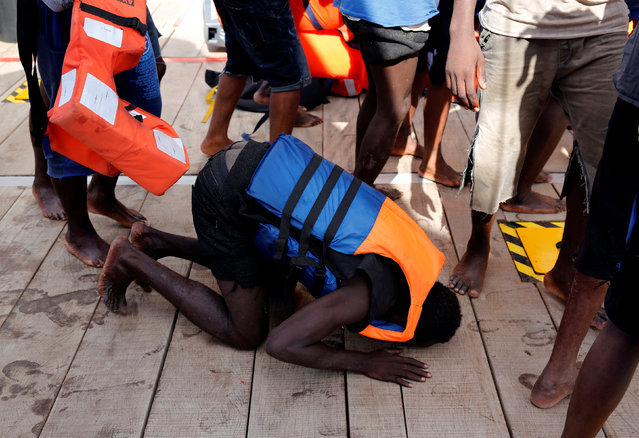
A migrant prays on his knees after boarding the Migrant Offshore Aid Station (MOAS) rescue ship Topaz Responder around 20 nautical miles off the coast of Libya, June 23, 2016. (Photo by Darrin Zammit Lupi/Reuters)

A migrant prays on his knees after boarding the Migrant Offshore Aid Station (MOAS) rescue ship Topaz Responder around 20 nautical miles off the coast of Libya, June 23, 2016. (Photo by Darrin Zammit Lupi/Reuters)
Details
02 Jul 2016 12:49:00
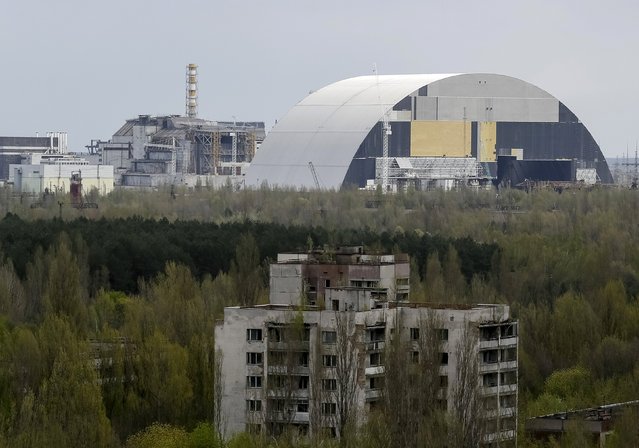
A containment shelter for the damaged fourth reactor (L) and the New Safe Confinement (NSC) structure (R) at the Chernobyl Nuclear Power Plant are seen from Ukraine's abandoned town of Pripyat, Ukraine, April 22, 2016. (Photo by Gleb Garanich/Reuters)

A containment shelter for the damaged fourth reactor (L) and the New Safe Confinement (NSC) structure (R) at the Chernobyl Nuclear Power Plant are seen from Ukraine's abandoned town of Pripyat, Ukraine, April 22, 2016. (Photo by Gleb Garanich/Reuters)
Details
23 Apr 2016 13:30:00
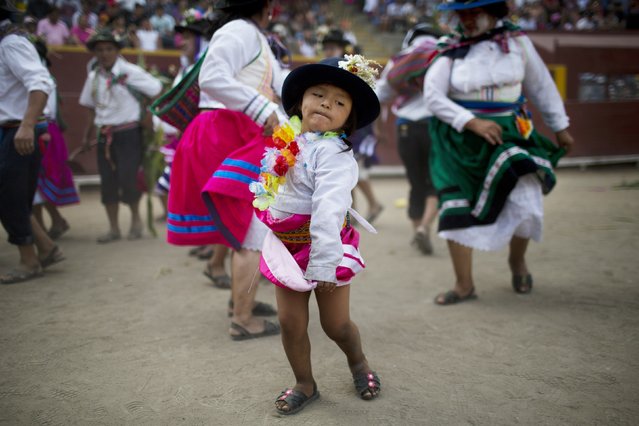
In this Sunday, March 29, 2015 photo, a young performer from the Parinacochas district of Ayacuhco dances in the Vencedores de Ayacucho dance festival, in the Acho bullring in Lima, Peru. The performers sang in the Quechua language, portraying the planting of corn and potatoes. From very young children to elderly people dressed as farmers, tigers, and foxes, as well as members of auto-defense groups, soldiers and police officers, to portray the violence that tore apart their families and communities. (Photo by Rodrigo Abd/AP Photo)

In this Sunday, March 29, 2015 photo, a young performer from the Parinacochas district of Ayacuhco dances in the Vencedores de Ayacucho dance festival, in the Acho bullring in Lima, Peru. The performers sang in the Quechua language, portraying the planting of corn and potatoes. From very young children to elderly people dressed as farmers, tigers, and foxes, as well as members of auto-defense groups, soldiers and police officers, to portray the violence that tore apart their families and communities. (Photo by Rodrigo Abd/AP Photo)
Details
01 Apr 2015 12:07:00
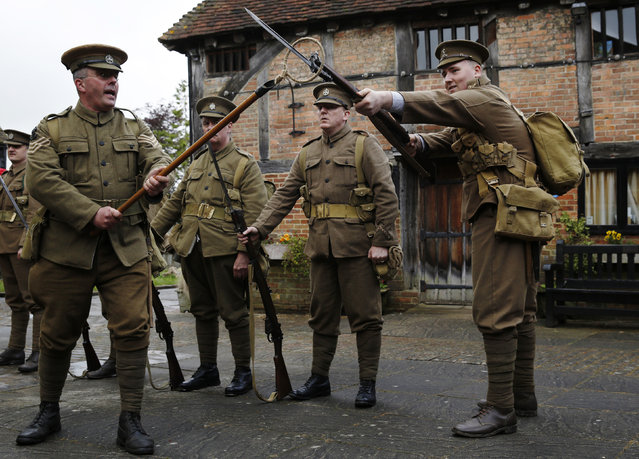
Factory landlord Lawrence Taylor (L), portraying a Colour Sergeant from the King's Royal Rifle Corps, part of the Rifles Living History Society, performs a drill with Connor Young (R) of the Queen's Own Royal West Kent Regiment Living History Group as they recreate the life of a First World War soldier at the Eden Valley Museum in Edenbridge in southeast England May 10, 2014. (Photo by Luke MacGregor/Reuters)

Factory landlord Lawrence Taylor (L), portraying a Colour Sergeant from the King's Royal Rifle Corps, part of the Rifles Living History Society, performs a drill with Connor Young (R) of the Queen's Own Royal West Kent Regiment Living History Group as they recreate the life of a First World War soldier at the Eden Valley Museum in Edenbridge in southeast England May 10, 2014. Lawrence has always had an interest in military history and specifically “The Rifles” – his veteran father's WWII regiment. When he became a re-enactor he chose not to re-enact WWII as many of the veterans are still alive, and he felt uncomfortable as he remembers his father would have flashbacks and nightmares about the war. United by a fascination with military history and a fondness for dressing up, groups such as the Rifles Living History Society and the Queen's Own Royal West Kent Regiment Living History Group get together to recreate aspects of life during the First World War. Reuters photographer Luke MacGregor photographed members of the groups, both as they took part in living history events and at their day jobs. (Photo by Luke MacGregor/Reuters)
Details
26 Aug 2014 10:12:00
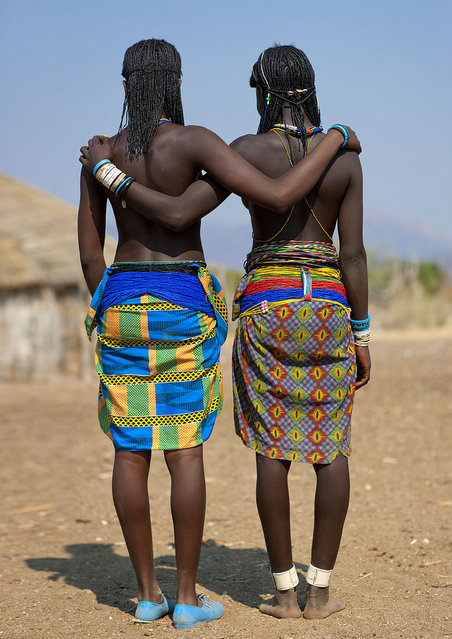
“Show us our butts! Mucawana tribe – Angola. In Soba village, the Muhacaona (Mucawana) tribe, perhaps the best place i have visited. They use cow dung and fat to make this so nice haircut, and love the beads. They asked me to make pictures of their backs... and butts to see on the camera screen if everything was perfect!”. (Eric Lafforgue)

“Show us our butts! Mucawana tribe – Angola. In Soba village, the Muhacaona (Mucawana) tribe, perhaps the best place i have visited. They use cow dung and fat to make this so nice haircut, and love the beads. They asked me to make pictures of their backs... and butts to see on the camera screen if everything was perfect!”. (Photo and comments by Eric Lafforgue)
Details
09 Nov 2012 15:04:00