Loading...
Done
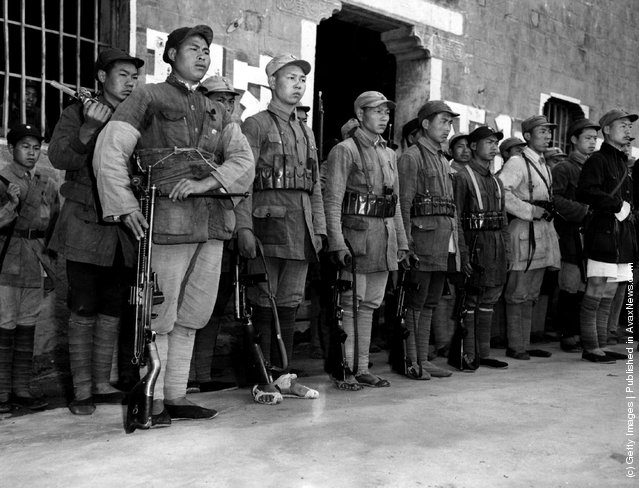
1946: Members of the Communist New Fourth Army on parade. Note how the modern equipment contrasts with the shoeless soldiers in the foreground

Members of the Communist New Fourth Army on parade. Note how the modern equipment contrasts with the shoeless soldiers in the foreground. (Photo by Hulton Archive/Getty Images). 6th July 1946
Details
28 Sep 2011 11:57:00
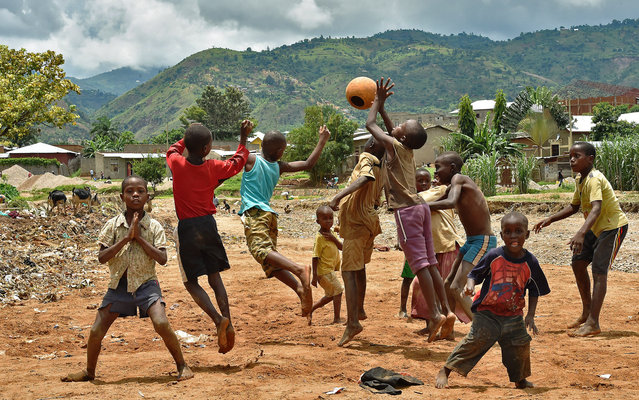
Children play football in Bujumbura, Burundi on March 19, 2015. (Photo by Carl de Souza/AFP Photo)

Children play football in Bujumbura, Burundi on March 19, 2015. (Photo by Carl de Souza/AFP Photo)
Details
21 Mar 2015 12:25:00
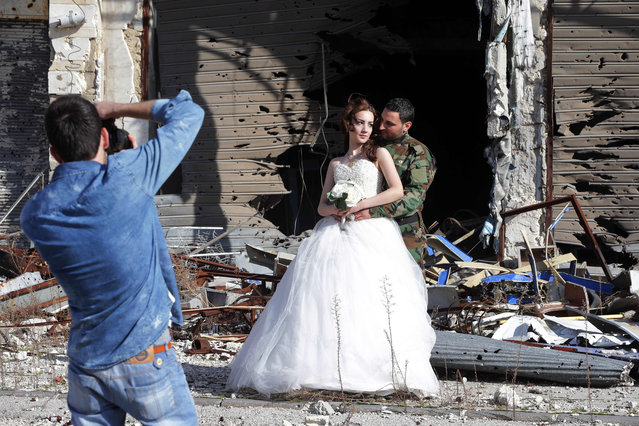
Newly-wed Syrian couple Nada Merhi, 18, and Hassan Youssef, 27, have their wedding pictures taken in front of a heavily damaged building in the war ravaged city of Homs on February 5, 2016. A Syrian photographer thought of using the destruction of Homs to take pictures of newly wed couples to show that life is stronger than death. (Photo by Joseph Eid/AFP Photo)

Newly-wed Syrian couple Nada Merhi, 18, and Hassan Youssef, 27, have their wedding pictures taken in front of a heavily damaged building in the war ravaged city of Homs on February 5, 2016. A Syrian photographer thought of using the destruction of Homs to take pictures of newly wed couples to show that life is stronger than death. (Photo by Joseph Eid/AFP Photo)
Details
07 Feb 2016 07:12:00
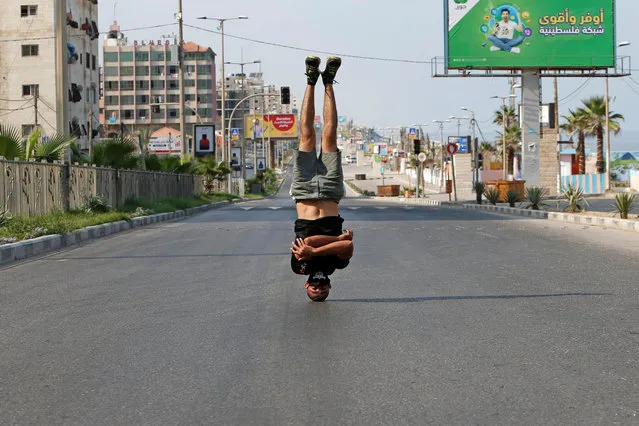
Palestinian athlete Ahmed Abu Hasira demonstrates his parkour skills during a lockdown amid the coronavirus disease (COVID-19) outbreak in Gaza City on September 8, 2020. (Photo by Mohammed Salem/Reuters)

Palestinian athlete Ahmed Abu Hasira demonstrates his parkour skills during a lockdown amid the coronavirus disease (COVID-19) outbreak in Gaza City on September 8, 2020. (Photo by Mohammed Salem/Reuters)
Details
10 Oct 2020 00:03:00
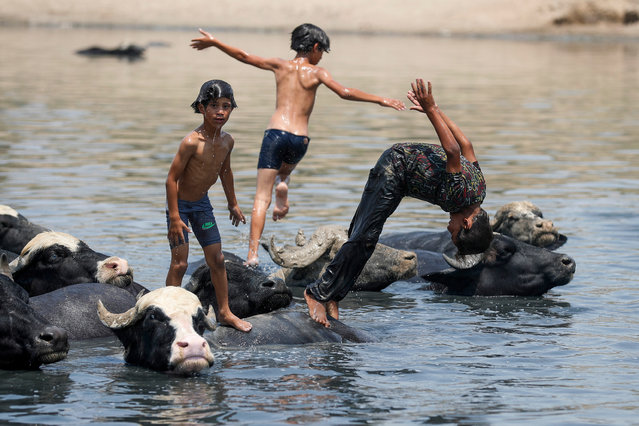
Iraqi boys swim with a herd of buffaloes in the Diyala River in the Faziliah district, east of Baghdad on August 2, 2021, amid extreme summer temperatures. As Iraq bakes under a blistering summer heat wave, its hard-scrabble farmers and herders are battling severe water shortages that are killing their animals, fields and way of life. (Photo by Ahmad Al-Rubaye/AFP Photo)

Iraqi boys swim with a herd of buffaloes in the Diyala River in the Faziliah district, east of Baghdad on August 2, 2021, amid extreme summer temperatures. As Iraq bakes under a blistering summer heat wave, its hard-scrabble farmers and herders are battling severe water shortages that are killing their animals, fields and way of life. (Photo by Ahmad Al-Rubaye/AFP Photo)
Details
21 Aug 2021 09:28:00
Taliban soldiers ride bumper cars at an amusement park in Kabul, Afghanistan on September 13, 2021. (Photo by WANA via Reuters)

Taliban soldiers ride bumper cars at an amusement park in Kabul, Afghanistan on September 13, 2021. (Photo by WANA via Reuters)
Details
21 Sep 2021 09:00:00
Mane flowing, a young competitor clears a jump at the hobby horse racing, eventing and dressage event at Parklands Equestrian Centre near Sheffield, UK on December 30, 2024. (Photo by James Glossop/Times Media Ltd)

Mane flowing, a young competitor clears a jump at the hobby horse racing, eventing and dressage event at Parklands Equestrian Centre near Sheffield, UK on December 30, 2024. (Photo by James Glossop/Times Media Ltd)
Details
16 Jan 2025 02:53:00
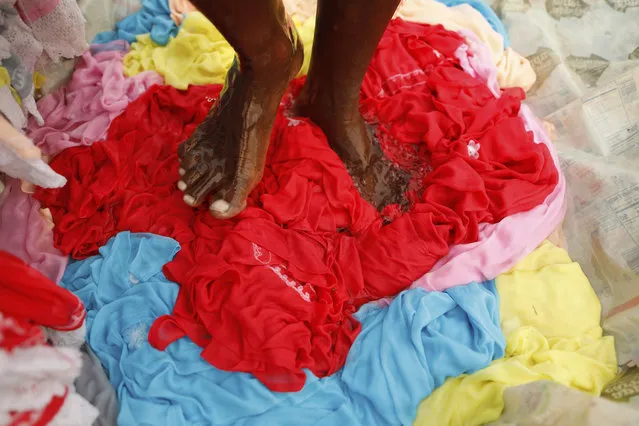
A dhobi, or a washerman washes cloths on the banks of the River Gomti in Lucknow, India, Saturday, September 12, 2020. Dhobis are traditional laundry workers who wash clothes by hand and dry them in the sun, an occupation which has been in existence for generations. Most cities in India have a Dhobi Ghat, or washermen's area, where the city's pile of clothes is laundered. This practice is still popular in India, despite of modern technology. Around 1,000 families work in Lucknow's Dhobi Ghat. However, in light of the novel coronavirus, their wages have decreased drastically. With each family earning around US$100-200 per month. (Photo by Rajesh Kumar Singh/AP Photo)

A dhobi, or a washerman washes cloths on the banks of the River Gomti in Lucknow, India, Saturday, September 12, 2020. Dhobis are traditional laundry workers who wash clothes by hand and dry them in the sun, an occupation which has been in existence for generations. Most cities in India have a Dhobi Ghat, or washermen's area, where the city's pile of clothes is laundered. This practice is still popular in India, despite of modern technology. Around 1,000 families work in Lucknow's Dhobi Ghat. However, in light of the novel coronavirus, their wages have decreased drastically. With each family earning around US$100-200 per month. (Photo by Rajesh Kumar Singh/AP Photo)
Details
25 Sep 2020 00:03:00