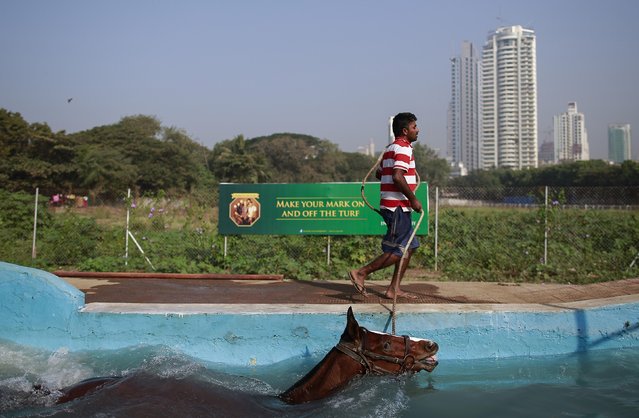
A groom leads his horse in the equine pool after working out on the track, during early morning workouts for the upcoming Derby race in Mumbai January 29, 2015. (Photo by Danish Siddiqui/Reuters)
A model presents a creation by Versace from the Spring/Summer 2023 collection during the Milan Fashion Week, in Milan, Italy, 23 September 2022. The Milano Fashion Week Women's runs from 20 to 26 September. (Photo by Mourad Balti Touati/EPA/EFE)
A woman cries as she watches the coffin containing the body of Venezuela's late President Hugo Chavez be taken from the hospital, where he died on Tuesday, to a military academy in Caracas, Venezuela, Wednesday, March 6, 2013. Seven days of mourning were declared, all schools were suspended for the week and friendly heads of state were expected for an elaborate funeral on Friday. (Photo by Rodrigo Abd/AP Photo)
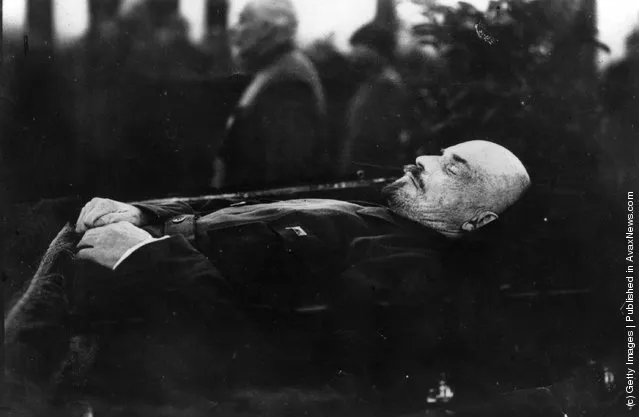
Photo: Vladimir Ilyich Lenin (1870 – 1924) lying in state in the Kremlin. (Photo by Hulton Archive/Getty Images). 1924
Important! For the same article in Russian language click here.
Something quite intriguing is happening within Russian-speaking internet during the last few – should you type a fully academic inquiry (at least, according to Russian academic requirements) in national search engines for "Lenin's mausoleum" – the first thing you get (even in top 10 searches) is website pages talking about black magic and occult. Website authors view this construction differently, but unconditionally agree on one thing: the mausoleum of the "leader of the world proletariat” – the essence of a magical artifact, a sort of “energy vampire”. It was built with a certain purpose: to drain the energy out of miserable Soviet citizens on one hand; and to poison the anthroposphere of one-sixth part of the earth with its vibes (the exact territory that was occupied by the former Soviet Union), depriving the Russian people of will to resist on the other hand. Complete nonsense? No doubt. Nevertheless, an intriguing one. Well, probably because some oddities do exist in mausoleum's history. These oddities are the thing we are going to discuss this time. First, let me refresh you memory on the subject.
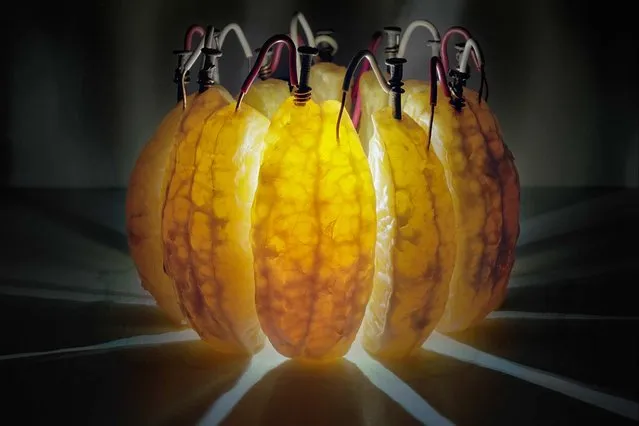
Wedges of an orange generate enough current and electrical juice – 3.5 volts – to power an LED. The fruit’s citric acid helps electrons flow from galvanized nails to copper wire in this 14-hour exposure. This image was published in September’s Visions of Earth, a trio of photos that appear in each issue of National Geographic. (Photo by Caleb Charland/National Geographic)
Ethnic Miao men wearing traditional masks smear dust on a woman's face to wish her good luck during local celebration event for Lunar New Year in Liuzhou, Guangxi Zhuang Autonomous Region, China, February 16, 2016. (Photo by Reuters/Stringer)
Schoolchildren perfom during celebrations to mark 35 years of Zimbabwe's Independence at the National sports stadium in Harare, Saturday, April 18, 2015. President Robert Mugabe, 91, the central figure in Zimbabwean politics 35 years after Independence from Britain, has led the country since 1980. (Photo by Tsvangirayi Mukwazhi/AP Photo)